• Fri frakt över 249 kr
  • •
  • Snabba leveranser
  • •
  • Billiga böcker
Kundservice

Du är på sajten för privatpersoner.

Företag, bibliotek eller offentlig verksamhet?

Du handlar på classic.bokus.com, där alla dina funktioner finns intakta.
Till classic.bokus.com
Bokus logotyp. Gå till startsidan.
  • Erbjudanden
  • Nyheter
  • Student
  • Topplistor
  • Barn & ungdom
  • Bokus Play
  • E-böcker
  • Pocketböcker
  • Spel & pussel

10% rabatt på allt med kod: NYSTART10 →

Sidfot

Mina sidor

    Hjälp

    • Kundservice
    • Vanliga frågor och svar
    • Frakt och leverans
    • Retur vid ångerrätt
    • Reklamera vara
    • Betalning
    • Köpvillkor
    • Allmänna villkor
    • Information om webbplatsens tillgänglighet

    Om Bokus

    • Om oss
    • Pressrum
    • För studenter
    • För företag
    • För bibliotek och offentlig verksamhet
    • För leverantörer
    • Hållbarhet

    Populärt

    • Aktuella erbjudanden
    • Presentkort
    • Studentlitteratur
    • Nya böcker
    • Topplistor
    • Signerade böcker
    • Engelska böcker

    Inspiration

    • Boktips
    • BookTok
    • Populära bokserier
    • Barnbokskaraktärer
    • Populära författare
    Logotyp för Bokus
    Följ oss på Facebook (extern länk)Följ oss på Instagram (extern länk)Följ oss på YouTube (extern länk)Följ oss på TikTok (extern länk)
    bokus @ CookiesAnpassa cookiesIntegritetspolicyKöpvillkor
    Till Citymail hemsida (extern länk)Till Budbee hemsida (extern länk)Till Postnord hemsida (extern länk)Till Schenker hemsida (extern länk)Till Early Bird hemsida (extern länk)Till Walleys hemsida (extern länk)
    1. Djur och Natur
    2. Naturböcker
    3. Växtböcker

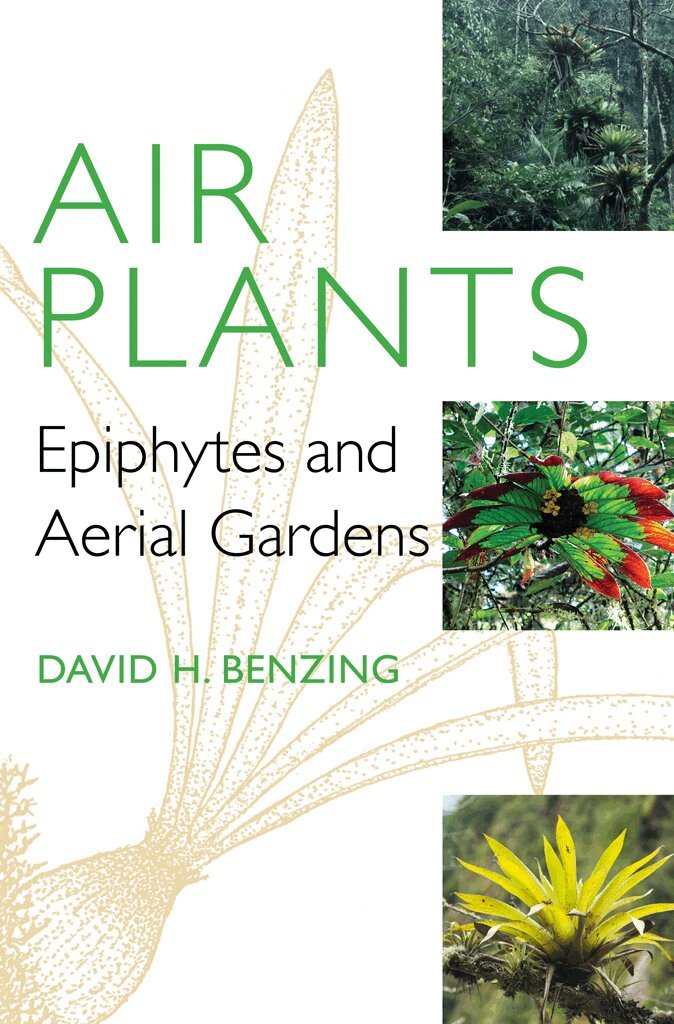
    Air Plants

    Epiphytes and Aerial Gardens

    AvDavid H. Benzing

    Inbunden, Engelska, 2012

    603 kr

    Beställningsvara. Skickas inom 5-8 vardagar. Fri frakt över 249 kr.

    Beskrivning

    Often growing far above the ground, "air plants" (or epiphytes) defy many of our common perceptions about plants. The majority use their roots only for attachment in the crowns of larger, usually woody plants—or to objects such as rocks and buildings—and derive moisture and nutrients from the atmosphere and by collecting falling debris. Only the mistletoes are true parasites. Epiphytes are not anomalies and there are approximately 28,000 species—about 10 percent of the higher or vascular plants—that grow this way. Many popular houseplants, including numerous aroids, bromeliads, ferns, and orchids, rank among the most familiar examples. In Air Plants, David H. Benzing takes a reader on a tour of the many taxonomic groups to which the epiphytes belong and explains in nontechnical language the anatomical and physiological adaptations that allow these plants to conserve water, thrive without the benefit of soil, and engage in unusual relationships with animals such as frogs and ants. Benzing's comprehensive account covers topics including ecology, evolution, photosynthesis and water relations, mineral nutrition, reproduction, and the nature of the forest canopy as habitat for the free-living and parasitic epiphytes. It also pays special attention to important phenomena such as adaptive trade-offs and leaf economics. Drawing on the author's deep experience with epiphytes and the latest scientific research, this book is accessible to readers unfamiliar with technical botany; it features a lavish illustration program, references, a glossary, and tables.

    Produktinformation

    • Utgivningsdatum:2012-06-15
    • Mått:155 x 235 x 21 mm
    • Vikt:907 g
    • Format:Inbunden
    • Språk:Engelska
    • Antal sidor:256
    • Förlag:Cornell University Press
    • ISBN:9780801450433

    Utforska kategorier

    • Växtböcker inom Djur och Natur

    Mer om författaren

    David H. Benzing is Professor of Biology Emeritus at Oberlin College and the Jessie B. Cox Chair in Tropical Biology at Marie Selby Botanical Gardens. He is the author of Bromeliaceae: Profile of an Adaptive Radiation, Vascular Epiphytes: General Biology and Associated Biota, and The Biology of the Bromeliads and coauthor of The Native Bromeliads of Florida.

    Recensioner i media

    Benzing's love for epiphytes is clearly evident, and the book provides an excellent introduction to the field.... By starting from first principles, it provides a tidy introduction to field botany to an undergraduate audience.... All the basic principles of botany are covered using epiphytes as model organisms.... The systematic overview of epiphyte diversity in particular provides an important, holistic grounding in epiphyte taxonomy, biogeography, and systematics.... There is something in it for everyone, from newcomers to plant biology to those who regularly climb trees to do their research.- K. C. Burns (Ecology) David Benzing's exuberance is evident throughout this book. His love of epiphytes... captivates the reader.... Benzing's is a well-conceived and well-executed testimony to epiphytes and serves to bring together up-to-date information about these not very well understood plants. It provides a basis for further inquiry to round out our understanding of this peculiar life style of plants and points out areas where further study would be productive.- William Stern (Plant Science Bulletin) Modest in size, but not in content and scope, Benzing's pithy gem of a synthesis appears 22 years after his technical monograph, Vascular Epiphytes (1990).... Summing Up: Highly recommended.- R. Schmid (Choice)

    Innehållsförteckning

    • 1. What Is an Epiphyte?Getting to Know the EpiphytesBody PlansThe EpidermisOther Notable Features of the EpiphytesStarting at the BeginningGeological HistoryGeographic DistributionUse by HumansConservation2. The Types of Epiphytes and Their Evolutionary OriginsThe Free-Living EpiphytesThe Biological Underpinnings of EpiphytismHow Epiphytism EvolvedThe Taxonomic Affiliations of the EpiphytesGenetic Heritage and Evolutionary OptionsEpiphytism and Speciation3. Epiphytes in Communities and EcosystemsThe Nature of Aerial HabitatsMineral NutrientsWaterLightEpiphytes as Members of CommunitiesRandom Factors Also Structure CommunitiesEcological SuccessionWhat Makes a Tree a Host for Epiphytes?How Epiphytes Can Impact Their HostsNutritional PiracyAdditional Ways That Epiphytes Harm Their HostsManifold Effects on Ecosystems4. Water ManagementVariations on Basic ThemesHow Biological Structure Relates to FunctionWater ManagementHow Epiphytes Cope with DroughtDrought AvoidanceLeaf EconomicsRootsLeaves as Proxies for Roots5. Photosynthesis and Mineral NutritionThe Photosynthetic SyndromesC3 versus CAM-type PhotosynthesisLight and Adaptive GrowthMineral NutritionThe Mistletoes6. Reproduction and Other Interactions with AnimalsPollinationFruits and SeedsAsexual ReproductionPlant DefensesAnts and EpiphytesTermitesLeafy Tanks and PhytotelmsCase Studies7. The Epiphytic MonocotsOrchidaceaeThe Vegetative BodyReproduction and SpeciationThe Adaptive TypesBromeliaceaeBromeliads versus OrchidsAdaptations for EpiphytismHemi-epiphytismThe Atmospheric BromeliadsAraceaeAmaryllidaceae and Additional Families in Order Liliales8. The Epiphytic EudicotsCactaceaeGeneral CharacteristicsAdaptations for EpiphytismEvolutionary HistoryEcologyReproductionEricaceaeAdaptations for EpiphytismEpiphytism and SpeciationReproductive BiologyHorticultureGesneriaceaeAdaptive VarietyEvolutionary HistoryReproductive BiologyRubiaceaeMelastomataceaeApocynaceaeSolanaceae9. The Pteridophytic EpiphytesThe Major Groups of PteridophytesThe FernsThe Lycophytes10. Miscellaneous EpiphytesPiperaceaeThe Carnivorous EpiphytesThe Stranglers and Other Primary Hemi-epiphytesThe GymnospermsAdditional Oddities11. Threats and ConservationHow Epiphytes Influence MicroclimatesContributions to BiodiversityGlobal ChangeExcess NutrientsPlant InvasionsHabitat LossGlossaryReferencesSubject IndexTaxon Index