• Fri frakt över 249 kr
  • •
  • Snabba leveranser
  • •
  • Billiga böcker
Kundservice

Du är på sajten för privatpersoner.

Företag, bibliotek eller offentlig verksamhet?

Du handlar på classic.bokus.com, där alla dina funktioner finns intakta.
Till classic.bokus.com
Bokus logotyp. Gå till startsidan.
  • Erbjudanden
  • Nyheter
  • Student
  • Topplistor
  • Barn & ungdom
  • Bokus Play
  • E-böcker
  • Pocketböcker
  • Spel & pussel

10% rabatt på allt med kod: NYSTART10 →

Sidfot

Mina sidor

    Hjälp

    • Kundservice
    • Vanliga frågor och svar
    • Frakt och leverans
    • Retur vid ångerrätt
    • Reklamera vara
    • Betalning
    • Köpvillkor
    • Allmänna villkor
    • Information om webbplatsens tillgänglighet

    Om Bokus

    • Om oss
    • Pressrum
    • För studenter
    • För företag
    • För bibliotek och offentlig verksamhet
    • För leverantörer
    • Hållbarhet

    Populärt

    • Aktuella erbjudanden
    • Presentkort
    • Studentlitteratur
    • Nya böcker
    • Topplistor
    • Signerade böcker
    • Engelska böcker

    Inspiration

    • Boktips
    • BookTok
    • Populära bokserier
    • Barnbokskaraktärer
    • Populära författare
    Logotyp för Bokus
    Följ oss på Facebook (extern länk)Följ oss på Instagram (extern länk)Följ oss på YouTube (extern länk)Följ oss på TikTok (extern länk)
    bokus @ CookiesAnpassa cookiesIntegritetspolicyKöpvillkor
    Till Citymail hemsida (extern länk)Till Budbee hemsida (extern länk)Till Postnord hemsida (extern länk)Till Schenker hemsida (extern länk)Till Early Bird hemsida (extern länk)Till Walleys hemsida (extern länk)
    1. Historia och arkeologi
    2. Historia
    3. Amerikas historia

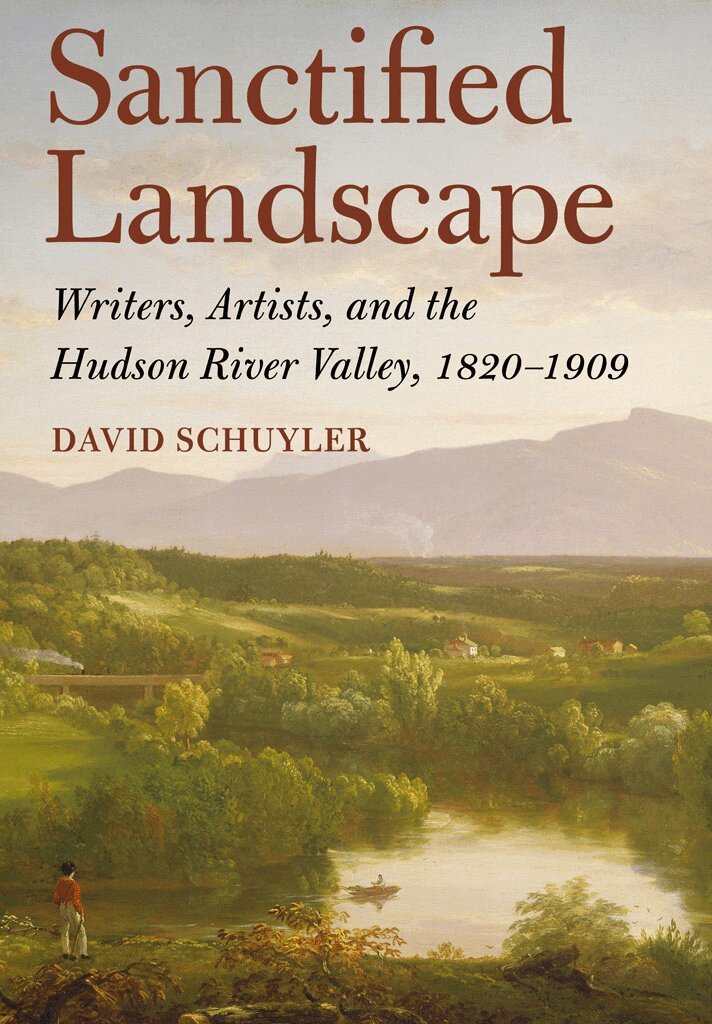
    Sanctified Landscape

    Writers, Artists, and the Hudson River Valley, 1820–1909

    AvDavid Schuyler

    Inbunden, Engelska, 2012

    345 kr

    Beställningsvara. Skickas inom 5-8 vardagar. Fri frakt över 249 kr.

    Beskrivning

    The Hudson River Valley was the first iconic American landscape. Beginning as early as the 1820s, artists and writers found new ways of thinking about the human relationship with the natural world along the Hudson. Here, amid the most dramatic river and mountain scenery in the eastern United States, Washington Irving and James Fenimore Cooper created a distinctly American literature, grounded in folklore and history, that contributed to the emergence of a sense of place in the valley. Painters, led by Thomas Cole, founded the Hudson River School, widely recognized as the first truly national style of art. As the century advanced and as landscape and history became increasingly intertwined in the national consciousness, an aesthetic identity took shape in the region through literature, art, memory, and folklore—even gardens and domestic architecture. In Sanctified Landscape, David Schuyler recounts this story of America's idealization of the Hudson Valley during the nineteenth and early twentieth centuries. Schuyler's story unfolds during a time of great change in American history. At the very moment when artists and writers were exploring the aesthetic potential of the Hudson Valley, the transportation revolution and the rise of industrial capitalism were transforming the region. The first generation of American tourists traveled from New York City to Cozzens Hotel and the Catskill Mountain House in search of the picturesque. Those who could afford to live some distance from jobs in the city built suburban homes or country estates. Given these momentous changes, it is not surprising that historic preservation emerged in the Hudson Valley: the first building in the United States preserved for its historic significance is Washington's Headquarters in Newburgh. Schuyler also finds the seeds of the modern environmental movement in the transformation of the Hudson Valley landscape. Richly illustrated and compellingly written, Sanctified Landscape makes for rewarding reading. Schuyler expertly ties local history to national developments, revealing why the Hudson River Valley was so important to nineteenth-century Americans—and why it is still beloved today.

    Produktinformation

    • Utgivningsdatum:2012-04-06
    • Mått:178 x 254 x 20 mm
    • Vikt:907 g
    • Format:Inbunden
    • Språk:Engelska
    • Antal sidor:224
    • Förlag:Cornell University Press
    • ISBN:9780801450808
    • Utmärkelser:Winner of the Herbert H. Lehman Award (New York Ac

    Utforska kategorier

    • Amerikas historia inom Historia och arkeologi

    Mer om författaren

    David Schuyler is Arthur and Katherine Shadek Professor of the Humanities and American Studies at Franklin & Marshall College. He is the author of A City Transformed: Redevelopment, Race, and Suburbanization in Lancaster, Pennsylvania, 1940–1980; Apostle of Taste: Andrew Jackson Downing, 1815–1852; and The New Urban Landscape: The Redefinition of City Form in Nineteenth-Century America and is an editor of The Frederick Law Olmsted Papers.

    Recensioner i media

    In his capable and congenial history, David Schuyler, a humanities and American studies professor at Franklin and Marshall College, reminds us that the dance of change and permanence itself has been a constant throughout Catskill and Hudson Valley history.- John Rowen (Kaatskill Life) Over the past two decades or so, David Schuyler has established himself as one of the nation's preeminent students of American landscape and planning history. Whether in dealing with the transformative nature of the forces that created urban landscapes or assessments of the fathers of landscape architecture in America, namely Frederick Law Olmstead and Andrew Jackson Downing, Schuyler's work has fashioned for us a deeper understanding and appreciation for the events, personalities, and forces that have made our environment what it is.... This is a fine and handsome book with lusciously reproduced paintings,wonderful reproductions of drawings and plans, and strong photographs. The quality reflects what university presses do better than most. In an era when many university presses are facing closure or are being downsized, a book of this nature is argument enough to embrace university presses for what they are: national treasures. And this book is a book about a national treasure itself, the mighty Hudson River. Thanks to David Schuyler and the Cornell University Press!(Environmental History) Schuyler has fashioned an absorbing account of the cultural milieu in which the Hudson Valley, a landscape of discrete villages, towns, and estates, was transformed into an iconic American region.... He adroitly foregrounds an abundant selection of contemporary sources testifying to the passionate sense of place these men exhibited in their professional and personal lives, as well as the influence most exerted, at least for a time, on the nation's aesthetic taste. Linking the Hudson Valley to early efforts of historic preservation and environmentalism, Schuyler commendably avoids the usual good-versus-evil narrative. The author's own sense of place is evident in illustrations and maps.(Choice)

    Innehållsförteckning

    • Introduction1 The Tourists' River: Experiencing the Hudson Valley2 The Artist's River: Thomas Cole3 The Writers' River: Washington Irving and N. P. Willis4 The River in a Garden: A. J. Downing5 Change and the Search for Continuity at Midcentury6 Elegy for the Hudson River School: Jervis McEntee7 The Naturalist's River: John Burroughs8 A River in Time: Preserving Landscape, Celebrating HistoryConclusion