• Fri frakt över 249 kr
  • •
  • Snabba leveranser
  • •
  • Billiga böcker
Kundservice

Du är på sajten för privatpersoner.

Företag, bibliotek eller offentlig verksamhet?

Du handlar på classic.bokus.com, där alla dina funktioner finns intakta.
Till classic.bokus.com
Bokus logotyp. Gå till startsidan.
  • Erbjudanden
  • Nyheter
  • Student
  • Topplistor
  • Barn & ungdom
  • Bokus Play
  • E-böcker
  • Pocketböcker
  • Spel & pussel

10% rabatt på allt med kod: NYSTART10 →

Sidfot

Mina sidor

    Hjälp

    • Kundservice
    • Vanliga frågor och svar
    • Frakt och leverans
    • Retur vid ångerrätt
    • Reklamera vara
    • Betalning
    • Köpvillkor
    • Allmänna villkor
    • Information om webbplatsens tillgänglighet

    Om Bokus

    • Om oss
    • Pressrum
    • För studenter
    • För företag
    • För bibliotek och offentlig verksamhet
    • För leverantörer
    • Hållbarhet

    Populärt

    • Aktuella erbjudanden
    • Presentkort
    • Studentlitteratur
    • Nya böcker
    • Topplistor
    • Signerade böcker
    • Engelska böcker

    Inspiration

    • Boktips
    • BookTok
    • Populära bokserier
    • Barnbokskaraktärer
    • Populära författare
    Logotyp för Bokus
    Följ oss på Facebook (extern länk)Följ oss på Instagram (extern länk)Följ oss på YouTube (extern länk)Följ oss på TikTok (extern länk)
    bokus @ CookiesAnpassa cookiesIntegritetspolicyKöpvillkor
    Till Citymail hemsida (extern länk)Till Budbee hemsida (extern länk)Till Postnord hemsida (extern länk)Till Schenker hemsida (extern länk)Till Early Bird hemsida (extern länk)Till Walleys hemsida (extern länk)
    1. Naturvetenskap och teknik
    2. Matematik och naturvetenskap
    3. Biologi
    4. Groddjur och reptiler

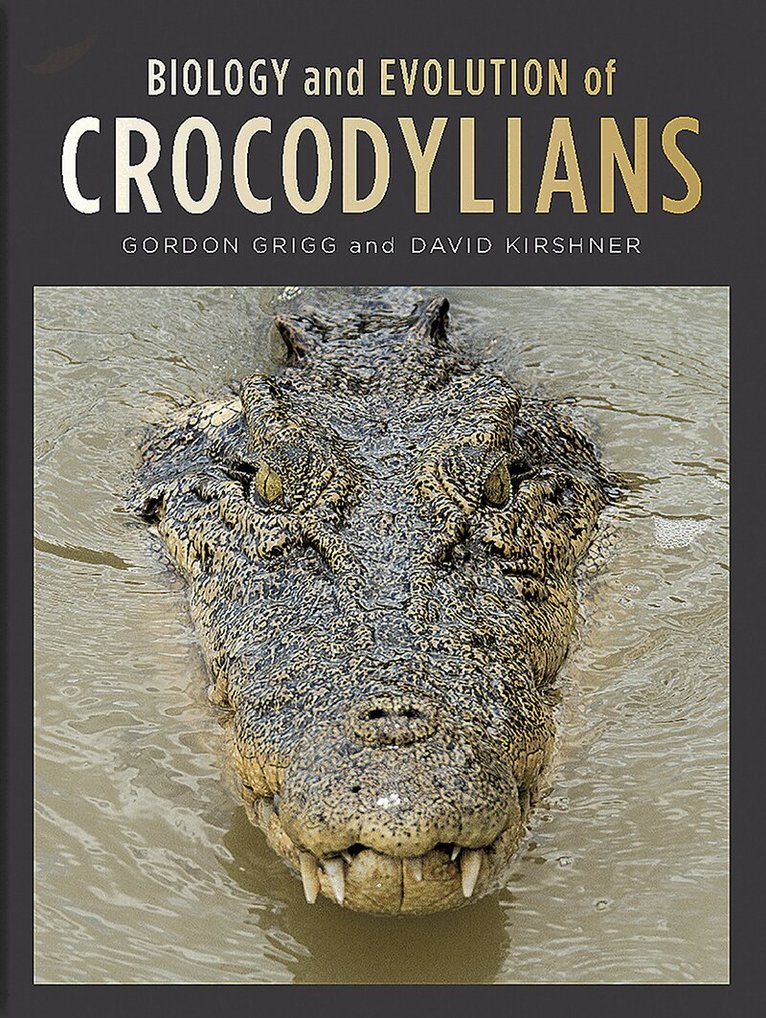
    Biology and Evolution of Crocodylians

    AvGordon Grigg,David Kirshner

    Inbunden, Engelska, 2015

    1 649 kr

    Beställningsvara. Skickas inom 5-8 vardagar. Fri frakt över 249 kr.

    Beskrivning

    Crocodiles, alligators, caimans, and gharials—the Crocodylia, known collectively as crocodylians—are the world's largest living reptiles. The largest of them, probably the estuarine or saltwater crocodile, Crocodylus porosus, can grow to almost twenty feet and weigh more than two thousand pounds. Crocodylians are creatures of great contrast. They can remain patiently still for ages, yet can also move like lightning to snap up a meal. They are formidably strong, active predators, with jaws that can tear apart large prey items, yet a mother or a father can gently assist hatchlings out of the eggs, and carry them to the water between their teeth. Because large crocodylians can (and do) eat people, they invite fear and loathing, but they also inspire curiosity and admiration. Biology and Evolution of Crocdylians is a comprehensive review of current knowledge about the world's largest and most famous living reptiles. Gordon Grigg's authoritative and accessible text and David Kirshner's stunning artwork and color photographs combine expertly in this contemporary celebration of crocodiles, alligators, caimans, and gharials. This book showcases the skills and capabilities that allow crocodylians to live how and where they do. It covers the biology and ecology of the extant species, conservation issues, crocodilian-human interaction, and the evolutionary history of the group. Richly illustrated with more than five hundred color photographs and black-and-white illustrations, this book will be a benchmark reference work for crocodylian biologists, herpetologists, and vertebrate biologists for years to come.

    Produktinformation

    • Utgivningsdatum:2015-04-15
    • Mått:197 x 260 x 42 mm
    • Vikt:2 268 g
    • Format:Inbunden
    • Språk:Engelska
    • Antal sidor:672
    • Förlag:Cornell University Press
    • Medarbetare:Richard Shine
    • ISBN:9780801454103

    Utforska kategorier

    • Groddjur och reptiler inom Naturvetenskap och teknik
    • Reptiler och groddjur inom Djur och Natur

    Mer om författaren

    Gordon Grigg is Emeritus Professor of Biological Sciences at the University of Queensland. David Kirshner has illustrated several books on wildlife. Rick Shine AM FAA is a Laureate Fellow of the Australian Research Council and Professor of Biological Sciences at the University of Sydney.

    Recensioner i media

    Biology and Evolution of Crocodyliansis an expensive book, but it is one that will serve any paleontologist seeking a detailed review of all aspects of modern crocodylian biology. The photographs and illustrations also make it a very attractive book for any natural history enthusiast.- Adam Pritchard (Palaeontologica Electronica) The author, Gordon Grigg, and illustrator, David Kirshner, have written a wonderful, beautifully illustrated, all-inclusive treatise on the Crocodylia that has already become (and will remain for the foreseeable future) the most important compilation of information and references yet attempted. It will be invaluable to both current researchers and future generations of crocodylian biologists.... [D]espite working in the area of crocodylian evolutionary biology for over 35 years, I learned more about these animals than I ever imagined by reading this volume.... Overall, this is a most remarkable publication, one that surely will stand the test of time and be remembered as one of the most important contributions ever in the history of crocodylian research.- Llewellyn D. Densmore (The Quarterly Review of Biology)

    Innehållsförteckning

    • ForewordPrefaceAcknowledgements1. INTRODUCTIONIntroducing crocodyliansThe living species of crocodyliansThe growth of scientific knowledge about crocodyliansBody size and age2. THE CROCODYLIAN FAMILY TREEThe modern crocodylians and their relationshipsExtinct Crocodylia and other crocodile-like reptiles; crocs in 'deep time'Summary3. CROCODYLIANS CLOSER UPThe external features of crocodyliansSkull and musculoskeletal system4. LOCOMOTION, BUOYANCY, AND TRAVELCrocodylians on landCrocodylians in the waterBuoyancyStomach stones (gastroliths)Capacity for long distance travel5. SENSORY SKILLS AND BRAINVisionHearing, movement and balanceBrain and cranial nervesOlfaction and gustation (chemosensation)Sense organs of the skinCognitive capacities and learning6. FEEDING, DIGESTION, AND NUTRITIONWhat do crocodylians eat?Prey capture and handlingDigestionNutrition7. ENERGY SUPPLY AND DELIVERYThe metabolic engines: crocodylian biochemistry and metabolismWhole body metabolism (anaerobic and aerobic)The respiratory systemThe circulatory system8. THE WORLD'S MOST EXTRAORDINARY HEARTA tour of the crocodylian heartNon-shunting and shunting patterns of blood flowWhat is the significance of pulmonary by-pass shunting in crocodylians?9. DIVING AND SUBMERGENCE BEHAVIOUR AND PHYSIOLOGYWhen? Why? How deep? How, and how for so long?Diving behaviour of crocodylians in the wildPhysiological support for crocodylian divingWhat are the longest submergences by crocodylians that can be supported aerobically?10. THERMAL RELATIONSIntroduction: crocodylians are not like other reptilesDaily and seasonal patterns of body temperatureBehaviours that modify body temperaturePhysiological mechanisms of thermoregulationThermal acclimatizationCrocodylians may have endothermic ancestryCould even the basal archosaurs have been endothermic?11. SALT AND WATER BALANCESalt and water balance in Crocodylus porosus: an introduction to crocodylian osmoregulationSalt and water balance in other crocodyliansLiving out of water, 'aestivation'Salt glands and implications for crocodylian evolutionary history12. REPRODUCTIONIntroduction: they're more like birdsOviducts, ovulation, fertilisation and the gravid stage13. POPULATIONS AND POPULATION ECOLOGYPopulations (and species)Population dynamics: changes through timeCase Histories14. CONSERVATION, COMMERCIALISATION, AND CONFLICTIntroductionHistorical perspectiveThe future for crocodylians?INDEX