• Fri frakt över 249 kr
  • •
  • Snabba leveranser
  • •
  • Billiga böcker
Kundservice

Du är på sajten för privatpersoner.

Företag, bibliotek eller offentlig verksamhet?

Du handlar på classic.bokus.com, där alla dina funktioner finns intakta.
Till classic.bokus.com
Bokus logotyp. Gå till startsidan.
  • Erbjudanden
  • Student
  • Topplistor
  • Barn & ungdom
  • Bokus Play
  • E-böcker
  • Ljudböcker
  • Pocketböcker
  • Spel och pussel

5% studentrabatt – använd koden KURSBOK27 →

Sidfot

Mina sidor

    Hjälp

    • Kundservice
    • Vanliga frågor och svar
    • Frakt och leverans
    • Retur vid ångerrätt
    • Reklamera vara
    • Betalning
    • Köpvillkor
    • Allmänna villkor
    • Information om webbplatsens tillgänglighet

    Om Bokus

    • Om oss
    • Pressrum
    • För studenter
    • För företag
    • För bibliotek och offentlig verksamhet
    • För leverantörer
    • Hållbarhet

    Populärt

    • Aktuella erbjudanden
    • Presentkort
    • Studentlitteratur
    • Nya böcker
    • Topplistor
    • Signerade böcker
    • Engelska böcker

    Inspiration

    • Boktips
    • BookTok
    • Barnbokskaraktärer
    • Populära författare
    Logotyp för Bokus
    Följ oss på Facebook (extern länk)Följ oss på Instagram (extern länk)Följ oss på YouTube (extern länk)Följ oss på TikTok (extern länk)
    bokus @ CookiesAnpassa cookiesIntegritetspolicyKöpvillkor
    Till Citymail hemsida (extern länk)Till Budbee hemsida (extern länk)Till Postnord hemsida (extern länk)Till Schenker hemsida (extern länk)Till Early Bird hemsida (extern länk)Till Walleys hemsida (extern länk)
    1. Samhälle och politik
    2. Politik och statsskick
    3. Internationella relationer

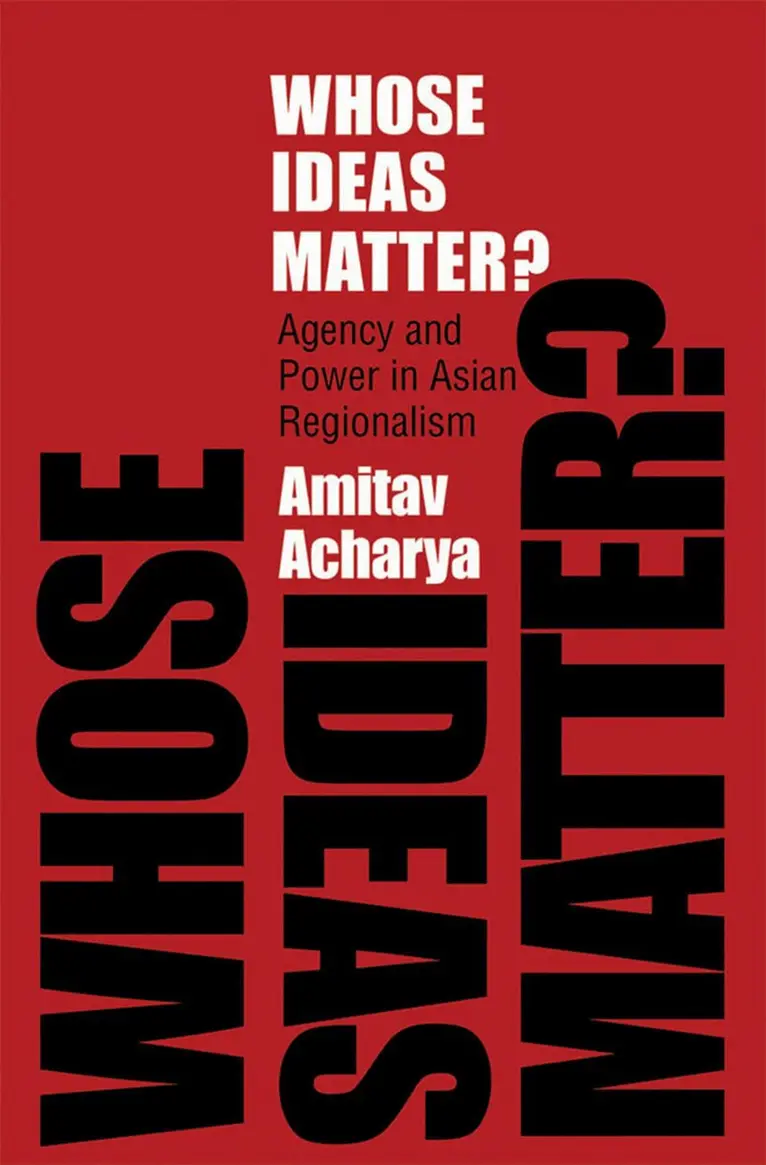
    Whose Ideas Matter?

    Agency and Power in Asian Regionalism

    AvAmitav Acharya

    Häftad, Engelska, 2011

    Del i serien Cornell Studies in Political Economy

    421 kr

    Beställningsvara. Skickas inom 10-15 vardagar. Fri frakt över 249 kr.

    Fler format och utgåvor

    Inbunden

    726 kr

    Beskrivning

    Asia is a crucial battleground for power and influence in the international system. It is also a theater of new experiments in regional cooperation that could redefine global order. Whose Ideas Matter? is the first book to explore the diffusion of ideas and norms in the international system from the perspective of local actors, with Asian regional institutions as its main focus.There's no Asian equivalent of the EU or of NATO. Why has Asia, and in particular Southeast Asia, avoided such multilateral institutions? Most accounts focus on U.S. interests and perceptions or intraregional rivalries to explain the design and effectiveness of regional institutions in Asia such as SEATO, ASEAN, and the ASEAN Regional Forum. Amitav Acharya instead foregrounds the ideas of Asian policymakers, including their response to the global norms of sovereignty and nonintervention. Asian regional institutions are shaped by contestations and compromises involving emerging global norms and the preexisting beliefs and practices of local actors. Acharya terms this perspective "constitutive localization" and argues that international politics is not all about Western ideas and norms forcing their way into non-Western societies while the latter remain passive recipients. Rather, ideas are conditioned and accepted by local agents who shape the diffusion of ideas and norms in the international system. Acharya sketches a normative trajectory of Asian regionalism that constitutes an important contribution to the global sovereignty regime and explains a remarkable continuity in the design and functions of Asian regional institutions.

    Produktinformation

    • Utgivningsdatum:2011-02-24
    • Mått:155 x 231 x 15 mm
    • Vikt:295 g
    • Format:Häftad
    • Språk:Engelska
    • Serie:Cornell Studies in Political Economy
    • Antal sidor:200
    • Förlag:Cornell University Press
    • ISBN:9780801477089
    • Utmärkelser:Honorable Mention, 2010 Bernard Schwartz Book Awar

    Utforska kategorier

    • Internationella relationer inom Samhälle och politik

    Mer om författaren

    Amitav Acharya is Professor of International Affairs at American University, Washington, D.C. He was Professor of Global Governance at the University of Bristol. He is the author of The Making of Southeast Asia, also from Cornell, and Constructing a Security Community in Southeast Asia and coeditor of Crafting Cooperation.

    Recensioner i media

    Whose Ideas Matter? constitutes a carefully constructed historical argument about Asian regionalism that challenges the prevalent top-down constructivist view that ideational forces move exclusively from Western institutions to Asian organizations. Employing primary sources, including interviews with relevant officials and original documents from regional conferences, Acharya demonstrates that Asian actors modified Western ideas to conform to existing Asian concerns. This is an important book, the most thorough explication of how constructivist theory enhances understanding of Asian regionalism. Amitav Acharya has written not only the most thorough application of constructivist theory on Asian regionalism but he has also added a new dimension to that theory on the localization of norm diffusion.- Sheldon W. Simon (Perspectives on Politics) Especially when discussing the Cold War period, the work is an important contribution to the understanding of the history of multilateral cooperation in the region. It usefully complements rational theorizing, as well as the usual explanations of why ASEAN is so weakly institutionalized: incomplete processes of nation-building (for instance in Cambodia and Timor-Leste); intra-ASEAN dissonances (for instance about the future regional role of the United States and China, and contested territorialities in the South China Sea); and the vast economic, social, cultural and political differences between the countries.- Oliver Hensengerth (International Affairs) In this book, Acharya arguably provides the most clearly stated volume in support of the constructivist tenet that a relatively low level of cooperation in Asia nevertheless has to be regarded as an outcome of normative interactions.- Ryoma Sakaeda (Journal of Current Southeast Asian Affairs)

    Innehållsförteckning

    • 1 Why Study the Norm Dynamics of Asian Regionalism?2 Perspectives on Norm Diffusion3 Ideas and Power: Non- Intervention and Collective Defense4 Constructing Asia's Cognitive Prior5 Resistance and Change: Common Security and Collective Intervention6 Conclusions, Extensions, and ExtrapolationsAppendix: Key Concepts, Regional DefinitionBibliography of Primary SourcesIndex