• Fri frakt över 249 kr
  • •
  • Snabba leveranser
  • •
  • Billiga böcker
Kundservice

Du är på sajten för privatpersoner.

Företag, bibliotek eller offentlig verksamhet?

Du handlar på classic.bokus.com, där alla dina funktioner finns intakta.
Till classic.bokus.com
Bokus logotyp. Gå till startsidan.
  • Erbjudanden
  • Nyheter
  • Student
  • Topplistor
  • Barn & ungdom
  • Bokus Play
  • E-böcker
  • Pocketböcker
  • Spel & pussel

10% rabatt på allt med kod NYSTART10 →

Sidfot

Mina sidor

    Hjälp

    • Kundservice
    • Vanliga frågor och svar
    • Frakt och leverans
    • Retur vid ångerrätt
    • Reklamera vara
    • Betalning
    • Köpvillkor
    • Allmänna villkor
    • Information om webbplatsens tillgänglighet

    Om Bokus

    • Om oss
    • Pressrum
    • För studenter
    • För företag
    • För bibliotek och offentlig verksamhet
    • För leverantörer
    • Hållbarhet

    Populärt

    • Aktuella erbjudanden
    • Presentkort
    • Studentlitteratur
    • Nya böcker
    • Topplistor
    • Signerade böcker
    • Engelska böcker

    Inspiration

    • Boktips
    • BookTok
    • Populära bokserier
    • Barnbokskaraktärer
    • Populära författare
    Logotyp för Bokus
    Följ oss på Facebook (extern länk)Följ oss på Instagram (extern länk)Följ oss på YouTube (extern länk)Följ oss på TikTok (extern länk)
    bokus @ CookiesAnpassa cookiesIntegritetspolicyKöpvillkor
    Till Citymail hemsida (extern länk)Till Budbee hemsida (extern länk)Till Postnord hemsida (extern länk)Till Schenker hemsida (extern länk)Till Early Bird hemsida (extern länk)Till Walleys hemsida (extern länk)
    1. Juridik
    2. Rättsvetenskap
    3. Juridik tillämpad på andra yrken

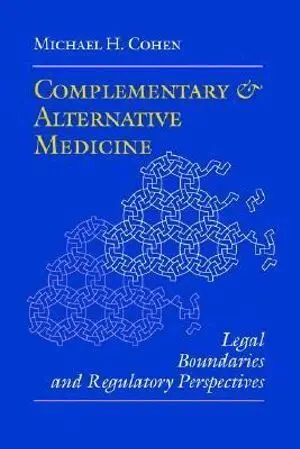
    Complementary and Alternative Medicine

    Legal Boundaries and Regulatory Perspectives

    AvMichael H. Cohen

    Häftad, Engelska, 1998

    406 kr

    Beställningsvara. Skickas inom 5-8 vardagar. Fri frakt över 249 kr.

    Beskrivning

    A third of all Americans use complementary and alternative medicine-including chiropractic, acupuncture, homeopathy, naturopathy, nutritional and herbal treatments, and massage therapy-even when their insurance does not cover it and they have to pay for such treatments themselves. Nearly a third of U.S. medical schools offer courses on complementary and alternative therapies. Congress has created an Office of Alternative Medicine within the National Institutes of Health, and federal and state lawmakers have introduced legislation authorizing widespread use of such therapies. These institutional and legislative developments, argues Michael H. Cohen, express a paradigm shift to a broader, more inclusive vision of health care than conventional medicine admits. Cohen explores the legal issues that health care providers (both conventional and alternative), institutions, and regulators confront as they contemplate integrating complementary and alternative medicine into mainstream U.S. health care.Challenging traditional ways of thinking about health, disease, and the role of law in regulating health, Cohen begins by defining complementary and alternative medicine and then places the regulation of orthodox and alternative health care in historical context. He next examines the legal ramifications of complementary and alternative medicine, including state medical licensing laws, legislative limitations on authorized practice, malpractice liability, food and drug laws, professional disciplinary issues, and third-party reimbursement. The final chapter provides a framework for thinking about the possible evolution of the regulatory structure. This book is the first to set forth the emerging moral and legal authority on which the safe and effective practice of alternative health care can rest. It further suggests how regulatory structures might develop to support a comprehensive, holistic, and balanced approach to health, one that permits integration of orthodox medicine with complementary and alternative medicine, while continuing to protect patients from fraudulent and dangerous treatments.

    Produktinformation

    • Utgivningsdatum:1998-03-30
    • Mått:152 x 229 x 11 mm
    • Vikt:318 g
    • Format:Häftad
    • Språk:Engelska
    • Antal sidor:200
    • Förlag:Johns Hopkins University Press
    • ISBN:9780801856891

    Utforska kategorier

    • Juridik tillämpad på andra yrken inom Juridik
    • Socialrätt och hälso- och sjukvårdsrätt inom Juridik
    • Alternativ medicin och terapier inom Medicin

    Mer om författaren

    Michael H. Cohen, Esq., is Assistant Clinical Professor of Medicine at Harvard Medical School and Principal in the Law Offices of Michael H. Cohen.

    Recensioner i media

    A must read for alternative/complementary advocates, consumers, and practitioners who want a better regulatory framework and better health care."--Rep. Peter DeFazio, Oregon "This outstanding recommended resource--nearly one-third of the text is devoted to case law and references--belongs on the library shelf of anyone thinking about or involved in health care."--Rena J. Gordon, University of Arizona "A provocative, pioneering, and timely contribution to the future of health care and medical regulation. Professor Cohen provides an original and authoritative synthesis of current regulatory and medical thinking regarding complementary and alternative medicine, together with a comprehensive framework for the evolution of regulatory authority governing alternative treatments and providers. Future discussions by clinical and research professionals in health care law and policy will find this authoritative text to be indispensable."--Kenneth R. Pelletier, Ph.D., M.D. (h.c.), Stanford University School of Medicine

    Innehållsförteckning

    • Preface and AcknowledgmentsPart I: Biomedicine and Holistic Healing Chapter 1. The Biomedical ParadigmChapter 2. The Holistic Healing ParadigmChapter 3. Holism and MechanismChapter 4. The Use of Holistic TherapiesChapter 5. Scientific Substantiation and Methodological IssuesChapter 6. An Integrated Health Care SystemPart II: Biomedical Regulation in Historical ContextChapter 7. The Emergence of LicensingChapter 8. The Development of the Biomedical CommunityChapter 9. The Response of the Regulatory ParadigmPart III: State Law Regulation of MedicineChapter 10. The Police Power RationaleChapter 11. Legal Definitions of the Practice of MedicineChapter 12. Unauthorized Professional PracticePart IV: Scope-of-Practice LimitationsChapter 13. Licensing of Complementary and Alternative ProvidersChapter 14. Legislatively Authorized Boundaries of PracticeChapter 15. Scope of Practice: The Case of ChiropracticChapter 16. Addressing Scope-of-Practice RisksPart V: Malpractice and Vicarious LiabilityChapter 17. Physicians' Malpractice Liability Chapter 18. Malpractice by Complementary and Alternative ProvidersChapter 19. Malpractice Liability of Health Care InstitutionsPart VI: Access to TreatmentsChapter 20. Treatments Requiring New Drug ApprovalChapter 21. Nutritional TherapiesChapter 22. Dietary Supplements and Health ChainsChapter 23. Health Care FreedomPart VII: Discipline and SanctionChapter 24. The Disciplinary ProcessChapter 25. State Medical Freedom ActsPart VIII: Third-Party ReimbursementChapter 26. Voluntary and Mandated CoverageChapter 27. Selected Exclusions and Coverage IssuesChapter 28. Health Care Fraud and Insurance FraudPart IX: The Evolution of Legal AuthorityChapter 29. Professional Licensure and Scope of PracticeChapter 30. Malpractice and Professional DisciplineChapter 31. Fraud and Health Care FreedomChapter 32. Integral Health CareChapter 33. ConclusionNotesIndex