• Fri frakt över 249 kr
  • •
  • Snabba leveranser
  • •
  • Billiga böcker
Kundservice

Du är på sajten för privatpersoner.

Företag, bibliotek eller offentlig verksamhet?

Du handlar på classic.bokus.com, där alla dina funktioner finns intakta.
Till classic.bokus.com
Bokus logotyp. Gå till startsidan.
  • Erbjudanden
  • Nyheter
  • Student
  • Topplistor
  • Barn & ungdom
  • Bokus Play
  • E-böcker
  • Pocketböcker
  • Spel & pussel

10% rabatt på allt med kod: NYSTART10 →

Sidfot

Mina sidor

    Hjälp

    • Kundservice
    • Vanliga frågor och svar
    • Frakt och leverans
    • Retur vid ångerrätt
    • Reklamera vara
    • Betalning
    • Köpvillkor
    • Allmänna villkor
    • Information om webbplatsens tillgänglighet

    Om Bokus

    • Om oss
    • Pressrum
    • För studenter
    • För företag
    • För bibliotek och offentlig verksamhet
    • För leverantörer
    • Hållbarhet

    Populärt

    • Aktuella erbjudanden
    • Presentkort
    • Studentlitteratur
    • Nya böcker
    • Topplistor
    • Signerade böcker
    • Engelska böcker

    Inspiration

    • Boktips
    • BookTok
    • Populära bokserier
    • Barnbokskaraktärer
    • Populära författare
    Logotyp för Bokus
    Följ oss på Facebook (extern länk)Följ oss på Instagram (extern länk)Följ oss på YouTube (extern länk)Följ oss på TikTok (extern länk)
    bokus @ CookiesAnpassa cookiesIntegritetspolicyKöpvillkor
    Till Citymail hemsida (extern länk)Till Budbee hemsida (extern länk)Till Postnord hemsida (extern länk)Till Schenker hemsida (extern länk)Till Early Bird hemsida (extern länk)Till Walleys hemsida (extern länk)
    1. Samhälle och politik
    2. Politik och statsskick
    3. Internationella relationer

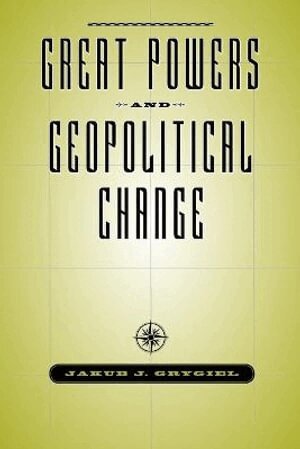
    Great Powers and Geopolitical Change

    AvJakub J. Grygiel

    Inbunden, Engelska, 2007

    522 kr

    Tillfälligt slut

    Fler format och utgåvor

    Häftad

    398 kr

    Beskrivning

    In an era of high technology and instant communication, the role of geography in the formation of strategy and politics in international relations can be undervalued. But the mountains of Afghanistan and the scorching sand storms of Iraq have provided stark reminders that geographical rea lities continue to have a profound impact on the success of military campaigns. Here, political scientist Jakub J. Grygiel brings to light the importance of incorporating geography into grand strategy. He argues that states can increase and maintain their position of power by pursuing a geostrategy that focuses on control of resources and lines of communication. Grygiel examines case studies of Venice, the Ottoman Empire, and China in the global fifteenth century-all great powers that faced a dramatic change in geopolitics when new routes and continents were discovered. The location of resources, the layout of trade networks, and the stability of state boundaries played a large role in the success or failure of these three powers.Grygiel asserts that, though many other aspects of foreign policy have changed throughout history, strategic response to geographical features remains one of the most salient factors in establishing and maintaining power in the international arena.
    Produktinformation

    • Utgivningsdatum:2007-03-29
    • Mått:152 x 229 x 23 mm
    • Vikt:522 g
    • Format:Inbunden
    • Språk:Engelska
    • Förlag:Johns Hopkins University Press
    • ISBN:9780801884801

    Utforska kategorier

    • Internationella relationer inom Samhälle och politik

    Mer om författaren

    Jakub J. Grygiel is an associate professor and the George H. W. Bush Chair of International Affairs at the Paul H. Nitze School of Advanced International Studies of the Johns Hopkins University.

    Recensioner i media

    This interesting book examines the strategic structure of the empires of Venice, the Ottomans, and Ming China from the eleventh to the sixteenth centuries... Grygiel's provocative volume will initiate many debates. -- Brian W. Blouet Geographical Review 2007 A must-read for anyone interested in international relations in general and geopolitics in particular. -- John P. Vanzo International Studies Review 2007 Grygiel's short but informative study serves as testament to the fact that today, no serious work of political theory can ignore the perspective of the longue duree, and even more specifically, the historical experience of non-Western regions and states. -- Boris Stremlin Journal of World-Systems Research 2008 He makes a very compelling case that geography, geopolitics, and geostrategy are relevant factors in the rise and decline of great powers, past, present, and future... Great Powers and Geopolitical Change is a book that I believe deserves the attention of policymakers and scholars alike. -- Randall L. Schweller Perspectives on Politics 2009 According to Grygiel, a country's strategic response to geography remains one of the most salient factors in establishing and maintaining power in the international arena. -- Geoffrey Sloan Foreign Affairs 2009
    Innehållsförteckning

    • AcknowledgmentsIntroduction1. The Premature Death of Geography2. Geography, Geopolitics, and Geostrategy3. The Geopolitical Change of the Sixteenth Century4. The Geostrategy of Venice (1000–1600)5. The Geostrategy of the Ottoman Empire (1300–1699)6. The Geostrategy of Ming China (1364–1644)7. Lessons for the United StatesNotesBibliographyIndex