• Fri frakt över 249 kr
  • •
  • Snabba leveranser
  • •
  • Billiga böcker
Kundservice

Du är på sajten för privatpersoner.

Företag, bibliotek eller offentlig verksamhet?

Du handlar på classic.bokus.com, där alla dina funktioner finns intakta.
Till classic.bokus.com
Bokus logotyp. Gå till startsidan.
  • Erbjudanden
  • Nyheter
  • Student
  • Topplistor
  • Barn & ungdom
  • Bokus Play
  • E-böcker
  • Pocketböcker
  • Spel & pussel

10% rabatt på allt med kod: NYSTART10 →

Sidfot

Mina sidor

    Hjälp

    • Kundservice
    • Vanliga frågor och svar
    • Frakt och leverans
    • Retur vid ångerrätt
    • Reklamera vara
    • Betalning
    • Köpvillkor
    • Allmänna villkor
    • Information om webbplatsens tillgänglighet

    Om Bokus

    • Om oss
    • Pressrum
    • För studenter
    • För företag
    • För bibliotek och offentlig verksamhet
    • För leverantörer
    • Hållbarhet

    Populärt

    • Aktuella erbjudanden
    • Presentkort
    • Studentlitteratur
    • Nya böcker
    • Topplistor
    • Signerade böcker
    • Engelska böcker

    Inspiration

    • Boktips
    • BookTok
    • Populära bokserier
    • Barnbokskaraktärer
    • Populära författare
    Logotyp för Bokus
    Följ oss på Facebook (extern länk)Följ oss på Instagram (extern länk)Följ oss på YouTube (extern länk)Följ oss på TikTok (extern länk)
    bokus @ CookiesAnpassa cookiesIntegritetspolicyKöpvillkor
    Till Citymail hemsida (extern länk)Till Budbee hemsida (extern länk)Till Postnord hemsida (extern länk)Till Schenker hemsida (extern länk)Till Early Bird hemsida (extern länk)Till Walleys hemsida (extern länk)
    1. Psykologi och pedagogik
    2. Psykologi
    3. Psykologiska teorier och skolor

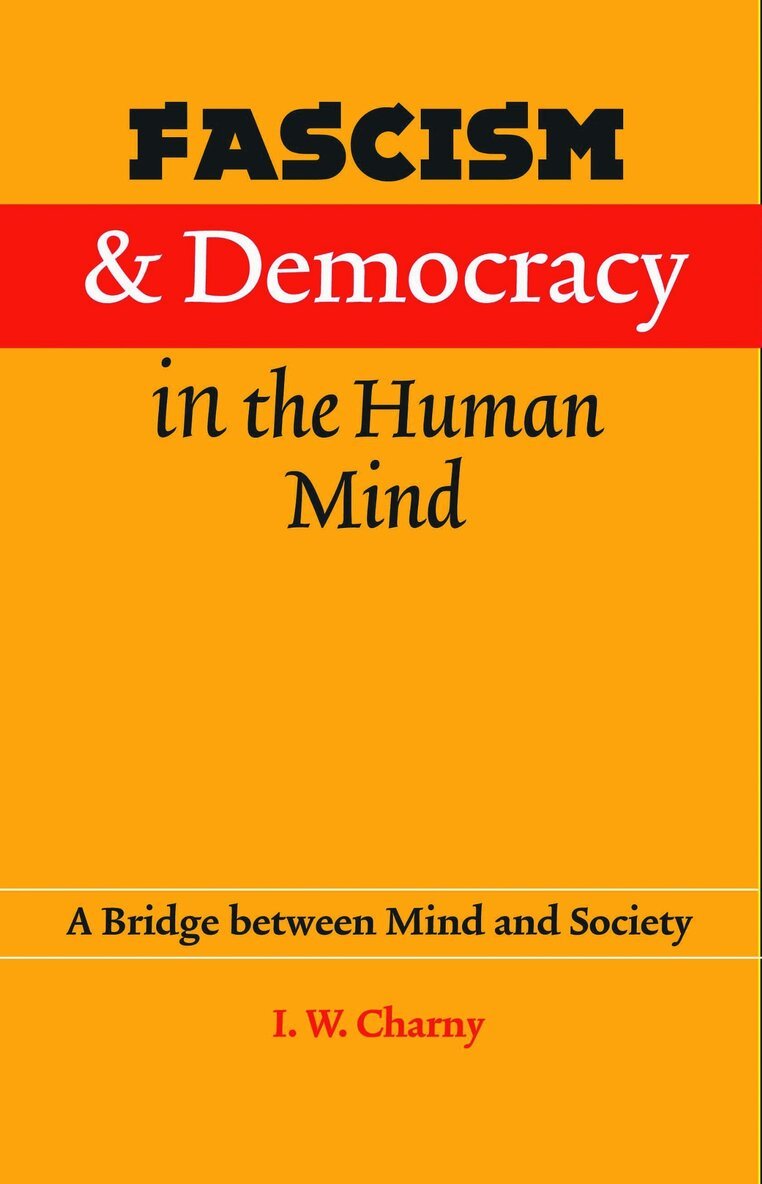
    Fascism and Democracy in the Human Mind

    A Bridge Between Mind and Society

    AvIsrael W. Charny

    Inbunden, Engelska, 2006

    438 kr

    Beställningsvara. Skickas inom 10-15 vardagar. Fri frakt över 249 kr.

    Fler format och utgåvor

    Häftad

    317 kr

    Beskrivning

    What might you have done if you had been caught up in the Holocaust? In My Lai? In Rwanda? Confronted with acts of violence and evil on scales grand and small, we ask ourselves, baffled, how such horrors can happen—how human beings seemingly like ourselves can commit such atrocities. The answer, I. W. Charny suggests in this important new work, may be found in each one of us, in the different and distinct ways in which we organize our minds. An internationally recognized scholar of the psychology of violence, Charny defines two paradigms of mental organization, the democratic and the fascist, and shows how these systems can determine behavior in intimate relationships, social situations, and events of global significance. With its novel conception of mental health and illness, this book develops new directions for diagnosis and treatment of emotional disorders that are played out in everyday acts of violence against ourselves and others. Fascism and Democracy in the Human Mind also offers much-needed insight into the sources and workings of terrorism and genocide. A sane, radical statement about the guiding principles underlying acts of violence and evil, this book sounds a passionate call for the democratic way of thinking, which recognizes complexity, embraces responsibility, and affirms life.

    Produktinformation

    • Utgivningsdatum:2006-07-01
    • Mått:161 x 230 x 40 mm
    • Vikt:885 g
    • Format:Inbunden
    • Språk:Engelska
    • Antal sidor:476
    • Förlag:University of Nebraska Press
    • ISBN:9780803215504

    Utforska kategorier

    • Psykologiska teorier och skolor inom Psykologi och pedagogik

    Mer om författaren

    I. W. Charny is the editor in chief of the Encyclopedia of Genocide and the executive director of the Institute on the Holocaust and Genocide in Jerusalem. A practicing clinical psychologist and family therapist, he is a professor of psychology and family therapy at Hebrew University of Jerusalem.

    Recensioner i media

    "Charny's understanding that fascism and democracy are not just political systems, but psychological states or forces gives us powerful tools for a holistic approach to fighting much that is evil. Charny's theory gives us a way of understanding that we are all on a continuum, from Hitler as perhaps the purest example of a mind given over entirely to 'totalitarianism,' to those who enact a 'democratic' life. As many of us are, I am certainly far from the 'democratic' ideal, but struggling toward it."-Henry Theriault, an associate professor of philosophy and coordinator of the Center for the Study of Human Rights at Worcester State College in Massachusetts -- Henry Theriault "Charny suggests new principles and approaches for individual and family therapy as well as for reducing the danger of future war, genocide, and terrorism. This is a hopeful and useful book, despite also being a wakeup call, insofar as it demonstrates how deeply-rooted the fascist mentality can become in individuals and societies."-Eric Markusen, a sociologist and the coauthor of The Genocidal Mentality: Nazi Holocaust and Nuclear Threat -- Eric Markusen "Momentous... [This is] the most innovative piece of scholarship I have ever read. Fascism and Democracy in the Human Mind is extremely timely and it offers suggestions about ways to go forward in conflict resolution at the societal, family, and individual levels. I know of no other books in psychology or Holocaust and genocide studies that have linked societal and individual processes in as innovative a way as this book does."-Robert K. Hitchcock, an anthropologist and coeditor of Endangered Peoples of Africa and the Middle East: Struggles to Survive and Thrive -- Robert K. Hitchcock "Charny argues persuasively that fascism and democracy are not only political systems but ways of organizing the mind. His book builds a convincing link between societal evil and the mind of the individual perpetrator... [This is] one of the most important books of this decade."-Douglas H. Sprenkle, a professor of marriage and family therapy and the author of Effectiveness Research in Marriage and Family Therapy -- Douglas H. Sprenkle "To read Fascism and Democracy in the Human Mind is to embark on a journey into one's own mind and, at the same time, into the human collectivity. The work asks us to reflect on who we are as individuals and as global citizens. By explicitly linking micro and macro structures and processes-whether internal and psychological, or external and political-Israel Charney has rendered a work of extraordinary importance... Charny writes in an accessible, engaging style, and this book's appeal will extend far beyond the many academic disciplines to which it relates."-Nicholas Robins, Journal of Genocide Research -- Nicholas Robins Journal of Genocide Research

    Innehållsförteckning

    • Chapter 1 - What is the Original 'Mind Software' We Humans Receive at the 'Factory'? We Start from a Weakminded, Rigid, and in Effect Fascist Mind Position and then Need to Grow Up, but Do We?; Chapter 2 - The Choice between Fascist Mind and Democratic Mind: What Chance do We have of Changing our "FASCIST MINDS" to "DEMOCRATIC MINDS"?; Chapter 3 - The Fascist Believer: Totality, Overcertainty, and Suppression of Information; Chapter 4 - The Fascist Slave: Obedience, Conformity, and Intolerance of Dissent; Chapter 5 - The Fascist Fist: Superiority, Excessive Power, and Violence Against Self and Others; Chapter 6 - The Fascist Denier: 'I Never Did Any Harm' - Denials of Doing Harm to Oneself or To Others; Chapter 7 - DEMOCRATIC MIND as the Healthy Alternative To FASCIST MIND: The Joy of Life Process and Opportunity; Chapter 8 - Psychotherapy as Anti-Fascism and Training for Democracy: The Psychotherapy Room as a Dedicated Experience in Democracy; Chapter 9 - Discovering Applications of DEMOCRATIC MIND in Everyday Life: How to Use our Minds Safely, Wholesomely and Creatively; Chapter 10 - A Unified Theory of DEMOCRATIC MIND in the Self, Family and Society: A Vision of More Decent Human Beings who do Less Harm to Themselves and Others; ClosingThe Care and Maintenance of the Bridge between Mind and Society: The Privilege and Responsibility of Working to Achieve Democratic Minds and Societies