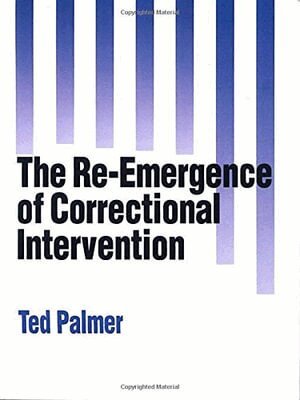
Häftad, Engelska, 1992
The Re-Emergence of Correctional Intervention
Av Ted Palmer
1529 kr
Beställningsvara. Skickas inom 3-6 vardagar. Fri frakt över 249 kr.
Beskrivning
Ted Palmer gives particular attention to the development of 'intensive supervision' in probation and after care, and sets out an agenda for the future. . . . He offers a developmental stages perspective for work with juveniles which should address changes to the offender and/or changes to the offenders' life circumstances. --LCCJ Newsletter Looking back to successful intervention programs of the 1970s--programs based on skill-development methods, control/surveillance techniques, psychologically oriented programs, and combinations of these procedures--Ted Palmer strongly supports such correctional intervention programs through an analysis of several recent studies, including his own. He evaluates the research to date on rehabilitation and describes the role--past, present, and future--of rehabilitation/habilitation within the context of other corrrectional modalities, including the justice model philosophy. He also presents an intervention framework and a related theoretical structure that can assist in program development, intervention planning for offenders, and understanding and evaluating change-processes. This timely volume will inspire passionate debate in the coming decade for practitioners, academics, and students alike in criminology. "Palmer, a recognized scholar of correctional practice and policy, answers critics of treatment and addresses the current emphasis on punishment as the sole disposition of offenders by assembling evidence supporting growth-centered (habilitation) intervention for juveniles and adults. Reviewing the past 15 years of evaluation of correctional intervention, he has identified key intervention elements, connections, and community/offender outcomes. . . . The concluding chapter is an extremely valuable investigation into offender intervention programs in which Palmer assesses prospects for change and effectiveness. Excellent bibliography. Undergraduate; graduate; faculty; professional." --Choice "Integrates several important components of the development correctional treatment policy: 1) the political/historical development of correctional treatment policy; 2) evolution of the debate on treatment effectiveness; 3) the methodology of treatment evaluation; 4) improved knowledge of recommendations for future programming and evaluation efforts. Since it interweaves numerous areas of expertise, such as psychology, research, and policy analysis, it is a unique contribution. It is this multifaceted approach to the topic which is sorely needed. To date, I have required readings on theory and policy, but I have provided and have required students to do the integrating. Palmer's book will be a valuable addition to this course. Furthermore, there is a growing group of planners, administrators, policy analysts, researchers, and scholars in the area of correctional treatment who would benefit from and be interested in Palmer's book. Again, the integration of theory, policy, and research offers a crucial resource to such an audience. This is a book that will be heavily cited in the years to come. . . . The analysis is brilliant. Added to the fact that Palmer already has a stellar reputation in this field, it is likely to become a benchmark publication." --Pat Van Voorhis, University of Cincinnati
Produktinformation
- Utgivningsdatum: 1992-05-13
- Mått: 140 x 216 x 15 mm
- Vikt: 340 g
- Format: Häftad
- Språk: Engelska
- Antal sidor: 234
- Upplaga: 1
- Förlag: SAGE Publications
- ISBN: 9780803945388
Utforska kategorier
Betyg & recensioner
0 recensioner
Inga recensioner tillgängliga.