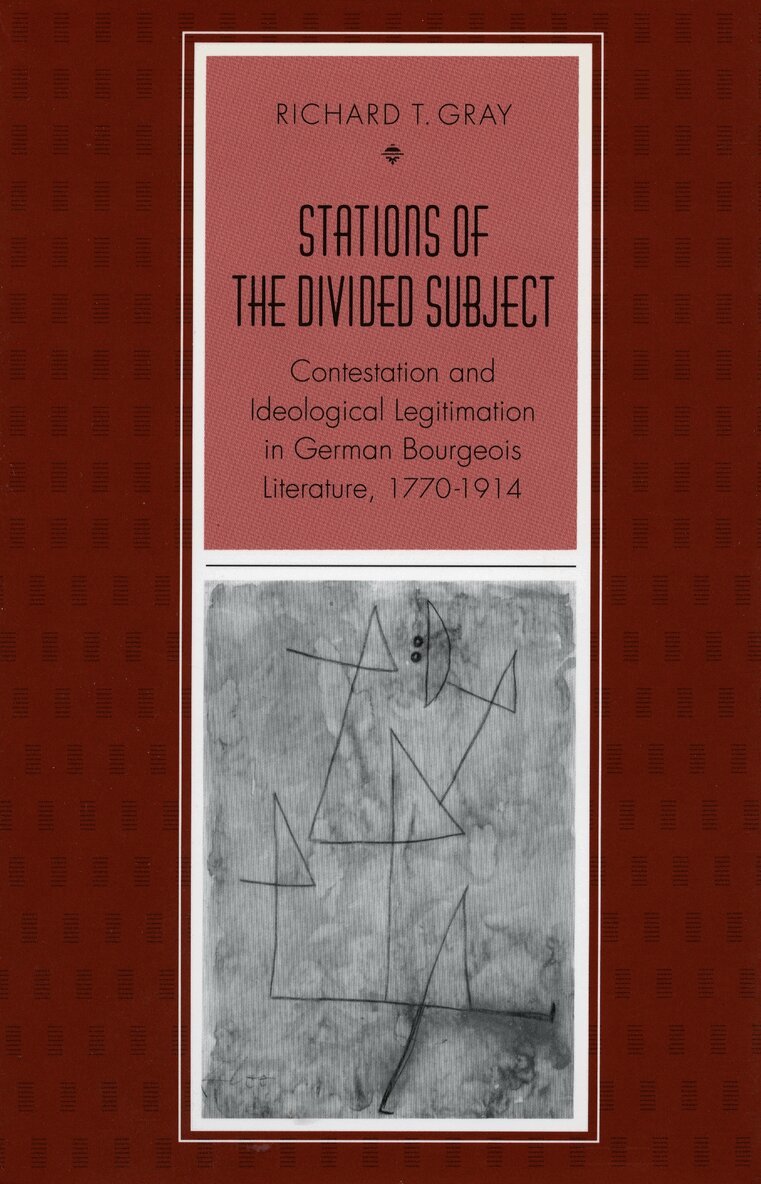
"This fine book is a cohesive and comprehensive argument regarding the vicissitudes of German culture from the Enlightenment to the First World War, notably the tension between art and politics."—Russell A. Berman, Stanford University
Innehållsförteckning
Introduction: divided subjectivity and the internal dialectic of bourgeois literature; Part I. Repression and the Ideological Construction of Bourgeois Subjectivity; 1. Picturing Emilia: conflict of representations and the tragedy of bourgeois subjectivity in Gotthold Ephraim Lessing's Emilia Galotti; 2. Righting writing: semiotic conflict, hermeneutical disjunction, and the subl(im)ation of revolt in Friedrich Schiller's The Robbers; Part II. Literature as Therapy for Divided Subjects; 3. Freelancing: Heinrich Heine'sIdeas. The Book Le Grand and literature between service and servitude; 4. Carnivalization, spectatorship, and the critique of enlightenment in Georg Buchner's Woyzeck; Part III. The Return of the Political Repressed and The Aporia of The Bourgeois Subject; 5. The hermeneut(r)ic(k) of the psychic narrative: Freud's 'Uncanny' and the political unconscious in Hugo von Hofmannsthal's A Tale of the Cavalry; 6. Infinite commerce: the aporia of bourgeois subjectivity in Franz Kafka's The Judgem ent.