• Fri frakt över 249 kr
  • •
  • Snabba leveranser
  • •
  • Billiga böcker
Kundservice

Du är på sajten för privatpersoner.

Företag, bibliotek eller offentlig verksamhet?

Du handlar på classic.bokus.com, där alla dina funktioner finns intakta.
Till classic.bokus.com
Bokus logotyp. Gå till startsidan.
  • Erbjudanden
  • Student
  • Topplistor
  • Barn & ungdom
  • Bokus Play
  • E-böcker
  • Ljudböcker
  • Pocketböcker
  • Spel och pussel

5% studentrabatt – använd koden KURSBOK27 →

Sidfot

Mina sidor

    Hjälp

    • Kundservice
    • Vanliga frågor och svar
    • Frakt och leverans
    • Retur vid ångerrätt
    • Reklamera vara
    • Betalning
    • Köpvillkor
    • Allmänna villkor
    • Information om webbplatsens tillgänglighet

    Om Bokus

    • Om oss
    • Pressrum
    • För studenter
    • För företag
    • För bibliotek och offentlig verksamhet
    • För leverantörer
    • Hållbarhet

    Populärt

    • Aktuella erbjudanden
    • Presentkort
    • Studentlitteratur
    • Nya böcker
    • Topplistor
    • Signerade böcker
    • Engelska böcker

    Inspiration

    • Boktips
    • BookTok
    • Barnbokskaraktärer
    • Populära författare
    Logotyp för Bokus
    Följ oss på Facebook (extern länk)Följ oss på Instagram (extern länk)Följ oss på YouTube (extern länk)Följ oss på TikTok (extern länk)
    bokus @ CookiesAnpassa cookiesIntegritetspolicyKöpvillkor
    Till Citymail hemsida (extern länk)Till Budbee hemsida (extern länk)Till Postnord hemsida (extern länk)Till Schenker hemsida (extern länk)Till Early Bird hemsida (extern länk)Till Walleys hemsida (extern länk)
    1. Filosofi och religion
    2. Filosofi
    3. Filosofiska discipliner

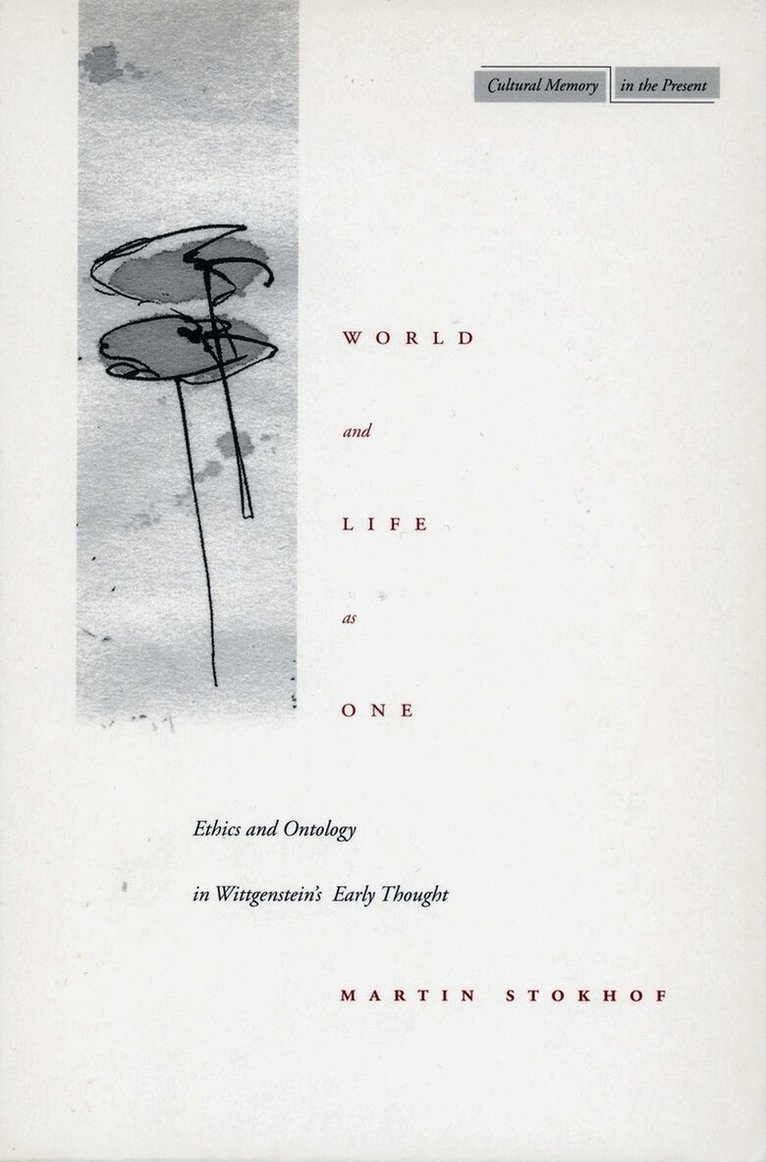
    World and Life As One

    Ethics and Ontology in Wittgenstein's Early Thought

    AvMartin Stokhof

    Inbunden, Engelska, 2002

    Del i serien Cultural Memory in the Present

    1 443 kr

    Beställningsvara. Skickas inom 10-15 vardagar. Fri frakt över 249 kr.

    Fler format och utgåvor

    Häftad

    334 kr

    E-bok

    14 kr

    Beskrivning

    This book explores in detail the relation between ontology and ethics in the early work of Ludwig Wittgenstein, notably the Tractatus Logico-Philosophicus and, to a lesser extent, the Notebooks 1914-1916. Self-contained and requiring no prior knowledge of Wittgenstein's thought, it is the first book-length argument that his views on ethics decisively shaped his ontological and semantic thought. The book's main thesis is twofold. It argues that the ontological theory of the Tractatus is fundamentally dependent on its logical and linguistic doctrines: the tractarian world is the world as it appears in language and thought. It also maintains that this interpretation of the ontology of the Tractatus can be argued for not only on systematic grounds, but also via the contents of the ethical theory that it offers. Wittgenstein's views on ethics presuppose that language and thought are but one way in which we interact with reality.Although detailed studies of Wittgenstein's ontology and ethics exist, this book is the first thorough investigation of the relationship between them. As an introduction to Wittgenstein, it sheds new light on an important aspect of his early thought.

    Produktinformation

    • Utgivningsdatum:2002-08-07
    • Mått:152 x 229 x 28 mm
    • Vikt:703 g
    • Format:Inbunden
    • Språk:Engelska
    • Serie:Cultural Memory in the Present
    • Antal sidor:352
    • Förlag:Stanford University Press
    • ISBN:9780804742214

    Utforska kategorier

    • Filosofiska discipliner inom Filosofi och religion

    Mer om författaren

    Martin Stokhof is Professor of the Philosophy of Language and Scientific Director of the Institute for Logic, Language, and Communication at the University of Amsterdam. He is a co-author of Logic, Language, and Meaning, Volumes 1 and 2, and a textbook (in Dutch) on the philosophy of language.

    Recensioner i media

    "This is an outstanding book. Owing to its broad and balanced scope, I know of no better book on the Tractatus. It is unique in covering in depth both the ontological-technical aspects and the ethical parts of that work."—Göran Sundholm, Leyden University