• Fri frakt över 249 kr
  • •
  • Snabba leveranser
  • •
  • Billiga böcker
Kundservice

Du är på sajten för privatpersoner.

Företag, bibliotek eller offentlig verksamhet?

Du handlar på classic.bokus.com, där alla dina funktioner finns intakta.
Till classic.bokus.com
Bokus logotyp. Gå till startsidan.
  • Erbjudanden
  • Nyheter
  • Student
  • Topplistor
  • Barn & ungdom
  • Bokus Play
  • E-böcker
  • Pocketböcker
  • Spel & pussel

10% rabatt på allt med kod NYSTART10 →

Sidfot

Mina sidor

    Hjälp

    • Kundservice
    • Vanliga frågor och svar
    • Frakt och leverans
    • Retur vid ångerrätt
    • Reklamera vara
    • Betalning
    • Köpvillkor
    • Allmänna villkor
    • Information om webbplatsens tillgänglighet

    Om Bokus

    • Om oss
    • Pressrum
    • För studenter
    • För företag
    • För bibliotek och offentlig verksamhet
    • För leverantörer
    • Hållbarhet

    Populärt

    • Aktuella erbjudanden
    • Presentkort
    • Studentlitteratur
    • Nya böcker
    • Topplistor
    • Signerade böcker
    • Engelska böcker

    Inspiration

    • Boktips
    • BookTok
    • Populära bokserier
    • Barnbokskaraktärer
    • Populära författare
    Logotyp för Bokus
    Följ oss på Facebook (extern länk)Följ oss på Instagram (extern länk)Följ oss på YouTube (extern länk)Följ oss på TikTok (extern länk)
    bokus @ CookiesAnpassa cookiesIntegritetspolicyKöpvillkor
    Till Citymail hemsida (extern länk)Till Budbee hemsida (extern länk)Till Postnord hemsida (extern länk)Till Schenker hemsida (extern länk)Till Early Bird hemsida (extern länk)Till Walleys hemsida (extern länk)
    1. Samhälle och politik
    2. Krig och försvar
    3. Vapen och utrustning
    4. Kärnvapen

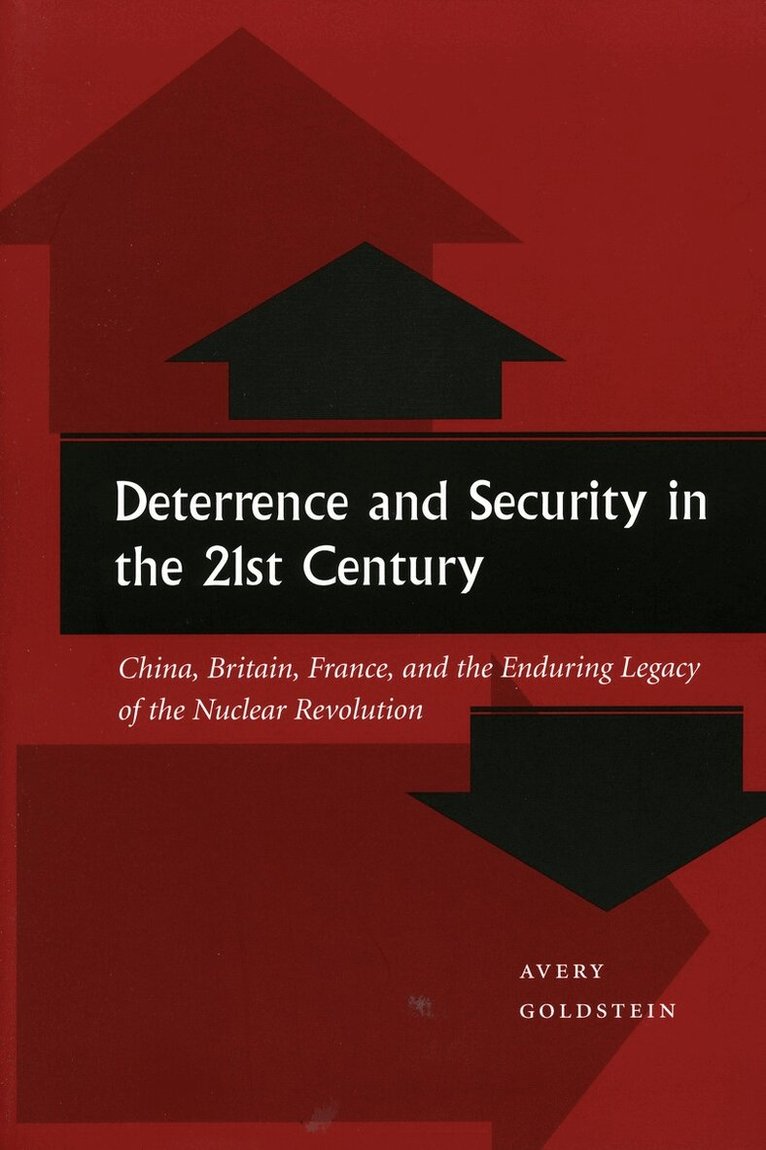
    Deterrence and Security in the 21st Century

    China, Britain, France, and the Enduring Legacy of the Nuclear Revolution

    AvAvery Goldstein

    Häftad, Engelska, 2007

    377 kr

    Beställningsvara. Skickas inom 5-8 vardagar. Fri frakt över 249 kr.

    Beskrivning

    Much recent writing about international politics understandably highlights the many changes that have followed from the collapse of the Soviet Union and the end of the Cold War. This book, by contrast, analyzes an important continuity that, the author argues, will characterize international strategic affairs well into the new century: nuclear deterrence will remain at the core of the security policies of the world's great powers and will continue to be an attractive option for many less powerful states worried about adversaries whose capabilities they cannot match.The central role of nuclear deterrence persists despite the advent of a new international system in which serious military threats are no longer obvious, the use of force is judged irrelevant to resolving most international disputes, and states' interests are increasingly defined in economic rather than military terms. Indeed, the author suggests why these changes may increase the appeal of nuclear deterrence in the coming decades.Beginning with a reconsideration of nuclear deterrence theory, the book takes issue with the usual emphasis on the need for invulnerable retaliatory forces and threats that leaders can rationally choose to carry out. The author explains why states, including badly outgunned states, can rely on nuclear deterrent strategies despite the difficulty they may face in deploying invulnerable forces and despite the implausibility of rationally carrying out their threats of retaliation. In the subsequent empirical analysis that examines the security policies of China, Britain, and France and taps recently declassified documents, the author suggests that the misleading standard view of what is often termed rational deterrence theory may well reflect the experience, or at least aspirations, of the Cold War superpowers more than the logic of deterrence itself. Case studies assessing the nuclear deterrent policies of China, Britain, and France highlight the reasons why their experience, rather than that of the more frequently studied Cold War superpowers, better reflects the strategic and economic factors likely to shape states' security policies in the twenty-first century. The book concludes by drawing out the implications of the author's theoretical and empirical analysis for the future role of nuclear weapons.

    Produktinformation

    • Utgivningsdatum:2007-03-01
    • Mått:152 x 229 x 25 mm
    • Vikt:485 g
    • Format:Häftad
    • Språk:Engelska
    • Antal sidor:368
    • Förlag:Stanford University Press
    • ISBN:9780804746861

    Utforska kategorier

    • Kärnvapen inom Samhälle och politik
    • Internationella relationer inom Samhälle och politik

    Mer om författaren

    Avery Goldstein is Professor of Political Science at the University of Pennsylvania and Director of the East Asia Program, Foreign Policy Research Institute, Philadelphia.

    Recensioner i media

    "Goldstein's excellent book helps explain why three very different countries—Britain, France, and China—all sought an independent nuclear deterrent despite, and, perhaps, because of their security alliances with nuclear superpowers. This accessible and well-crafted work will be useful not only to diplomatic historians and international relations theorists, but also to policy analysts who are examining why certain relatively weak states are currently pursuing the nuclear option."—Thomas Christensen, Massachusetts Institute of Technology "Avery Goldstein's book, Deterrence and Security in the 21st Century: China, Britain, France, and the Enduring Legacy of the Nuclear Revolution, provides a well-written and historically grounded look at the likely nature of emerging nuclear security relationships. . . . Goldstein's book makes a subtantial contribution to the existing security literature. . . . Goldstein's insights . . . have great applicability for understanding post-Cold War security dynamics and similar patterns shaping the behavior of both new nuclear states and would-be nulcear states"—International Politics "A decade after the end of the cold war, nuclear issues have come to the fore again, but the focus now is much less on superpowers and much more on middle or regional powers. In a subtle combination of theory and empirical cases, Professor Goldstein examines the trade offs confronting states considering the nuclear option. This book is essential reading for anyone studying deterrence theory or nuclear proliferation."—Robert Powell, University of California, Berkeley "This is a semitheoretical survey of the security policies of three middle powers . . . during the last half of the twentieth century, with an argument that their common experiences form a useful template for predicting the future role of nuclear weapons, including proliferation. The three case studies are superbly done." —Political Science Quarterly "This book is welcome for the historical analyses of the smaller nuclear powers. . . ."—American Political Science Review "Deterrence and Security in the 21st Century is a valuable and provocative contribution to the current debate about the future of nuclear deterrence."—Journal of Strategic Studies

    Innehållsförteckning

    • 1. Introduction; 2. Theoretical foundation; 3. China: strategic choices: 4. China: nuclear deterrent; 5. Britain; 6. France; 7. Nuclear weapons states in the post-Cold War world; 8. Legacy of the nuclear revolution for the twenty-first century.