• Fri frakt över 249 kr
  • •
  • Snabba leveranser
  • •
  • Billiga böcker
Kundservice

Du är på sajten för privatpersoner.

Företag, bibliotek eller offentlig verksamhet?

Du handlar på classic.bokus.com, där alla dina funktioner finns intakta.
Till classic.bokus.com
Bokus logotyp. Gå till startsidan.
  • Erbjudanden
  • Nyheter
  • Student
  • Topplistor
  • Barn & ungdom
  • Bokus Play
  • E-böcker
  • Pocketböcker
  • Spel & pussel

10% rabatt på allt med kod: NYSTART10 →

Sidfot

Mina sidor

    Hjälp

    • Kundservice
    • Vanliga frågor och svar
    • Frakt och leverans
    • Retur vid ångerrätt
    • Reklamera vara
    • Betalning
    • Köpvillkor
    • Allmänna villkor
    • Information om webbplatsens tillgänglighet

    Om Bokus

    • Om oss
    • Pressrum
    • För studenter
    • För företag
    • För bibliotek och offentlig verksamhet
    • För leverantörer
    • Hållbarhet

    Populärt

    • Aktuella erbjudanden
    • Presentkort
    • Studentlitteratur
    • Nya böcker
    • Topplistor
    • Signerade böcker
    • Engelska böcker

    Inspiration

    • Boktips
    • BookTok
    • Populära bokserier
    • Barnbokskaraktärer
    • Populära författare
    Logotyp för Bokus
    Följ oss på Facebook (extern länk)Följ oss på Instagram (extern länk)Följ oss på YouTube (extern länk)Följ oss på TikTok (extern länk)
    bokus @ CookiesAnpassa cookiesIntegritetspolicyKöpvillkor
    Till Citymail hemsida (extern länk)Till Budbee hemsida (extern länk)Till Postnord hemsida (extern länk)Till Schenker hemsida (extern länk)Till Early Bird hemsida (extern länk)Till Walleys hemsida (extern länk)
    1. Historia och arkeologi
    2. Historia
    3. Amerikas historia

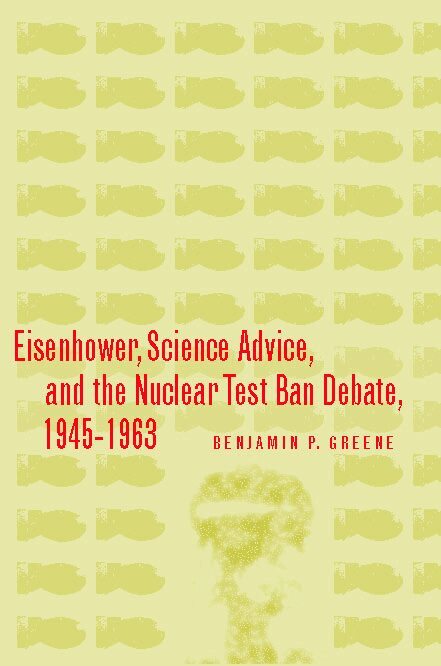
    Eisenhower, Science Advice, and the Nuclear Test-Ban Debate, 1945-1963

    AvBenjamin P. Greene

    Inbunden, Engelska, 2006

    Del i serien Stanford Nuclear Age Series

    1 093 kr

    Beställningsvara. Skickas inom 10-15 vardagar. Fri frakt över 249 kr.

    Beskrivning

    Based on extensive research in government archives and private papers, this book analyzes the secret debate within the Eisenhower administration over the pursuit of a nuclear test-ban agreement. In contrast to much recent scholarship, this study concludes that Eisenhower strongly desired to reach an accord with the Soviet Union and the United Kingdom to cease nuclear weapons testing. For Eisenhower, a test ban would ease Cold War tensions, slow the nuclear arms race, and build confidence toward disarmament; however, he faced continual resistance from his early scientific advisers, most notably Lewis L. Strauss and Edward Teller. Extensive research into previously unavailable government archival sources and collections of private manuscripts reveals the manipulative acts of test-ban opponents and other factors that inhibited Eisenhower's actions throughout his presidency. Meticulously analyzed, these sources underscore Eisenhower's dependence on the counsel of his science advisors, such as Strauss, James R. Killian, and George B. Kistiakowsky, to determine the course he pursued in regard to several components of his national security strategy. In addition to its comprehensive analysis of the test-ban debate, this book makes important contributions to the scholarly literature assessing Eisenhower's leadership and his approach to arms control.

    Produktinformation

    • Utgivningsdatum:2006-10-23
    • Mått:152 x 229 x 11 mm
    • Vikt:454 g
    • Format:Inbunden
    • Språk:Engelska
    • Serie:Stanford Nuclear Age Series
    • Antal sidor:376
    • Förlag:Stanford University Press
    • ISBN:9780804754453

    Utforska kategorier

    • Amerikas historia inom Historia och arkeologi
    • Internationella relationer inom Samhälle och politik

    Mer om författaren

    Benjamin Greene is Assistant Professor of History at Bowling Green State University in Ohio.

    Recensioner i media

    "Greene offers an intriguing argument to explain why the president failed [to negotiate a comprehensive nuclear test-ban treaty with the USSR]. His book is carefully crafted, it is methodologically sound, and it makes a genuine contribution to scholarship on the politics of science and technology in the cold war. Greene's conclusions, however, are bound to be controversial because of what they say not only about science advice but about Eisenhower's control over his own administration." - Technology and Culture "Greene's thoroughly researched and well-written book promotes a clear thesis: The scientists who advised Eisenhower played the 'pivotal role' in shaping his attitudes about the test ban and thus shaped the test-ban debate." - Journal of American History "This is a very valuable study, based on an exhaustive survey of the sources that have become available in the past four decades of what may, or may not, have been an important missed opportunity for a total ban on nuclear testing before 1961." - Parameters "Greene demonstrates thoroughly, in so doing superseding previous scholarship, that Eisenhower personally wanted a test ban." - Journal of Military History "Benjamin P. Greene's monograph is an exemplary study of the interaction of geopolitics, bureaucratic maneuvering, and scientific claims during the Dwight D. Eisenhower administration. The careful research and important arguments of Greene's monograph make it essential reading for historians interested in the Cold War, arms control, nuclear decision making, and the history of science policy." - American Historical Review "Greene's book is a valuable addition to the historical literature on US policy on nuclear weapons and on the role of presidential science advising in the early Cold War period. [Greene] succeeds in making a strong case that Eisenhower was disappointed that he did not achieve a nuclear test-ban treaty during his presidency." - ISIS "Greene provides a major and convincing new interpretation of Eisenhower's efforts, and shows that they were heavily influenced by the scientific advice he received . . . It is strongly recommended to those interested in the history of scientific-political interaction, nuclear research and diplomacy, and of the Eisenhower presidency." - The International History Review "Other scholars have written about science advice in presidential administrations, but Benjamin P. Greene's account is the most thorough on the complicated role of scientists in the ongoing development of Eisenhower's test ban policies." - The Historian

    Innehållsförteckning

    • Table of Contents Preface Abbreviations Introduction Chapter One: Eisenhower and the Atomic Age (1945-1952) Chapter Two: The Dawn of the Thermonuclear Age (1953) Chapter Three: The BRAVO Shot and Rise of the Test-Ban Debate within the International and Scientific Communities (1954-1955) Chapter Four: Fallout from the BRAVO Shot: The Test-Ban Debate within the Eisenhower Administration (1954-1955) Chapter Five: The Election of 1956: A Moratorium on Candor Chapter Six: The Influence of Strauss, the Fall of Stassen, and the Rise of Sputnik (November 1956 - October 1957) Chapter Seven: PSAC, the Test Moratorium, and the Geneva System (October 1957 - August 1958) Chapter Eight: Hard Decisions after HARDTACK II: Stalemate at Geneva (August 1958 - December 1959) Chapter Nine: The Threshold Ban, the Paris Summit, and the Farewell Address (December 1959 - January 1961) Epilogue Conclusion Notes Sources Index