• Fri frakt över 249 kr
  • •
  • Snabba leveranser
  • •
  • Billiga böcker
Kundservice

Du är på sajten för privatpersoner.

Företag, bibliotek eller offentlig verksamhet?

Du handlar på classic.bokus.com, där alla dina funktioner finns intakta.
Till classic.bokus.com
Bokus logotyp. Gå till startsidan.
  • Erbjudanden
  • Nyheter
  • Student
  • Topplistor
  • Barn & ungdom
  • Bokus Play
  • E-böcker
  • Pocketböcker
  • Spel & pussel

10% studentrabatt med kod TERM26

Sidfot

Mina sidor

    Hjälp

    • Kundservice
    • Vanliga frågor och svar
    • Frakt och leverans
    • Retur vid ångerrätt
    • Reklamera vara
    • Betalning
    • Köpvillkor
    • Allmänna villkor
    • Information om webbplatsens tillgänglighet

    Om Bokus

    • Om oss
    • Pressrum
    • För studenter
    • För företag
    • För bibliotek och offentlig verksamhet
    • För leverantörer
    • Hållbarhet

    Populärt

    • Aktuella erbjudanden
    • Presentkort
    • Studentlitteratur
    • Nya böcker
    • Topplistor
    • Signerade böcker
    • Engelska böcker

    Inspiration

    • Boktips
    • BookTok
    • Populära bokserier
    • Barnbokskaraktärer
    • Populära författare
    Logotyp för Bokus
    Följ oss på Facebook (extern länk)Följ oss på Instagram (extern länk)Följ oss på YouTube (extern länk)Följ oss på TikTok (extern länk)
    bokus @ CookiesAnpassa cookiesIntegritetspolicyKöpvillkor
    Till Citymail hemsida (extern länk)Till Budbee hemsida (extern länk)Till Postnord hemsida (extern länk)Till Schenker hemsida (extern länk)Till Early Bird hemsida (extern länk)Till Walleys hemsida (extern länk)
    1. Samhälle och politik
    2. Krig och försvar
    3. Militära operationer

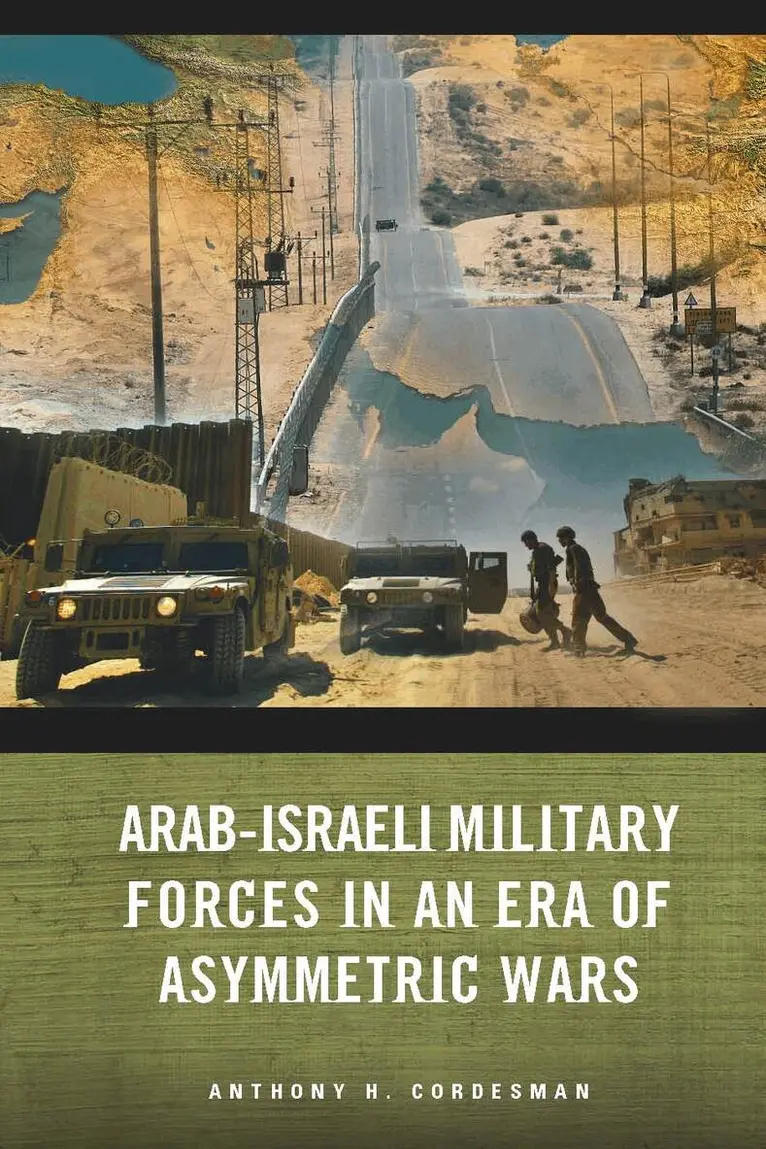
    Arab-Israeli Military Forces in an Era of Asymmetric Wars

    AvAnthony H. Cordesman

    Häftad, Engelska, 2008

    464 kr

    Beställningsvara. Skickas inom 3-6 vardagar. Fri frakt över 249 kr.

    Fler format och utgåvor

    Inbunden

    910 kr

    E-bok

    981 kr

    Beskrivning

    The reality of the Arab-Israeli balance now consists of two subordinate balances: Israel versus Syria and Israel versus the Palestinians. The book analyzes these two balances in detail and their impact on defense planning in each country and on the overall strategic risk to the region as a whole. It covers military developments in each of six states—Egypt, Israel, Jordan, Lebanon, Syria, and Palestine—and provides an analytical view with charts and tables of how the changing natures of the military and political threats faced by each is impacting its military force readiness and development. The book has the most comprehensive data on past, current, and future military force structure currently available, drawn from the widest range of sources. Responding to the most recent of events in the region, this book is the first to deal with the effects on the Arab-Israeli military balance of the strategic uncertainty created by the Iraqi insurgency and the Iranian nuclear program. It also studies how the Gaza pullout, the Syrian withdrawal from Lebanon, the changing political landscape in Israel, and the threat of nuclear proliferation are having impacts on the Egyptian-Israeli and Jordanian-Israeli peace accords and the prospects for a settlement between the Palestinians and Israelis. The roles of Hezbollah, Hamas, and Palestinian Islamic Jihad are analyzed in light of the changing political landscape in both Israel and Palestine. Given the role of Syria in the Palestinian-Israeli affairs, the book also explores the ways that internal instability in Lebanon could escalate into a regional conflict.

    Produktinformation

    • Utgivningsdatum:2008-03-12
    • Mått:155 x 235 x 28 mm
    • Vikt:612 g
    • Format:Häftad
    • Språk:Engelska
    • Antal sidor:432
    • Förlag:Stanford University Press
    • ISBN:9780804759670

    Utforska kategorier

    • Militära operationer inom Samhälle och politik
    • Politik och statsskick inom Samhälle och politik

    Mer om författaren

    Anthony H. Cordesman holds the Arleigh A. Burke Chair in Strategy at the Center for Strategic and International Studies and is an analyst and commentator for ABC News. He has written extensively on energy and Middle East politics, economics, demographics, and security. He has served in a number of senior positions in the U.S. government, including the Department of Energy, and several assignments in the Middle East.

    Recensioner i media

    "This is a valuable reference book for those interested in the Arab-Israeli conflict."—Middle East Studies Association Bulletin "This book contains an exhaustive array of information and graphics on the quantities and types of weapons for ground, air, air defense, naval, and paramilitary forces as well as weapons of mass destruction capabilities in each of the actors at the core of the Arab-Israeli conflict. These actors are the nation-states of Israel, Egypt, Jordan, Syria, and Lebanon, as well as the Palestinians. The comprehensive order-of-battle information is complemented by rich qualitative analysis of the strengths and weaknesses of military and security forces in combat. The book is an important reference work for graduate students, scholars, and practitioners who study Middle East security issues. It is especially recommended for libraries intent on maintaining important reference volumes for the Middle East. Highly recommended. Graduate students, faculty, and practitioners."—Choice "Anthony Cordesman here does what he does best. In his latest of a long series of books on the Middle East, he evaluates the military forces of Israel and its surrounding Arab neighbors with particular emphasis on unconventional warfare, or what is now called asymmetric warfare, meaning war where one side mingles with the civilian population causing moral confusion to the enemy. His book consists of an overview along with a segment for each of the countries involved. His findings are what most of us have already surmised: that in a conventional army-to-army war, Israel will triumph. He gives us detailed proof as to why, and as we learn more about their armies, we get a better understanding of each of the countries....Mr. Cordesman simply reports the facts with masses of corroborating detail and leaves moral judgments to others. We need not ask for more."—The Washington Times