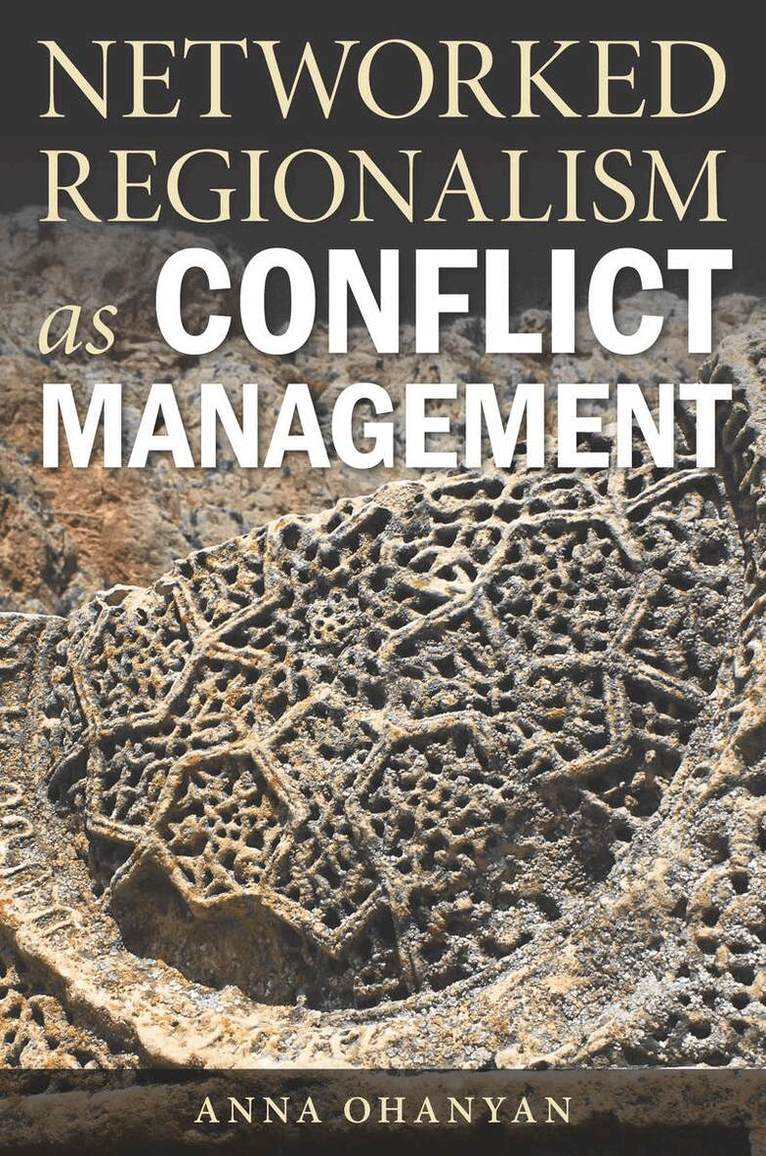
Networked Regionalism As Conflict Management
359 kr
Läs direkt i Bokus Reader – eller ladda ned till din enhet
Du är på sajten för privatpersoner.
359 kr
Läs direkt i Bokus Reader – eller ladda ned till din enhet
Anna Ohanyan is Chair of the Department of Political Science and International Studies at Stonehill College.
"Ohanyan offers an innovative an unique study taht examines the concept of regionalism as it relates to conflict management. Academic theories and mainstream discussions related to regionalism generally rely on the examples of the EU and Association of Southeast Asian nations. The book demonstrates why these theories, such as functionalism, and more general international relations theories are inadequate to explain what the author calls politically divided areas . . . Recommended."—J. R. Clardie, CHOICE "Networked Regionalism as Conflict Management is a breakthrough for conflict resolution audiences. It integrates conflict theory with regionalism theory in a way that makes both more useful. Graduate students will find new lines of research here to pursue and policy makers will find promising paths to follow."—David Matz, Department of Conflict Resolution, Human Security, and Global Governance, University of Massachusetts Boston "This is an exceptional, truly outstanding work. It bridges multiple theories of international relations, draws on the best of each of these, and presents a much-needed new approach to addressing current real world problems. I hope policy-makers will take heed, and further embrace the possibilities of regionalism."—Susan Allen, Director, the Center for Peacemaking Practice, George Mason University "Anna Ohanyan's Networked Regionalism as Conflict Management offers one of the best answers to the criticism that scholarly work on regionalism often lacks practical application. It shows how carefully constructed regionalism can address seemingly intractable conflicts and serve as a crucial building bloc for the regional and global order."—Amitav Acharya, UNESCO Chair in Transnational Challenges and Governance, American University, Washington, D.C.
Du är på sajten för privatpersoner.
359 kr
Läs direkt i Bokus Reader – eller ladda ned till din enhet
Anna Ohanyan is Chair of the Department of Political Science and International Studies at Stonehill College.
"Ohanyan offers an innovative an unique study taht examines the concept of regionalism as it relates to conflict management. Academic theories and mainstream discussions related to regionalism generally rely on the examples of the EU and Association of Southeast Asian nations. The book demonstrates why these theories, such as functionalism, and more general international relations theories are inadequate to explain what the author calls politically divided areas . . . Recommended."—J. R. Clardie, CHOICE "Networked Regionalism as Conflict Management is a breakthrough for conflict resolution audiences. It integrates conflict theory with regionalism theory in a way that makes both more useful. Graduate students will find new lines of research here to pursue and policy makers will find promising paths to follow."—David Matz, Department of Conflict Resolution, Human Security, and Global Governance, University of Massachusetts Boston "This is an exceptional, truly outstanding work. It bridges multiple theories of international relations, draws on the best of each of these, and presents a much-needed new approach to addressing current real world problems. I hope policy-makers will take heed, and further embrace the possibilities of regionalism."—Susan Allen, Director, the Center for Peacemaking Practice, George Mason University "Anna Ohanyan's Networked Regionalism as Conflict Management offers one of the best answers to the criticism that scholarly work on regionalism often lacks practical application. It shows how carefully constructed regionalism can address seemingly intractable conflicts and serve as a crucial building bloc for the regional and global order."—Amitav Acharya, UNESCO Chair in Transnational Challenges and Governance, American University, Washington, D.C.
Du är på sajten för privatpersoner.
359 kr
Läs direkt i Bokus Reader – eller ladda ned till din enhet
Anna Ohanyan is Chair of the Department of Political Science and International Studies at Stonehill College.
"Ohanyan offers an innovative an unique study taht examines the concept of regionalism as it relates to conflict management. Academic theories and mainstream discussions related to regionalism generally rely on the examples of the EU and Association of Southeast Asian nations. The book demonstrates why these theories, such as functionalism, and more general international relations theories are inadequate to explain what the author calls politically divided areas . . . Recommended."—J. R. Clardie, CHOICE "Networked Regionalism as Conflict Management is a breakthrough for conflict resolution audiences. It integrates conflict theory with regionalism theory in a way that makes both more useful. Graduate students will find new lines of research here to pursue and policy makers will find promising paths to follow."—David Matz, Department of Conflict Resolution, Human Security, and Global Governance, University of Massachusetts Boston "This is an exceptional, truly outstanding work. It bridges multiple theories of international relations, draws on the best of each of these, and presents a much-needed new approach to addressing current real world problems. I hope policy-makers will take heed, and further embrace the possibilities of regionalism."—Susan Allen, Director, the Center for Peacemaking Practice, George Mason University "Anna Ohanyan's Networked Regionalism as Conflict Management offers one of the best answers to the criticism that scholarly work on regionalism often lacks practical application. It shows how carefully constructed regionalism can address seemingly intractable conflicts and serve as a crucial building bloc for the regional and global order."—Amitav Acharya, UNESCO Chair in Transnational Challenges and Governance, American University, Washington, D.C.