• Fri frakt över 249 kr
  • •
  • Snabba leveranser
  • •
  • Billiga böcker
Kundservice

Du är på sajten för privatpersoner.

Företag, bibliotek eller offentlig verksamhet?

Du handlar på classic.bokus.com, där alla dina funktioner finns intakta.
Till classic.bokus.com
Bokus logotyp. Gå till startsidan.
  • Erbjudanden
  • Nyheter
  • Student
  • Topplistor
  • Barn & ungdom
  • Bokus Play
  • E-böcker
  • Pocketböcker
  • Spel & pussel

10% studentrabatt med kod TERM26

Sidfot

Mina sidor

    Hjälp

    • Kundservice
    • Vanliga frågor och svar
    • Frakt och leverans
    • Retur vid ångerrätt
    • Reklamera vara
    • Betalning
    • Köpvillkor
    • Allmänna villkor
    • Information om webbplatsens tillgänglighet

    Om Bokus

    • Om oss
    • Pressrum
    • För studenter
    • För företag
    • För bibliotek och offentlig verksamhet
    • För leverantörer
    • Hållbarhet

    Populärt

    • Aktuella erbjudanden
    • Presentkort
    • Studentlitteratur
    • Nya böcker
    • Topplistor
    • Signerade böcker
    • Engelska böcker

    Inspiration

    • Boktips
    • BookTok
    • Populära bokserier
    • Barnbokskaraktärer
    • Populära författare
    Logotyp för Bokus
    Följ oss på Facebook (extern länk)Följ oss på Instagram (extern länk)Följ oss på YouTube (extern länk)Följ oss på TikTok (extern länk)
    bokus @ CookiesAnpassa cookiesIntegritetspolicyKöpvillkor
    Till Citymail hemsida (extern länk)Till Budbee hemsida (extern länk)Till Postnord hemsida (extern länk)Till Schenker hemsida (extern länk)Till Early Bird hemsida (extern länk)Till Walleys hemsida (extern länk)
    1. Historia och arkeologi
    2. Historia
    3. Amerikas historia

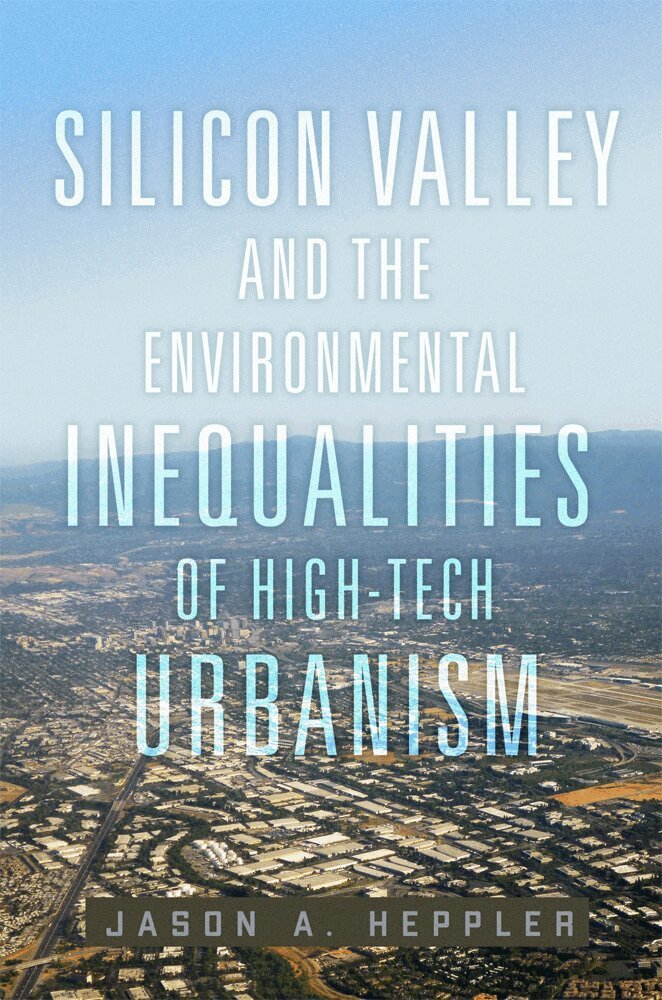
    Silicon Valley and the Environmental Inequalities of High-Tech Urbanism Volume 9

    AvJason A. Heppler

    Inbunden, Engelska, 2024

    Del i serien Environment in Modern North America

    1 037 kr

    Beställningsvara. Skickas inom 10-15 vardagar. Fri frakt över 249 kr.

    Fler format och utgåvor

    Häftad

    336 kr

    Beskrivning

    In the half century after World War II, California’s Santa Clara Valley transformed from a rolling landscape of fields and orchards into the nation’s most consequential high-tech industrial corridor. How Santa Clara Valley became Silicon Valley and came to embody both the triumphs and the failures of a new vision of the American West is the question Jason A. Heppler explores in this book. A revealing look at the significance of nature in social, cultural, and economic conceptions of place, the book is also a case study on the origins of American environmentalism and debates about urban and suburban sustainability.Between 1950 and 1990, business and community leaders pursued a new vision of the landscape stretching from Palo Alto to San Jose—a vision that melded the bucolic naturalism of orchards, pleasant weather, and green spaces with the metropolitan promise of modern industry, government-funded research, and technology. Heppler describes the success of a new, clean, future-facing economy, coupled with a pleasant, green environment, in drawing people to Silicon Valley. And in this overwhelming success, he also locates the rapidly emerging faults created by competing ideas about forming these idyllic communities—specifically, widespread environmental degradation and increasing social stratification. Cities organized around high-tech industries, suburban growth, and urban expansion were, as Heppler shows, crucibles for empowering elites, worsening human health, and spreading pollution.What do “nature” and “place” mean, and who gets to define these terms? Key to Heppler’s work is the idea that these questions reflect and determine what, and who, matters in any conversation about the environment. Silicon Valley and the Environmental Inequalities of High-Tech Urbanism vividly traces that idea through the linked histories of Silicon Valley and environmentalism in the West.

    Produktinformation

    • Utgivningsdatum:2024-04-23
    • Mått:152 x 229 x 18 mm
    • Vikt:272 g
    • Format:Inbunden
    • Språk:Engelska
    • Serie:Environment in Modern North America
    • Antal sidor:224
    • Förlag:University of Oklahoma Press
    • ISBN:9780806193731

    Utforska kategorier

    • Amerikas historia inom Historia och arkeologi
    • Lokalhistoria och kulturhistoria inom Historia och arkeologi
    • Miljöteknik inom Naturvetenskap och teknik

    Mer om författaren

    Historian Jason A. Heppler is Senior Software Developer at the Roy Rosenzweig Center for History and New Media at George Mason University and Affiliate Fellow at the Center for Great Plains Studies at the University of Nebraska–Lincoln. He is the creator or collaborator on numerous digital history projects, including the William F. Cody Archive, American Religious Ecologies, and the American Indian Digital History Project.

    Recensioner i media

    “With deep empathy and keen insight, Jason Heppler shows what lies beneath the sparkling high-tech campuses of today’s Silicon Valley: a long and tangled history of environmental transformation and trade-offs, mythmaking and moneymaking, conservation and exclusion, and a western landscape remade many times over. This book is an invaluable addition to the literature.”—Margaret O’Mara, author of The Code: Silicon Valley and the Remaking of America"Silicon Valley and the Environmental Inequalities of High-Tech Urbanism explains how ‘land, real estate, segregation, and pollution’ became central themes in the history of Silicon Valley and other booming metropolises of the postwar American West. Drawing on discussions sparked by several local controversies from the 1940s through the 1990s, Jason Heppler skillfully dissects people’s shifting perceptions of the places where they lived, worked, played, polluted, and argued about the future. As populations multiplied, as subdivisions and science parks supplanted orchards, as activists challenged the elite’s plans and power, and as the Valley acquired more Superfund sites than any other American county, inhabitants produced a remarkably wide and diverse range of attitudes toward and commitments to ‘nature.’”—John M. Findlay, author of The Mobilized American West, 1940–2000.