• Fri frakt över 249 kr
  • •
  • Snabba leveranser
  • •
  • Billiga böcker
Kundservice

Du är på sajten för privatpersoner.

Företag, bibliotek eller offentlig verksamhet?

Du handlar på classic.bokus.com, där alla dina funktioner finns intakta.
Till classic.bokus.com
Bokus logotyp. Gå till startsidan.
  • Erbjudanden
  • Student
  • Topplistor
  • Barn & ungdom
  • Bokus Play
  • E-böcker
  • Ljudböcker
  • Pocketböcker
  • Spel och pussel

Pocketfynda! Hundratals böcker för 49 kr/st →

Sidfot

Mina sidor

    Hjälp

    • Kundservice
    • Vanliga frågor och svar
    • Frakt och leverans
    • Retur vid ångerrätt
    • Reklamera vara
    • Betalning
    • Köpvillkor
    • Allmänna villkor
    • Information om webbplatsens tillgänglighet

    Om Bokus

    • Om oss
    • Pressrum
    • För studenter
    • För företag
    • För bibliotek och offentlig verksamhet
    • För leverantörer
    • Hållbarhet

    Populärt

    • Aktuella erbjudanden
    • Presentkort
    • Studentlitteratur
    • Nya böcker
    • Topplistor
    • Signerade böcker
    • Engelska böcker

    Inspiration

    • Boktips
    • BookTok
    • Barnbokskaraktärer
    • Populära författare
    Logotyp för Bokus
    Följ oss på Facebook (extern länk)Följ oss på Instagram (extern länk)Följ oss på YouTube (extern länk)Följ oss på TikTok (extern länk)
    bokus @ CookiesAnpassa cookiesIntegritetspolicyKöpvillkor
    Till Citymail hemsida (extern länk)Till Budbee hemsida (extern länk)Till Postnord hemsida (extern länk)Till Schenker hemsida (extern länk)Till Early Bird hemsida (extern länk)Till Walleys hemsida (extern länk)
    1. Språk och ordböcker
    2. Språkvetenskap och lingvistik

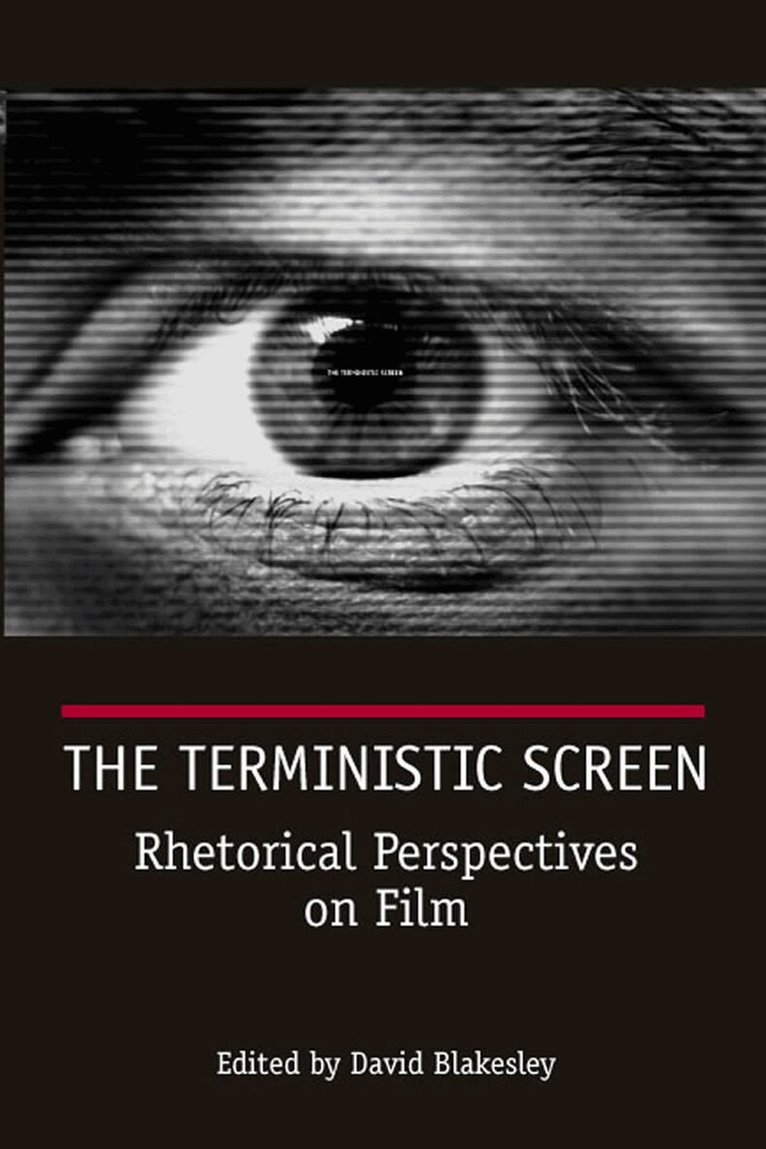
    Terministic Screen

    Rhetorical Perspectives on Film

    AvDavid Blakesley

    Häftad, Engelska, 2007

    386 kr

    Beställningsvara. Skickas inom 5-8 vardagar. Fri frakt över 249 kr.

    Beskrivning

    The Terministic Screen: Rhetorical Perspectives on Film examines the importance of rhetoric in the study of film and film theory. Rhetorical approaches to film studies have been widely practiced, but rarely discussed until now. Taking on such issues as Hollywood blacklisting, fascistic aesthetics, and postmodern dialogics, editor David Blakesley presents fifteen critical essays that examine rhetoric's role in such popular films as ""The Fifth Element"", ""The Last Temptation of Christ"", ""The Usual Suspects"", ""Deliverance"", ""The English Patient"", ""Pulp Fiction"", ""The Music Man"", ""Copycat"", ""Hoop Dreams"", and ""A Time to Kill"". Aided by sixteen illustrations, these insightful essays consider films rhetorically, as ways of seeing and not seeing, as acts that dramatize how people use language and images to tell stories and foster identification. Contributors include David Blakesley, Alan Nadel, Ann Chisholm, Martin J. Medhurst, Byron Hawk, Ekaterina V. Haskins, James Roberts, Thomas W. Benson, Philip L. Simpson, Davis W. Houck, Caroline J. S. Picart, Friedemann Weidauer, Bruce Krajewski, Harriet Malinowitz, Granetta L. Richardson, and Kelly Ritter.

    Produktinformation

    • Utgivningsdatum:2007-09-30
    • Mått:162 x 228 x 19 mm
    • Vikt:439 g
    • Format:Häftad
    • Språk:Engelska
    • Antal sidor:328
    • Förlag:Southern Illinois University Press
    • ISBN:9780809328291

    Utforska kategorier

    • Språkvetenskap och lingvistik inom Språk och ordböcker
    • Film inom Kultur

    Mer om författaren

    David Blakesley is a professor of English and director of professional writing at Purdue University. He is the author of The Elements of Dramatism and The Thomson Handbook (with Jeffrey L. Hoogeveen), and the editor (with Julie Whitaker) of Kenneth Burke's Late Poems, 1968-1993. He has also written about film and visual rhetoric for Enculturation, Kairos, and Defining Visual Rhetorics (Hill and Helmers, eds.). For Southern Illinois University Press, he edited the Rhetorical Philosophy and Theory series.

    Recensioner i media

    The Terministic Screen: Rhetorical Perspectives on Film offers readers who have interests or specialities in rhetorical analysis a point of entry into contemporary cinema as it frames issues of style, representation, history, and culture. Although the literature on cinema is vast, relatively few books have adopted an explicitly rhetorical emphasis. Thus, this volume fills a long-neglected gap in the scholarly literature on film. - Stephen Prince, author of Movies and Meaning: An Introduction to Film