• Fri frakt över 249 kr
  • •
  • Snabba leveranser
  • •
  • Billiga böcker
Kundservice

Du är på sajten för privatpersoner.

Företag, bibliotek eller offentlig verksamhet?

Du handlar på classic.bokus.com, där alla dina funktioner finns intakta.
Till classic.bokus.com
Bokus logotyp. Gå till startsidan.
  • Erbjudanden
  • Nyheter
  • Student
  • Topplistor
  • Barn & ungdom
  • Bokus Play
  • E-böcker
  • Pocketböcker
  • Spel & pussel

10% rabatt på allt med kod: NYSTART10 →

Sidfot

Mina sidor

    Hjälp

    • Kundservice
    • Vanliga frågor och svar
    • Frakt och leverans
    • Retur vid ångerrätt
    • Reklamera vara
    • Betalning
    • Köpvillkor
    • Allmänna villkor
    • Information om webbplatsens tillgänglighet

    Om Bokus

    • Om oss
    • Pressrum
    • För studenter
    • För företag
    • För bibliotek och offentlig verksamhet
    • För leverantörer
    • Hållbarhet

    Populärt

    • Aktuella erbjudanden
    • Presentkort
    • Studentlitteratur
    • Nya böcker
    • Topplistor
    • Signerade böcker
    • Engelska böcker

    Inspiration

    • Boktips
    • BookTok
    • Populära bokserier
    • Barnbokskaraktärer
    • Populära författare
    Logotyp för Bokus
    Följ oss på Facebook (extern länk)Följ oss på Instagram (extern länk)Följ oss på YouTube (extern länk)Följ oss på TikTok (extern länk)
    bokus @ CookiesAnpassa cookiesIntegritetspolicyKöpvillkor
    Till Citymail hemsida (extern länk)Till Budbee hemsida (extern länk)Till Postnord hemsida (extern länk)Till Schenker hemsida (extern länk)Till Early Bird hemsida (extern länk)Till Walleys hemsida (extern länk)
    1. Skönlitteratur
    2. Litteraturvetenskap

    American Georgics

    Economy and Environment in Early American Literature

    AvTimothy Sweet

    E-bok
    Engelska, 2013

    1 451 kr

    Läs direkt i Bokus Reader – eller ladda ned till din enhet

    Fler format och utgåvor

    Inbunden

    1 029 kr

    Beskrivning

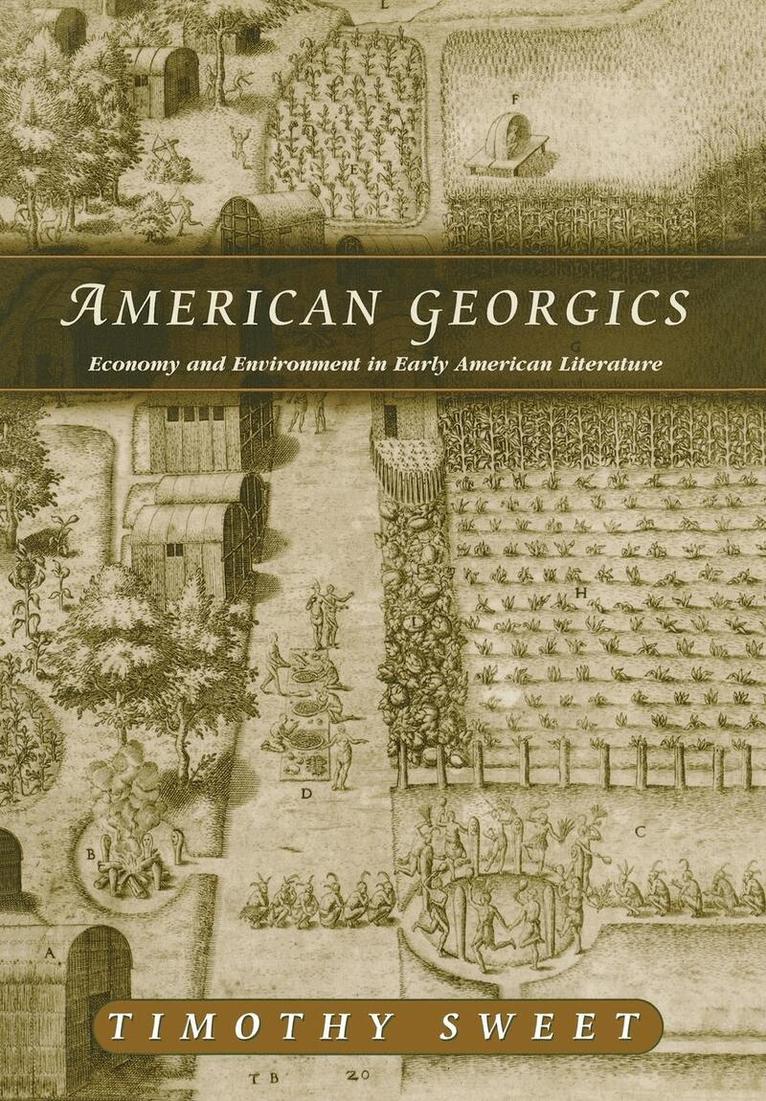
    In classical terms the georgic celebrates the working landscape, cultivated to become fruitful and prosperous, in contrast to the idealized or fanciful landscapes of the pastoral. Arguing that economic considerations must become central to any understanding of the human community's engagement with the natural environment, Timothy Sweet identifies a distinct literary mode he calls the American georgic.Offering a fresh approach to ecocritical and environmentally-oriented literary studies, Sweet traces the history of the American georgic from its origins in late sixteenth-century English literature promoting the colonization of the Americas through the mid-nineteenth century, ending with George Perkins Marsh's Man and Nature (1864), the foundational text in the conservationist movement.

    Produktinformation

    • Utgivningsdatum:2013-04-19
    • Språk:Engelska
    • Antal sidor:232
    • Filformat:EPUB
    • Kopieringsskydd:LCP
    • ISBN:9780812203189
    • Förlag:University of Pennsylvania Press

    Utforska kategorier

    • Litteraturvetenskap inom Skönlitteratur

    Mer om författaren

    Timothy Sweet is Professor of English at West Virginia University. He is the author also of Traces of War: Poetry, Photography, and the Crisis of the Union.

    Recensioner i media

    "Sweet offers a wide-ranging examination of the agricultural work of North American men and women as seen through the lens of literature... Sweet's greatest achievement is his ability to integrate hundreds of years of discourse about the North American continent into a cohesive narrative of evolving perceptions of environment and humankind's role in shaping it."-American Literature "Thoughtful, critically intelligent, and well-informed."-Lawrence Buell, Harvard University

    Innehållsförteckning

    • Introduction1. Economy and Environment in Sixteenth-Century Promotional Literature2. "God Sells Us All Things for Our Labour": John Smith's Generall Historie3. "Wonder-Working Providence" of the Market4. "Admirable Oeconomy": Robert Beverley's Calculus of Compensation5. Ideologies of Farming: Crevecoeur, Jefferson, Rush, and Brown6. Cherokee "Improvements" and the Removal Debate7. "Co-Workers with Nature": Cooper, Thoreau, and MarshNotesWoks CitedIndexAcknowledgments