• Fri frakt över 249 kr
  • •
  • Snabba leveranser
  • •
  • Billiga böcker
Kundservice

Du är på sajten för privatpersoner.

Företag, bibliotek eller offentlig verksamhet?

Du handlar på classic.bokus.com, där alla dina funktioner finns intakta.
Till classic.bokus.com
Bokus logotyp. Gå till startsidan.
  • Erbjudanden
  • Student
  • Topplistor
  • Barn & ungdom
  • Bokus Play
  • E-böcker
  • Ljudböcker
  • Pocketböcker
  • Spel och pussel

5% studentrabatt – använd koden KURSBOK27 →

Sidfot

Mina sidor

    Hjälp

    • Kundservice
    • Vanliga frågor och svar
    • Frakt och leverans
    • Retur vid ångerrätt
    • Reklamera vara
    • Betalning
    • Köpvillkor
    • Allmänna villkor
    • Information om webbplatsens tillgänglighet

    Om Bokus

    • Om oss
    • Pressrum
    • För studenter
    • För företag
    • För bibliotek och offentlig verksamhet
    • För leverantörer
    • Hållbarhet

    Populärt

    • Aktuella erbjudanden
    • Presentkort
    • Studentlitteratur
    • Nya böcker
    • Topplistor
    • Signerade böcker
    • Engelska böcker

    Inspiration

    • Boktips
    • BookTok
    • Barnbokskaraktärer
    • Populära författare
    Logotyp för Bokus
    Följ oss på Facebook (extern länk)Följ oss på Instagram (extern länk)Följ oss på YouTube (extern länk)Följ oss på TikTok (extern länk)
    bokus @ CookiesAnpassa cookiesIntegritetspolicyKöpvillkor
    Till Citymail hemsida (extern länk)Till Budbee hemsida (extern länk)Till Postnord hemsida (extern länk)Till Schenker hemsida (extern länk)Till Early Bird hemsida (extern länk)Till Walleys hemsida (extern länk)
    1. Samhälle och politik
    2. Politik och statsskick
    3. Internationella relationer

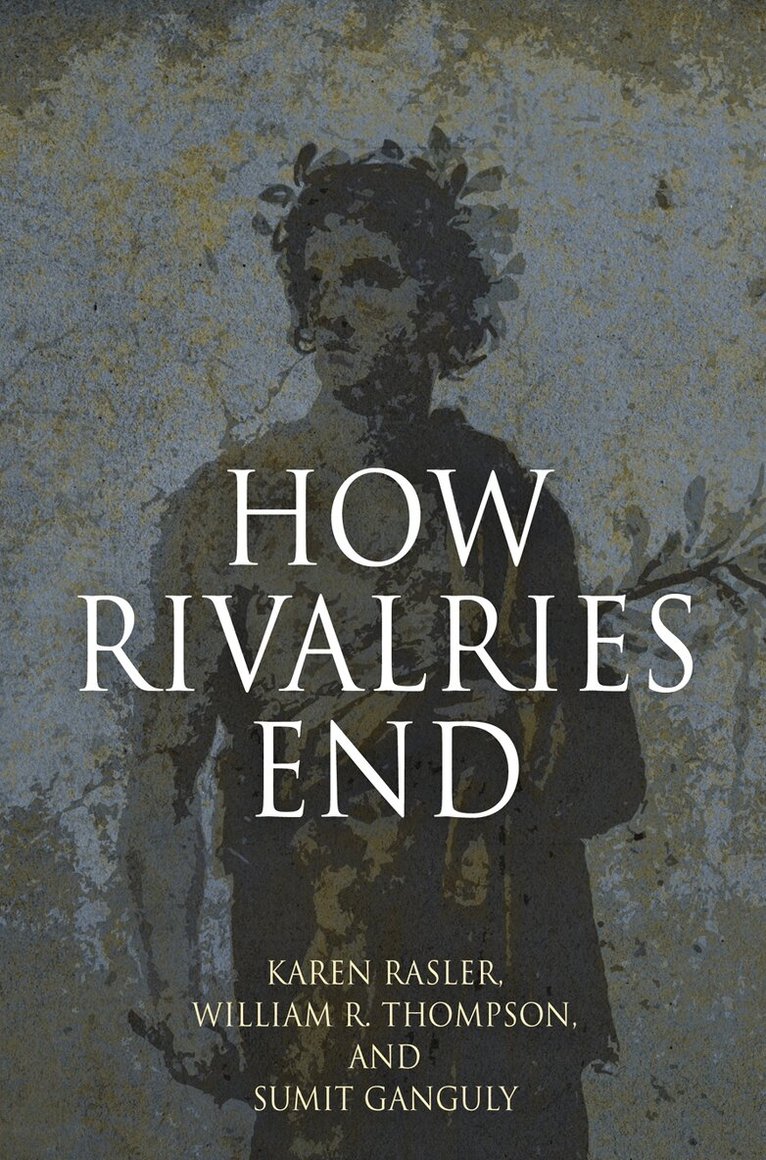
    How Rivalries End

    AvKaren Rasler,William R. Thompson

    Inbunden, Engelska, 2013

    891 kr

    Beställningsvara. Skickas inom 10-15 vardagar. Fri frakt över 249 kr.

    Fler format och utgåvor

    E-bok

    1 265 kr

    Beskrivning

    Rivalry between nations has a long and sometimes bloody history. Not all political opposition culminates in war-the rivalry between the United States and the Soviet Union is one example-but in most cases competition between nations and peoples for resources and strategic advantage does lead to violence: nearly 80 percent of the wars fought since 1816 were sparked by contention between rival nations. Long-term discord is a global concern, since competing states may drag allies into their conflict or threaten to use weapons of mass destruction. How Rivalries End is a study of how such rivalries take root and flourish and particularly how some dissipate over time without recourse to war.Political scientists Karen Rasler, William R. Thompson, and Sumit Ganguly examine ten political hot spots, stretching from Egypt and Israel to the two Koreas, where crises and military confrontations have occurred over the last seven decades. Through exacting analysis of thirty-two attempts to deescalate strategic rivalries, they reveal a pattern in successful conflict resolutions: shocks that overcome foreign policy inertia; changes in perceptions of the adversary's competitiveness or threat; positive responses to conciliatory signals; and continuing effort to avoid conflict after hostilities cease. How Rivalries End significantly contributes to our understanding why protracted conflicts sometimes deescalate and even terminate without resort to war.

    Produktinformation

    • Utgivningsdatum:2013-04-19
    • Mått:152 x 229 x 30 mm
    • Vikt:590 g
    • Format:Inbunden
    • Språk:Engelska
    • Antal sidor:280
    • Förlag:University of Pennsylvania Press
    • ISBN:9780812244984

    Utforska kategorier

    • Internationella relationer inom Samhälle och politik

    Mer om författaren

    Karen Rasler and William R. Thompson, Professors of Political Science at Indiana University, have cowritten many books, including Strategic Rivalry: Space, Position, and Conflict Resolution in World Politics. Sumit Ganguly is Rabindranath Tagore Professor of Indian Cultures and Civilizations, and Director of the Center on American and Global Security, at Indiana University. He is the author, most recently, of Conflict Unending: Indo-Pakistani Tensions Since 1947.

    Recensioner i media

    "With impeccable scholarship, How Rivalries End utilizes a vast theoretical, empirical, and extraordinary case literature. This is a highly original study and a much needed one." (John Vasquez, University of Illinois at Urbana-Champaign)

    Innehållsförteckning

    • Chapter 1. The Problem of Rivalry Deescalation and TerminationChapter 2. The Evolution of Expectations and StrategiesChapter 3. The Egyptian-Israeli Rivalry, 1948-1970Chapter 4. The Egyptian-Israeli Rivalry, 1970-1979Chapter 5. The Israeli-Syrian Rivalry, 1948-2000, and the Israeli-Palestinian Rivalry, 1980s and Early 1990sChapter 6. The Indo-Pakistani Rivalry, 1947-2010Chapter 7. Other Eurasian Rivalries and Their InterdependenceChapter 8. The Outcome: Assessing the Rivalry Deescalation TheoryAppendixNotesReferencesIndex