• Fri frakt över 249 kr
  • •
  • Snabba leveranser
  • •
  • Billiga böcker
Kundservice

Du är på sajten för privatpersoner.

Företag, bibliotek eller offentlig verksamhet?

Du handlar på classic.bokus.com, där alla dina funktioner finns intakta.
Till classic.bokus.com
Bokus logotyp. Gå till startsidan.
  • Erbjudanden
  • Nyheter
  • Student
  • Topplistor
  • Barn & ungdom
  • Bokus Play
  • E-böcker
  • Pocketböcker
  • Spel & pussel

10% rabatt på allt med kod NYSTART10 →

Sidfot

Mina sidor

    Hjälp

    • Kundservice
    • Vanliga frågor och svar
    • Frakt och leverans
    • Retur vid ångerrätt
    • Reklamera vara
    • Betalning
    • Köpvillkor
    • Allmänna villkor
    • Information om webbplatsens tillgänglighet

    Om Bokus

    • Om oss
    • Pressrum
    • För studenter
    • För företag
    • För bibliotek och offentlig verksamhet
    • För leverantörer
    • Hållbarhet

    Populärt

    • Aktuella erbjudanden
    • Presentkort
    • Studentlitteratur
    • Nya böcker
    • Topplistor
    • Signerade böcker
    • Engelska böcker

    Inspiration

    • Boktips
    • BookTok
    • Populära bokserier
    • Barnbokskaraktärer
    • Populära författare
    Logotyp för Bokus
    Följ oss på Facebook (extern länk)Följ oss på Instagram (extern länk)Följ oss på YouTube (extern länk)Följ oss på TikTok (extern länk)
    bokus @ CookiesAnpassa cookiesIntegritetspolicyKöpvillkor
    Till Citymail hemsida (extern länk)Till Budbee hemsida (extern länk)Till Postnord hemsida (extern länk)Till Schenker hemsida (extern länk)Till Early Bird hemsida (extern länk)Till Walleys hemsida (extern länk)
    1. Filosofi och religion
    2. Religion och tro
    3. Religion: allmänt

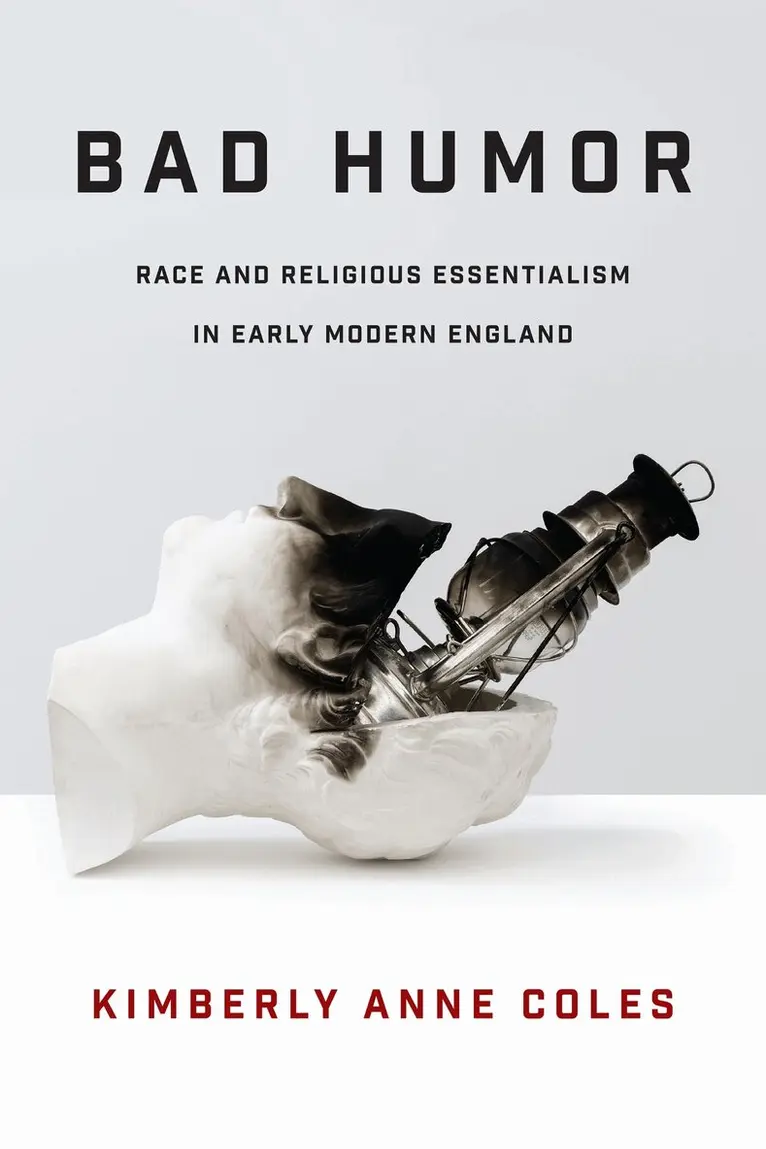
    Bad Humor

    Race and Religious Essentialism in Early Modern England

    AvKimberly Anne Coles

    Inbunden, Engelska, 2022

    827 kr

    Beställningsvara. Skickas inom 5-8 vardagar. Fri frakt över 249 kr.

    Fler format och utgåvor

    E-bok

    1 254 kr

    Beskrivning

    Race, in the early modern period, is a concept at the crossroads of a set of overlapping concerns of lineage, religion, and nation. In Bad Humor, Kimberly Anne Coles charts how these concerns converged around a pseudoscientific system that confirmed the absolute difference between Protestants and Catholics, guaranteed the noble quality of English blood, and justified English colonial domination.Coles delineates the process whereby religious error, first resident in the body, becomes marked on the skin. Early modern medical theory bound together psyche and soma in mutual influence. By the end of the sixteenth century, there is a general acceptance that the soul's condition, as a consequence of religious belief or its absence, could be manifest in the humoral disposition of the physical body. The history that this book unfolds describes developments in natural philosophy in the early part of the sixteenth century that force a subsequent reconsideration of the interactions of body and soul and that bring medical theory and theological discourse into close, even inextricable, contact. With particular consideration to how these ideas are reflected in texts by Elizabeth Cary, John Donne, Ben Jonson, William Shakespeare, Edmund Spenser, Mary Wroth, and others, Coles reveals how science and religion meet nascent capitalism and colonial endeavor to create a taxonomy of Christians in Black and White.

    Produktinformation

    • Utgivningsdatum:2022-04-19
    • Mått:152 x 229 x 20 mm
    • Vikt:478 g
    • Format:Inbunden
    • Språk:Engelska
    • Antal sidor:248
    • Förlag:University of Pennsylvania Press
    • ISBN:9780812253733

    Utforska kategorier

    • Religion: allmänt inom Filosofi och religion
    • Litteraturvetenskap inom Skönlitteratur

    Mer om författaren

    Kimberly Anne Coles is Professor of English at the University of Maryland, College Park.

    Recensioner i media

    "By analyzing how theology and natural philosophy of the period inform works of early modern English literature, [Bad Humor] traces the development of a racial logic that ultimately upholds and justifies English colonial rule by rendering impossible the religious conversion of Irish Catholics, Spanish Catholics, Africans and Indigenous people. Coles examines canonical works by John Donne, Ben Jonson, Edmund Spenser and Shakespeare alongside readings of Mary Wroth, Elizabeth Carey and Aphra Behn to document an emerging relationship between melancholy and religious error that assumes the heritability of (un)belief. Writing within a contemporary American context that has witnessed a rise in white Christian nationalism, Coles offers a timely exploration of how race and religion become intertwined." (Times Literary Supplement) "This book offers a refreshing new approach to early modern critical race studies by investigating the correspondence of early modern science and religion in the construction of race and its manifestation in colonial practices. Specifically, Coles traces the process whereby wrong religion, caused by excess of melancholy corrupting the body and soul, becomes marked on the skin...By merging early modern science and religion in her study, Coles demonstrates how theories of the body and soul were manipulated to designate people of color and their offspring as non-Christian in order to justify colonial oppression...[A]n important contribution to early modern critical race studies through its alignment of race, religion, and science." (Renaissance Quarterly) "Locating religion and race along a single axis, Kimberly Anne Coles measures the role of the connection between body and soul in the oppression and alienation of groups of people. Her argument gets at the foundations of race-making in a book that is thoroughly grounded in literary criticism, early modern race studies, religious history, early modern medical theory, and early American law." (Jonathan Burton, Whittier College) "Bad Humor is a timely contribution to ongoing conversations about how religion informed early modern race-thinking. Arguing that earlier conceptions of hereditary blood and rank enabled 'Black melancholy' to be tethered to irreligion, Coles shows that faith comes to be seen as less a feature of belief than an inheritable somatic condition. First articulated in relationship to Europeans and later to Black Africans, the idea that there exists a 'complexion of the soul' reveals early modern theology, natural philosophy, humoral medicine, and Protestant literature to be early contributors to white supremacy." (Valerie Traub, University of Michigan) "Uncovering how humoral theory entwines with philosophical and theological discussions of the relationship between body and soul, Kimberly Anne Coles makes clear that English Protestants rendered belief and non-belief heritable, and that this understanding of the heritable nature of belief was used to justify colonialism and the enslavement of Africans. Bad Humor provides important new insight into the racialization of religion in early modern English literature." (Dennis Austin Britton, The University of British Columbia) "In Bad Humor, Kimberly Anne Coles traces a logic whereby humoral imbalance—in particular, the excess of black bile supposedly registered in dark complexions—constitutes an essential moral inferiority that renders Christian conversion and civic affiliation impossible; those so cast outside the body politic are marked as legitimate objects of enslavement and genocide. Bad Humor compels us to attend to the enmeshment of science and religion in shaping early modern iterations of hierarchy and heredity attuned to the demands of emergent racial capitalism." (Melissa E. Sanchez, University of Pennsylvania)

    Innehållsförteckning

    • PrefaceIntroduction Chapter 1. "Souls drowned in flesh and blood": The Fluid Poetics of John Donne and Christopher BrookeChapter 2. Bad Faith: The Color of Wrong Religion in Ben Jonson's The Masque of Blackness and Mary Wroth's Pamphilia to AmphilanthusChapter 3. Moral Constitution: The Color of Blood in Elizabeth Cary's Tragedy of Mariam and the New English TractsChapter 4. "Soule is Forme": The (Re)formation of the Body in Edmund Spenser's The Faerie QueeneChapter 5. Moral Husbandry: Cultivating Right Religion in New WorldsCoda. The One-Drop RuleNotesBibliographyIndexAcknowledgments