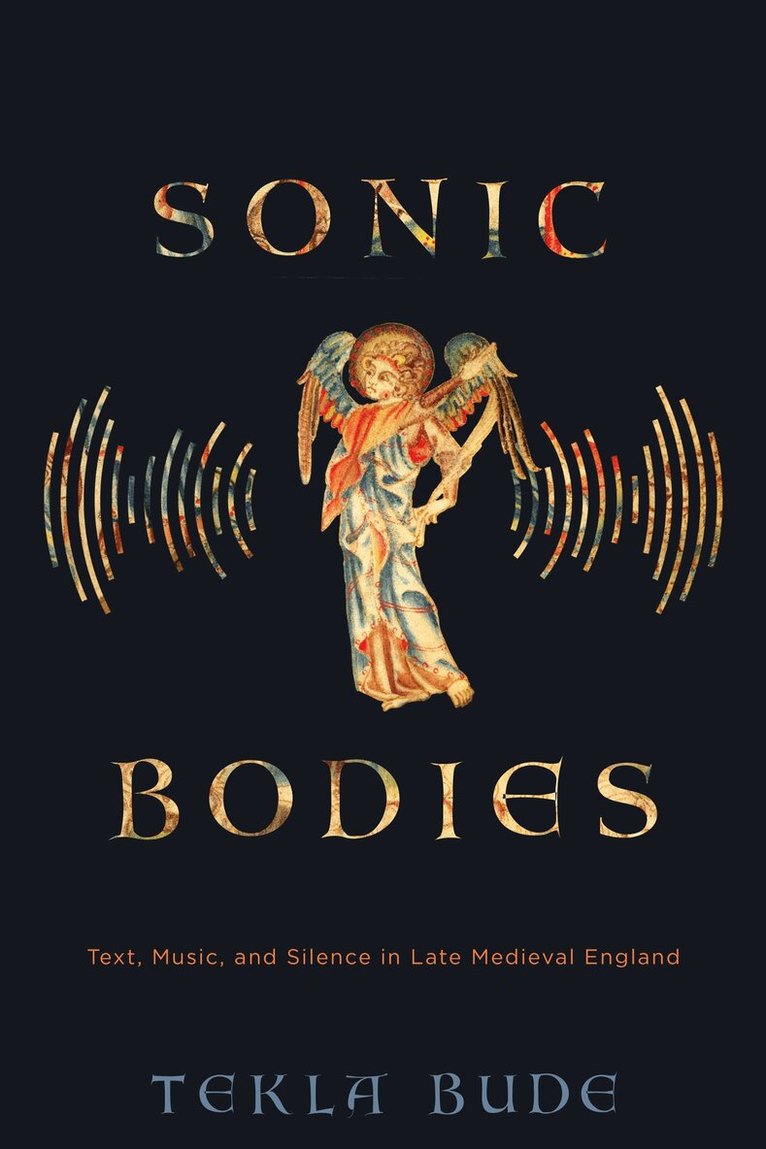
E-bok, Engelska, 2022
Sonic Bodies
Text, Music, and Silence in Late Medieval England
Av Tekla Bude
Del i serien Sound in History
1195 kr
Läs direkt i Bokus Reader – eller ladda ned till din enhet
Fler format och utgåvor
Beskrivning
Produktinformation
- Utgivningsdatum: 2022-03-22
- Språk: Engelska
- Antal sidor: 336
- Filformat: EPUB
- Kopieringsskydd: LCP
- ISBN: 9780812298321
- Förlag: University of Pennsylvania Press
- Serie: Sound in History
Utforska kategorier
Mer om författaren
Tekla Bude is Assistant Professor of English at Oregon State University.
Recensioner i media
"This provocative book calls for a rethinking of the concepts 'music' and 'body.' Tekla Bude argues that 'music and the body are entangled practices that emerge out of social and textual environments so diverse' that 'sonic bodies' exist at the extreme limits of what 'music' and 'body' have been understood to be. Six wide-ranging chapters, along with an introduction and coda, draw on an impressive array of sources, methodologies, and critical approaches, medieval and modern. This is a learned book, intensely aware of and informed by trends and conversations in medieval studies and musicology as well as in allied fields." (Studies in the Age of Chaucer) "Sonic Bodies begins from a refreshingly new place, gently shifting fleshy notions of the body to one side in order to trace the unexpected intersubjective and transpersonal bodily forms that emerge when we conceptualize sound and body otherwise: not as sensory signal and receptor but as 'mutually dependent,relational, historically contingent, and co-emergent processes that rely on a dialectics of materiality'...[A]mbitious and inventive; its readings are frequently revealing and its vision is bracingly capacious...[There is] vigorous thought on the book's every page. Sonic Bodies makes thinkable a differently embodied sonic past others will surely seek to play in." (Journal of Medieval Religious Cultures) "The aim of this book is not only to broaden our understanding of what constitutes "music" and the "body" in Western European medieval culture, but also to draw attention to the political and ethical stakes inherent in these formal and aesthetic questions...[B]y broadening our definitions of music and the body in medieval literature, Sonic Bodies makes an invaluable contribution to our understanding of the social, political, and ethical implications of sound in Western medieval culture." (Speculum) "In Sonic Bodies, Tekla Bude presents an incredibly interesting analysis of the definitions of music and the body, by going beyond those texts that are traditionally considered to be musical, and redefining notions of sonority and the body in the process. Moreover, Bude demonstrates a command of several different subdisciplines within the arts and humanities," - Mariana López (The Medieval Review) "Drawing on a wide range of texts in Latin and Middle English, Tekla Bude shows how thoroughly medieval culture imagined its soundscape in material terms." (Bruce Holsinger, University of Virginia) "Tekla Bude offers a richly transdisciplinary account of the medieval entanglements of music and body, expanding the range of literatures and disciplines relevant for the understanding of medieval sonic practices." (Andrew Hicks, Cornell University)
Betyg & recensioner
0 recensioner
Inga recensioner tillgängliga.