• Fri frakt över 249 kr
  • •
  • Snabba leveranser
  • •
  • Billiga böcker
Kundservice

Du är på sajten för privatpersoner.

Företag, bibliotek eller offentlig verksamhet?

Du handlar på classic.bokus.com, där alla dina funktioner finns intakta.
Till classic.bokus.com
Bokus logotyp. Gå till startsidan.
  • Erbjudanden
  • Student
  • Topplistor
  • Barn & ungdom
  • Bokus Play
  • E-böcker
  • Ljudböcker
  • Pocketböcker
  • Spel och pussel

Pocketfynda! Hundratals böcker för 49 kr/st →

Sidfot

Mina sidor

    Hjälp

    • Kundservice
    • Vanliga frågor och svar
    • Frakt och leverans
    • Retur vid ångerrätt
    • Reklamera vara
    • Betalning
    • Köpvillkor
    • Allmänna villkor
    • Information om webbplatsens tillgänglighet

    Om Bokus

    • Om oss
    • Pressrum
    • För studenter
    • För företag
    • För bibliotek och offentlig verksamhet
    • För leverantörer
    • Hållbarhet

    Populärt

    • Aktuella erbjudanden
    • Presentkort
    • Studentlitteratur
    • Nya böcker
    • Topplistor
    • Signerade böcker
    • Engelska böcker

    Inspiration

    • Boktips
    • BookTok
    • Barnbokskaraktärer
    • Populära författare
    Logotyp för Bokus
    Följ oss på Facebook (extern länk)Följ oss på Instagram (extern länk)Följ oss på YouTube (extern länk)Följ oss på TikTok (extern länk)
    bokus @ CookiesAnpassa cookiesIntegritetspolicyKöpvillkor
    Till Citymail hemsida (extern länk)Till Budbee hemsida (extern länk)Till Postnord hemsida (extern länk)Till Schenker hemsida (extern länk)Till Early Bird hemsida (extern länk)Till Walleys hemsida (extern länk)
    1. Skönlitteratur
    2. Litteraturvetenskap
    3. Litteraturvetenskap

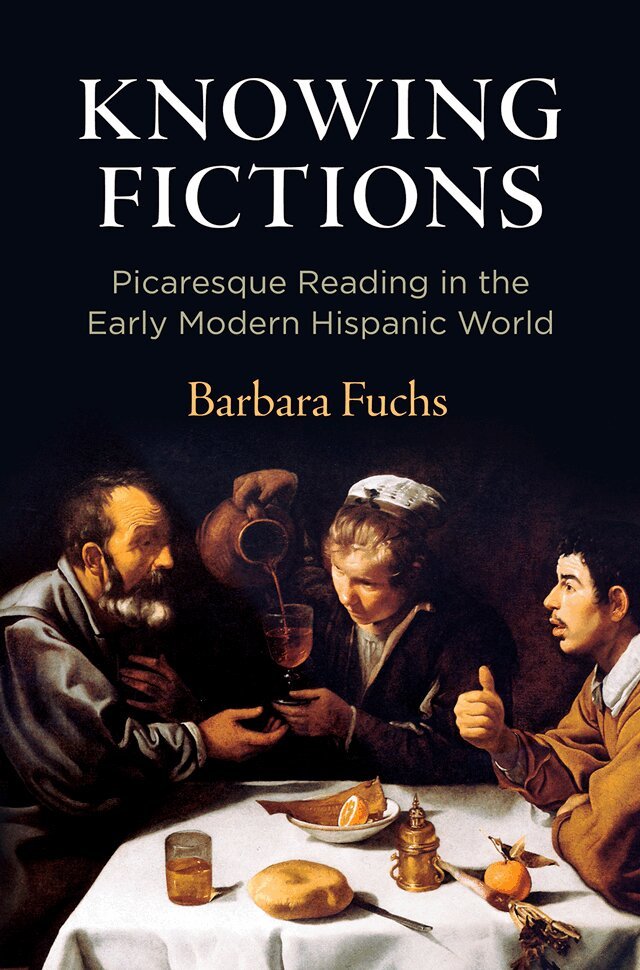
    Knowing Fictions

    Picaresque Reading in the Early Modern Hispanic World

    AvBarbara Fuchs

    E-bok
    Engelska, 2020

    Del i serien Haney Foundation Series

    998 kr

    Läs direkt i Bokus Reader – eller ladda ned till din enhet

    Fler format och utgåvor

    Inbunden

    707 kr

    Beskrivning

    European exploration and conquest expanded exponentially in the late fifteenth and sixteenth centuries, and as the horizons of imperial experience grew more distant, strategies designed to convey the act of witnessing came to be a key source of textual authority. From the relaciÓn to the captivity narrative, the Hispanic imperial project relied heavily on the first-person authority of genres whose authenticity undergirded the ideological armature of national consolidation, expansion, and conquest. At the same time, increasing pressures for religious conformity in Spain, as across Europe, required subjects to bare themselves before external authorities in intimate confessions of their faith. Emerging from this charged context, the unreliable voice of the pÍcaro poses a rhetorical challenge to the authority of the witness, destabilizing the possibility of trustworthy representation precisely because of his or her intimate involvement in the narrative.In Knowing Fictions, Barbara Fuchs seeks at once to rethink the category of the picaresque while firmly centering it once more in the early modern Hispanic world from which it emerged. Venturing beyond the traditional picaresque canon, Fuchs traces Mediterranean itineraries of diaspora, captivity, and imperial rivalry in a corpus of texts that employ picaresque conventions to contest narrative authority. By engaging the picaresque not just as a genre with more or less strictly defined boundaries, but as a set of literary strategies that interrogate the mechanisms of truth-telling itself, Fuchs shows how self-consciously fictional picaresque texts effectively encouraged readers to adopt a critical stance toward the truth claims implicit in the forms of authoritative discourse proliferating in Imperial Spain.

    Produktinformation

    • Utgivningsdatum:2020-11-30
    • Språk:Engelska
    • Antal sidor:208
    • Filformat:EPUB
    • Kopieringsskydd:LCP
    • ISBN:9780812299502
    • Förlag:University of Pennsylvania Press
    • Serie:Haney Foundation Series

    Utforska kategorier

    • Litteraturvetenskap inom Skönlitteratur

    Mer om författaren

    Barbara Fuchs is Professor of Spanish and English at the University of California, Los Angeles. Her books include The Poetics of Piracy: Emulating Spain in English Literature and Exotic Nation: Maurophilia and the Construction of Early Modern Spain, as well as the translations "The Abencerraje" and "Ozmin and Daraja": Two Sixteenth-Century Novellas from Spain and Cervantes's "The Bagnios of Algiers" and "The Great Sultana": Two Plays of Captivity, all of which are available from the University of Pennsylvania Press.

    Recensioner i media

    "Those familiar with Fuchs's previous scholarship will not be surprised that Knowing Fictions is seasoned with lucid and highly fecund arguments, but they will surely relish the penetrating and often dazzling parallels that she draws both within her objects of analysis and across texts, genres, and geographic locales. Scholars of early modern Spain will find in this study a refreshingly new take on the picaresque, while those working in other disciplines, eras, and national traditions will discover a trove of original insights to enrich their work farther afiel —value propositions that not even the most skeptical reader can deny." (Modern Language Quarterly) "With its theoretically nimble introduction, a timely postscript, and four chapters that richly contextualize then animate close, critical readings, Knowing Fictions makes a compelling case for exploring and often trespassing beyond the conventional generic borders of the early modern Spanish picaresque...Knowing Fictions, reading and weighing early modern Spanish picaresque writing, finds other learned, skeptical, and unequivocally admirable ways to be epistemologically attentive." (Modern Philology) "Knowing Fictions makes an original, sophisticated and timely contribution to the fields of siglo de oro and early modern studies. Barbara Fuchs builds on exquisitely contextualized close readings of a series of canonical and non-canonical first-person biographical and pseudo-biographical narratives and witness accounts to advance a new theory of the picaresque as a self-conscious or 'knowing' narrative form that educates readers in the art of critical media consumption." (David Castillo, University at Buffalo)

    Innehållsförteckning

    • IntroductionChapter 1. Imperial Picaresques: La Lozana Andaluza and Spanish RomeChapter 2. Picaresque Captivity: The Viaje de TurquÍa and its Cervantine IterationsChapter 3. "O Te Digo Verdades o Mentiras": Crediting the PÍcaro in GuzmÁn de AlfaracheChapter 4. Cervantes' Skeptical Picaresques and the Pact of FictionalityPostscript. The Fact of FictionNotesBibliographyIndexAcknowledgments