• Fri frakt över 249 kr
  • •
  • Snabba leveranser
  • •
  • Billiga böcker
Kundservice

Du är på sajten för privatpersoner.

Företag, bibliotek eller offentlig verksamhet?

Du handlar på classic.bokus.com, där alla dina funktioner finns intakta.
Till classic.bokus.com
Bokus logotyp. Gå till startsidan.
  • Erbjudanden
  • Nyheter
  • Student
  • Topplistor
  • Barn & ungdom
  • Bokus Play
  • E-böcker
  • Pocketböcker
  • Spel & pussel

10% rabatt på allt med kod: NYSTART10 →

Sidfot

Mina sidor

    Hjälp

    • Kundservice
    • Vanliga frågor och svar
    • Frakt och leverans
    • Retur vid ångerrätt
    • Reklamera vara
    • Betalning
    • Köpvillkor
    • Allmänna villkor
    • Information om webbplatsens tillgänglighet

    Om Bokus

    • Om oss
    • Pressrum
    • För studenter
    • För företag
    • För bibliotek och offentlig verksamhet
    • För leverantörer
    • Hållbarhet

    Populärt

    • Aktuella erbjudanden
    • Presentkort
    • Studentlitteratur
    • Nya böcker
    • Topplistor
    • Signerade böcker
    • Engelska böcker

    Inspiration

    • Boktips
    • BookTok
    • Populära bokserier
    • Barnbokskaraktärer
    • Populära författare
    Logotyp för Bokus
    Följ oss på Facebook (extern länk)Följ oss på Instagram (extern länk)Följ oss på YouTube (extern länk)Följ oss på TikTok (extern länk)
    bokus @ CookiesAnpassa cookiesIntegritetspolicyKöpvillkor
    Till Citymail hemsida (extern länk)Till Budbee hemsida (extern länk)Till Postnord hemsida (extern länk)Till Schenker hemsida (extern länk)Till Early Bird hemsida (extern länk)Till Walleys hemsida (extern länk)
    1. Skönlitteratur
    2. Litteraturvetenskap
    3. Litteraturvetenskap

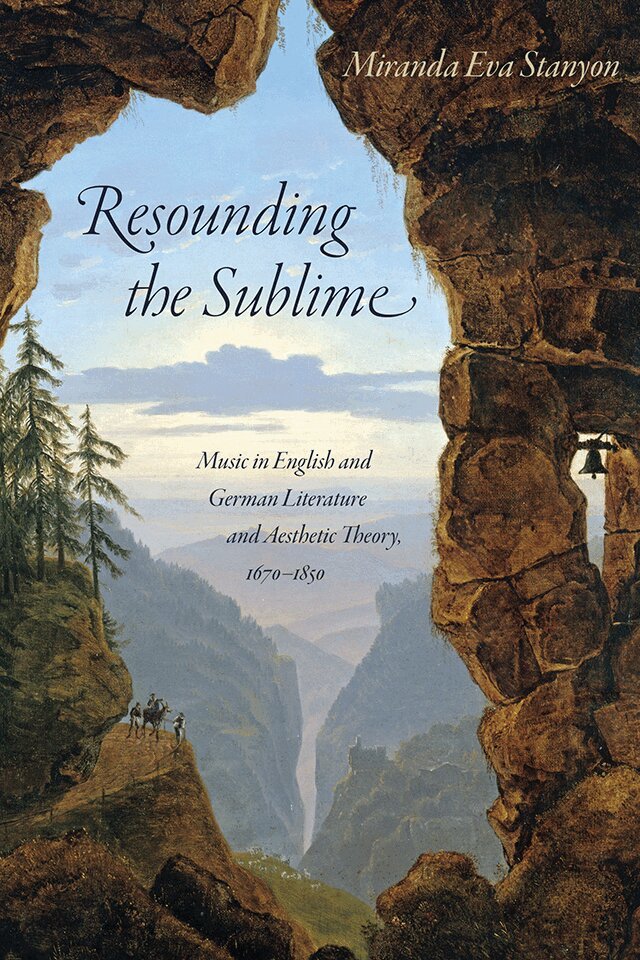
    Resounding the Sublime

    Music in English and German Literature and Aesthetic Theory, 1670-1850

    AvMiranda Eva Stanyon

    E-bok
    Engelska, 2021

    Del i serien Sound in History

    1 361 kr

    Läs direkt i Bokus Reader – eller ladda ned till din enhet

    Fler format och utgåvor

    Inbunden

    966 kr

    Beskrivning

    What does the sublime sound like? Harmonious, discordant, noisy, rustling, silent? Miranda Eva Stanyon rereads and resounds this crucial aesthetic category in English and German literatures of the long eighteenth century from a musical perspective and shows how sonorous sublimes lay at the heart of a central and transformative discourse. For Enlightenment and Romantic era listeners, the musical sublime represented a sonic encounter of the most extreme kind, one that tested what humans were capable of feeling, imagining, thinking, and therefore becoming.The sublime and music have not always sung from the same hymn sheet, Stanyon observes. She charts an antagonistic intimacy between the two, from the sublime's rise to prominence in the later seventeenth century, through the upheavals associated with Kant in the late eighteenth century, and their reverberations in the nineteenth. Offering readings of canonical texts by Longinus, Dryden, Burke, Klopstock, Herder, Coleridge, De Quincey, and others alongside lesser-known figures, she shows how the literary sublime was inextricable from musical culture, from folksongs and ballads to psalmody, polychoral sacred music, and opera. Deeply interdisciplinary, Resounding the Sublime draws literature into dialogue with sound studies, musicology, and intellectual and cultural history to offer new perspectives on the sublime as a phenomenon which crossed media, disciplines, and cultures.An interdisciplinary study of sound in history, the book recovers varieties of the sublime crucial for understanding both the period it covers and the genealogy of modern and postmodern aesthetic discourses. In resounding the sublime, Stanyon reveals a phenomenon which was always already resonant. The sublime emerges not only as the aesthetic of the violently powerful, a-rational, or unrepresentable, but as a variegated discourse with competing dissonant, harmonious, rustling, noisy, and silent strains, one in which music and sound illustrate deep divisions over issues of power, reason, and representation.

    Produktinformation

    • Utgivningsdatum:2021-05-07
    • Språk:Engelska
    • Antal sidor:304
    • Filformat:EPUB
    • Kopieringsskydd:LCP
    • ISBN:9780812299564
    • Förlag:University of Pennsylvania Press
    • Serie:Sound in History

    Utforska kategorier

    • Litteraturvetenskap inom Skönlitteratur

    Mer om författaren

    Miranda Eva Stanyon is Lecturer in Comparative Literature at King's College London and Research Fellow in English Literature at the University of Melbourne

    Recensioner i media

    "This sophisticated comparatist study traces influential ideas of music's relationship with various conceptions of the sublime across aesthetic theory and literature of the long eighteenth century and the Romantic period, in English andGerman (translated by the author)...For literary scholars, philosophers, and theorists of music and aesthetics working on the ode, on affect, on rhetoric, or on pre-Romantic aesthetics, this book's detailed, learned map of transnational influences and affinities in ideas of the musical sublime will prove invaluable, as will its attractive argument for the centrality of sound to the sublime." (Modern Language Quarterly)

    Innehållsförteckning

    • ContentsList of AbbreviationsNote on Translations and ReferencesIntroductionPart I. He Rais'd a Mortal to the Skies; She Drew an Angel Down: English Literature, Circa 1670-1760Chapter 1. Music as a "Bastard Imitation of Persuasion"? Power and Legitimacy in Dryden and DennisChapter 2. "What Passion Cannot Musick Raise and Quell!" Passionate and Dispassionate Sublimity with theHillarians and HandeliansPart II. Hissing Snakes and Angelic Hosts: German Literature, Circa 1720-1770Chapter 3. Reforming Aesthetics: Bodmer and Breitinger's Anti-Musical SublimeChapter 4. Klopstock, Rustling, and the Antiphonal SublimePart III. Sublime Beauty and the Wrath of the Organ: English and German Literature, Circa 1770-1850Chapter 5. The Beauty of the Infinite: Herder's Sublimely-Beautiful, Beautifully-Sublime MusicChapter 6. The Terror of the Infinite: Thomas De Quincey's ReverberationsConclusionNotesBibliographyIndexAcknowledgments