• Fri frakt över 249 kr
  • •
  • Snabba leveranser
  • •
  • Billiga böcker
Kundservice

Du är på sajten för privatpersoner.

Företag, bibliotek eller offentlig verksamhet?

Du handlar på classic.bokus.com, där alla dina funktioner finns intakta.
Till classic.bokus.com
Bokus logotyp. Gå till startsidan.
  • Erbjudanden
  • Nyheter
  • Student
  • Topplistor
  • Barn & ungdom
  • Bokus Play
  • E-böcker
  • Pocketböcker
  • Spel & pussel

10% rabatt på allt med kod: NYSTART10 →

Sidfot

Mina sidor

    Hjälp

    • Kundservice
    • Vanliga frågor och svar
    • Frakt och leverans
    • Retur vid ångerrätt
    • Reklamera vara
    • Betalning
    • Köpvillkor
    • Allmänna villkor
    • Information om webbplatsens tillgänglighet

    Om Bokus

    • Om oss
    • Pressrum
    • För studenter
    • För företag
    • För bibliotek och offentlig verksamhet
    • För leverantörer
    • Hållbarhet

    Populärt

    • Aktuella erbjudanden
    • Presentkort
    • Studentlitteratur
    • Nya böcker
    • Topplistor
    • Signerade böcker
    • Engelska böcker

    Inspiration

    • Boktips
    • BookTok
    • Populära bokserier
    • Barnbokskaraktärer
    • Populära författare
    Logotyp för Bokus
    Följ oss på Facebook (extern länk)Följ oss på Instagram (extern länk)Följ oss på YouTube (extern länk)Följ oss på TikTok (extern länk)
    bokus @ CookiesAnpassa cookiesIntegritetspolicyKöpvillkor
    Till Citymail hemsida (extern länk)Till Budbee hemsida (extern länk)Till Postnord hemsida (extern länk)Till Schenker hemsida (extern länk)Till Early Bird hemsida (extern länk)Till Walleys hemsida (extern länk)
    1. Naturvetenskap och teknik
    2. Teknik och industri
    3. Övrig teknik och tillämpad vetenskap

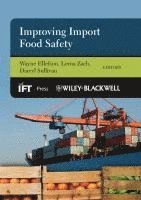
    Improving Import Food Safety

    AvWayne Ellefson,Lorna Zach

    Inbunden, Engelska, 2012

    Del 83 i serien Institute of Food Technologists Series

    2 578 kr

    Beställningsvara. Skickas inom 5-8 vardagar. Fri frakt över 249 kr.

    Beskrivning

    Food safety has been a global concern for many years. While global sourcing of foods and ingredients provides great opportunity for variety and diversity of cultural products, there are significant risks. Programs that regulate food safety and quality in countries around the world vary in their scope and effectiveness, with many being underfunded. Rapidly developing countries may lack the expertise, laboratory resources for testing, and established inspection programs to adequately promote the safety of foods. Rather, these countries may be more focused on providing enough food for their citizens. Lack of documentation or traceability in the exporting country can further exacerbate the situation. Of course, safety problems in food imported from more developed countries also occur, and the source of food borne disease outbreaks are found regularly within the United States.Improving Import Food Safety gathers together vital information on the food safety programs of national governments, the food industry, and the testing industry. Chapters have been contributed by authors from the United States, Latin America, Europe, and Asia. Readers will learn about a variety of regulatory approaches to food safety at the federal and state levels in the United States, as well as in selected countries and within the food industry itself. They will also gain insights into the nature and source of safety problems, in addition to approaches to food safety around the world.The book is divided into three sections: Highlighting Key Issues: authors illustrate the millions of permutations for the origin of ingredients, discussing the difficulty if policing imports, providing a unique perspective on the economic situation in China and insight into development of support for small farm producers in Mexico.Legal and Regulatory Issues/Structures in the USA and Abroad: describes the legal and regulatory system in the European Union, the United States, and China, plus a chapter addressing global approaches to fraud.Potential Strategies to Improve Import Safety: presents strategies to deal with what are ultimately global issues, but on multiple levels. Perspectives are provided by authors from Industry, and industry trade association, academia, and a recently semi-retired, global ambassador or food safety.Readers will find this book noteworthy because of the diverse topics and perspectives offered on the challenges of keeping food safe in a global economy. Authors come from a variety of backgrounds, and each has provided a unique perspective on this critical topic. The volume is aimed at importers and exporters of food and ingredients; food microbiologists, food safety and QC/QA personnel; regulatory and legal personnel in food manufacturing companies; food policy makers and regulatory officials and facility and graduate students in food science.

    Produktinformation

    • Utgivningsdatum:2012-12-14
    • Mått:158 x 236 x 20 mm
    • Vikt:667 g
    • Format:Inbunden
    • Språk:Engelska
    • Serie:Institute of Food Technologists Series
    • Antal sidor:368
    • Förlag:John Wiley and Sons Ltd
    • ISBN:9780813808772

    Utforska kategorier

    • Övrig teknik och tillämpad vetenskap inom Naturvetenskap och teknik

    Mer om författaren

    The EditorsWayne Ellefson, Covance Laboratories, Inc., Madison, Wisconsin, USA.Lorna Zach, Center for Human Performance and Risk Analysis, Department of Industrial and Systems Engineering, University of Wisconsin-Madison, Madison, Wisconsin, USA and System Solutions for the Food Industry, Mt. Horeb, Wisconsin, USA.Darryl Sullivan, Covance Laboratories, Inc., Madison, Wisconsin, USA.

    Innehållsförteckning

    • Contributors xiii Preface xviiAcknowledgment xixPart I Highlighting Key Issues 1Chapter 1 Emerging Global Food System Risks and Potential Solutions 3Shaun KennedyOverview 3Supply Chain Complexity 4Increasing Role of Imports 6Unusual Sources for Imports 7Other Emerging Food Safety Risks 10Economically Motivated Adulteration 11Other Emerging Intentional Threats 13Potential Solutions 15Conclusions 19References 19Chapter 2 A Cooperative Federal–State Approach for Monitoring Imported Foods: Reviewing the New York State Model 21Joe CorbyIntroduction 21State and Local Government Strengths 23The New York Model for a Cooperative Federal–State Approach for Monitoring the Safety of Imported Food 25Examples of Violative Imported Food Products Found in the Pilot Cooperative Project 35Discussion 41Conclusions 42References 42Chapter 3 The Impact of the Chinese Development Model on Food Safety 45Wenran JiangIntroduction 45China’s Explosive Economic Growth and its Impact 46China as a Growing Food Superpower 51China’s Food Safety Regimes 53China’s Food Safety Challenges 57Conclusions 61Notes 62References 63Chapter 4 The Role of Public–Private Partnerships on the Access of Smallholder Producers of Mexican Cantaloupe to Fresh Produce Export Markets 65Belem Avendano, Clare Narrod, and Marites TiongcoFoodborne Outbreaks and the Increasing Demand for Food Safety in Fruit and Vegetables 66Production Trends of the Cantaloupe Industry in Mexico 71Responses to Food Safety Problems Associated with Cantaloupe Outbreaks 74Major Barriers to Market Access for Small Mexican Producers in the Cantaloupe Supply Chain 76The Role of Private–Public Partnerships in Facilitating Smallholders to Overcome Barriers to Export Market Entry 78Summary and Conclusions 81Notes 82References 83Part II Legal and Regulatory Issues/Structures in the United States and Abroad 87Chapter 5 Improving US Regulation of Imported Foods 89Neal FortinIntroduction 89The Major Federal Agencies 91The FDA Import Process 92Prior Notice of Import 93USDA’s Import System 98Other Import Controls 100Country-of-origin Labeling 103Challenges Facing Import Regulation 104International Standards – Codex 106Conclusions 106References 108Chapter 6 EU Food Safety Regulation and Trust-enhancing Principles 111Ellen VosIntroduction 111Food Regulation: Between Market and Safety 112The EU’s Failings in Ensuring Food Safety 114The EU’s New Regime on Food Safety Regulation 115Restoring Trust in EU Decision-making on Foods 118Concluding Remarks 125Acknowledgment 126Notes 126References 129Chapter 7 Experience of Food Safety Authorities in Europe and the Rapid Alert System 133Roger WoodIntroduction 133The EU Approach to Legislation in the Food Sector 134Food Crises 135Risk Assessment and Risk Management and the EFSA 136The Rapid Alert System for Food and Feed 141Notes 148Chapter 8 The Development of and Challenges Facing Food Safety Law in the People’s Republic of China 151Yuanyuan ShenIntroduction 151From “Food Hygiene” to “Food Safety”: A Brief History of the Development of China’s Food Safeguard System (1978–2009) 153China’s Food Safeguard System Today 165The Challenges China Faces in Food Safeguard Improvement 181Conclusions 186Acknowledgments 187Notes 187References 192Chapter 9 Defining Food Fraud and the Chemistry of the Crime 195John SpinkIntroduction 195Food Fraud 196Diversion, Parallel Trade, and Gray Market 203Criminology and the Chemistry of the Crime 204Improving Import Food Safety 208Conclusions 213References 214Part III Potential Strategies to Improve Import Safety 217Chapter 10 Tracking and Managing the Next Crisis 219Henry Chin, Nancy Rachman, and Maia JackIntroduction 219Tracking the Next Crisis 220Issue Management Tools 227Conclusion 233Notes 234Chapter 11 Food Product Tracing 235Jennifer McEntireIntroduction 235Current US Recordkeeping Requirements 236Global Recordkeeping Guidance and Practices 237Commercial Product Tracing Standards 238Food Industry Factors Affecting Traceability 241Recommendations for Product Tracing 244Commingling – A Special Case forProduct Tracing 246Traceability Versus Recall Ability 247Product Tracing as a Food Safety Tool for Imports 247References 248Chapter 12 Improving the Safety of Imported Foods with Intelligent Systems: The Case of United States–Mexico Fresh Produce Supply Chain 251William Nganje, Na Hu, Timothy Richards and Albert KaganIntroduction 252Assessment of Threat and Vulnerability 259Data and Procedure 261Optimal Control Procedure 263Results and Discussion 265Notes 269Appendix 270References 272Chapter 13 Testing with Confidence in the Pursuit of Global Food Safety 275Ronald L. Johnson and Robert E. KoeritzerIntroduction 275AOAC® International: Official Methods of Analysis sm 279Evolution of Method Development and Validation 280AOAC Research Institute 280Initial Step in AOAC Harmonization of Rapid Microbiological Test Kits 284The AOAC Guidelines Under Revision 289References 291Chapter 14 Global Food Protection: A New Organization is Needed 293William H. SperberIntroduction 293Background 294Proposal 298Conclusion 301Note 302References 302Chapter 15 Summary and Recommendations for the Safety of Imported Foods 303Lorna Zach, M. Ellin Doyle, Vicki Bierand Chuck Czuprynski Introduction 305Summary of Current Concerns 306Recommendations to Improve the Safety of Imported Foods 316Concluding Recommendations 321Conclusion 328Acknowledgments 328Notes 329References 329Index 335