• Fri frakt över 249 kr
  • •
  • Snabba leveranser
  • •
  • Billiga böcker
Kundservice

Du är på sajten för privatpersoner.

Företag, bibliotek eller offentlig verksamhet?

Du handlar på classic.bokus.com, där alla dina funktioner finns intakta.
Till classic.bokus.com
Bokus logotyp. Gå till startsidan.
  • Erbjudanden
  • Nyheter
  • Student
  • Topplistor
  • Barn & ungdom
  • Bokus Play
  • E-böcker
  • Pocketböcker
  • Spel & pussel

Må bättre, för mindre! Upp till 50% rabatt på hälsoböcker

Sidfot

Mina sidor

    Hjälp

    • Kundservice
    • Vanliga frågor och svar
    • Frakt och leverans
    • Retur vid ångerrätt
    • Reklamera vara
    • Betalning
    • Köpvillkor
    • Allmänna villkor
    • Information om webbplatsens tillgänglighet

    Om Bokus

    • Om oss
    • Pressrum
    • För studenter
    • För företag
    • För bibliotek och offentlig verksamhet
    • För leverantörer
    • Hållbarhet

    Populärt

    • Aktuella erbjudanden
    • Presentkort
    • Studentlitteratur
    • Nya böcker
    • Topplistor
    • Signerade böcker
    • Engelska böcker

    Inspiration

    • Boktips
    • BookTok
    • Populära bokserier
    • Barnbokskaraktärer
    • Populära författare
    Logotyp för Bokus
    Följ oss på Facebook (extern länk)Följ oss på Instagram (extern länk)Följ oss på YouTube (extern länk)Följ oss på TikTok (extern länk)
    bokus @ CookiesAnpassa cookiesIntegritetspolicyKöpvillkor
    Till Citymail hemsida (extern länk)Till Budbee hemsida (extern länk)Till Postnord hemsida (extern länk)Till Schenker hemsida (extern länk)Till Early Bird hemsida (extern länk)Till Walleys hemsida (extern länk)
    1. Historia och arkeologi
    2. Historia
    3. Amerikas historia

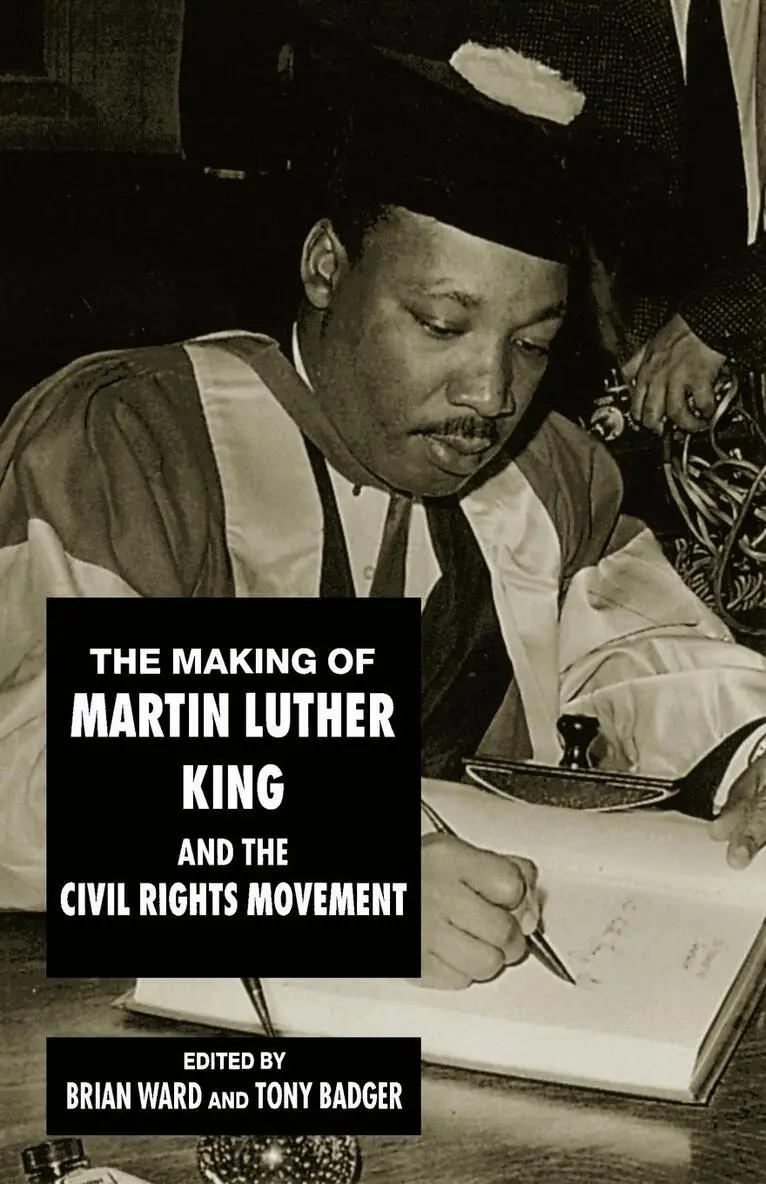
    Making of Martin Luther King and the Civil Rights Movement

    AvHanna Yablonka,Brian Ward

    Häftad, Engelska, 1996

    430 kr

    Beställningsvara. Skickas inom 5-8 vardagar. Fri frakt över 249 kr.

    Beskrivning

    The Making of Martin Luther King and The Civil Rights Movement incorporates the changing focus of civil rights movement studies to focus on communities and leaders heretofore ignored or under-represented, and thereby challenges many of the agendas established by civil rights scholarship of the past twenty-five years. We learn from essays on communities in Louisiana, Arkansas, and Montgomery that key centers of black life, such as unions, schools, teachers, businessmen, and masonic lodges played important roles in the movement. We learn of the importance of influential local leaders such as W. H. Flowers in Arkansas and Edgar Daniel Nixon in Montgomery, who were tremendously effective at organizing on the local level.The volume also confronts paradigms of history such as the notion that the Civil Rights Movement can be traced from the reformist integration of King, to the revolutionary black nationalism of Malcolm X, Stokely Carmichael, and the Black Panther Party. Clayborne Carson argues in a pathbreaking essay that there were radical undercurrents in mass black movements of the 1950s and early 60s, and that these undercurrents contained the seeds of the most significant mass movements of subsequent decades. In contrast, black power militancy of the late 1960's, according to Carson, was either readily suppressed or transformed into forms that did not threaten the dominant political and economic elites.

    Produktinformation

    • Utgivningsdatum:1996-01-01
    • Mått:152 x 229 x 17 mm
    • Vikt:340 g
    • Format:Häftad
    • Språk:Engelska
    • Antal sidor:256
    • Förlag:New York University Press
    • ISBN:9780814792964

    Utforska kategorier

    • Amerikas historia inom Historia och arkeologi

    Mer om författaren

    Brian Ward is Lecturer in American History at the University of Newcastle upon Tyne.Tony Badger is Paul Mellon Professor of American History at the University of Cambridge.

    Recensioner i media

    "The volume effectively challenges accepted notions of "race" and "racial equality" and considers the long-term effects of the struggle on its participants, tracing the development of African-American political thought since the 1960s." (Orlando Times)