• Fri frakt över 249 kr
  • •
  • Snabba leveranser
  • •
  • Billiga böcker
Kundservice

Du är på sajten för privatpersoner.

Företag, bibliotek eller offentlig verksamhet?

Du handlar på classic.bokus.com, där alla dina funktioner finns intakta.
Till classic.bokus.com
Bokus logotyp. Gå till startsidan.
  • Erbjudanden
  • Nyheter
  • Student
  • Topplistor
  • Barn & ungdom
  • Bokus Play
  • E-böcker
  • Pocketböcker
  • Spel & pussel

10% rabatt på allt med kod: NYSTART10 →

Sidfot

Mina sidor

    Hjälp

    • Kundservice
    • Vanliga frågor och svar
    • Frakt och leverans
    • Retur vid ångerrätt
    • Reklamera vara
    • Betalning
    • Köpvillkor
    • Allmänna villkor
    • Information om webbplatsens tillgänglighet

    Om Bokus

    • Om oss
    • Pressrum
    • För studenter
    • För företag
    • För bibliotek och offentlig verksamhet
    • För leverantörer
    • Hållbarhet

    Populärt

    • Aktuella erbjudanden
    • Presentkort
    • Studentlitteratur
    • Nya böcker
    • Topplistor
    • Signerade böcker
    • Engelska böcker

    Inspiration

    • Boktips
    • BookTok
    • Populära bokserier
    • Barnbokskaraktärer
    • Populära författare
    Logotyp för Bokus
    Följ oss på Facebook (extern länk)Följ oss på Instagram (extern länk)Följ oss på YouTube (extern länk)Följ oss på TikTok (extern länk)
    bokus @ CookiesAnpassa cookiesIntegritetspolicyKöpvillkor
    Till Citymail hemsida (extern länk)Till Budbee hemsida (extern länk)Till Postnord hemsida (extern länk)Till Schenker hemsida (extern länk)Till Early Bird hemsida (extern länk)Till Walleys hemsida (extern länk)
    1. Kultur
    2. Arkitektur

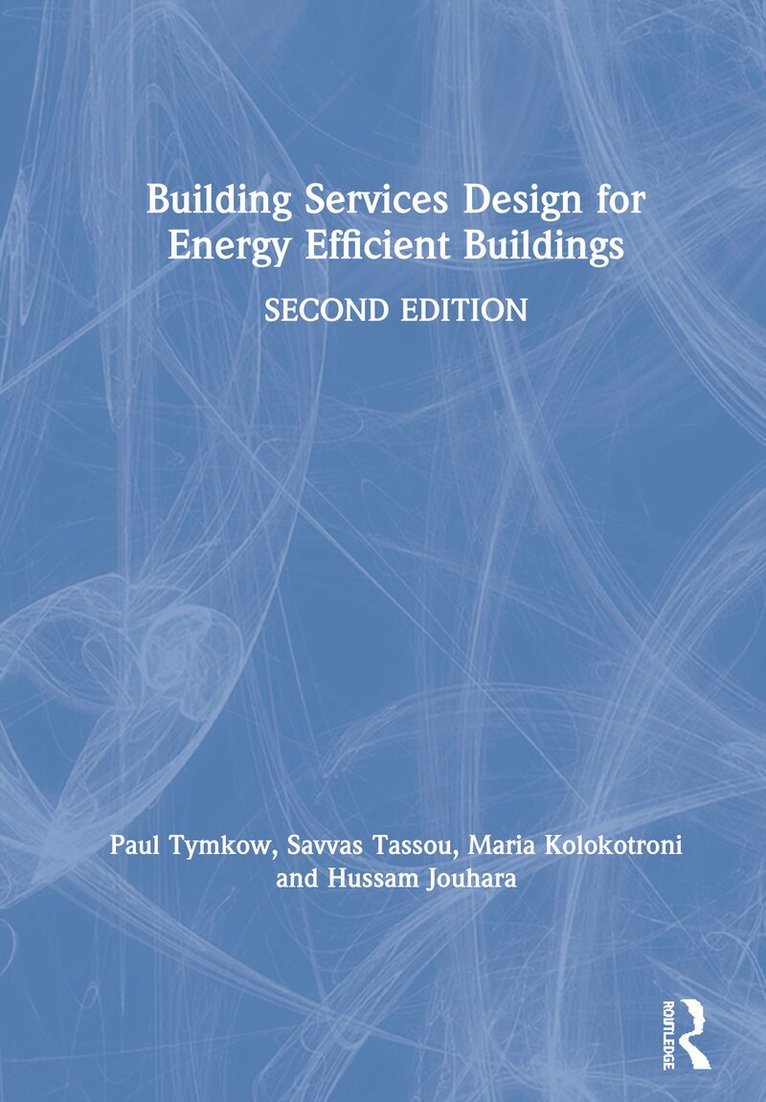
    Building Services Design for Energy Efficient Buildings

    AvPaul Tymkow,Savvas Tassou

    Inbunden, Engelska, 2020

    2 495 kr

    Beställningsvara. Skickas inom 10-15 vardagar. Fri frakt över 249 kr.

    Fler format och utgåvor

    Häftad

    817 kr

    Beskrivning

    The role and influence of building services engineers are undergoing rapid change and are pivotal to achieving low-carbon buildings. However, textbooks in the field have tended to remain fairly traditional with a detailed focus on the technicalities of heating, ventilation and air conditioning (HVAC) systems, often with little wider context. This book addresses that need by embracing a contemporary understanding of the urgent challenge to address climate change, together with practical approaches to energy efficiency and carbon mitigation for mechanical and electrical systems, in a concise manner.The essential conceptual design issues for planning the principal building services systems that influence energy efficiency are examined in detail. These are HVAC and electrical systems. In addition, the following issues are addressed:background issues on climate change, whole-life performance and design collaborationgeneric strategies for energy efficient, low-carbon designhealth and wellbeing and post occupancy evaluationbuilding ventilationair conditioning and HVAC system selectionthermal energy generation and distribution systemslow-energy approaches for thermal controlelectrical systems, data collection, controls and monitoringbuilding thermal load assessmentbuilding electric power load assessmentspace planning and design integration with other disciplines.In order to deliver buildings that help mitigate climate change impacts, a new perspective is required for building services engineers, from the initial conceptual design and throughout the design collaboration with other disciplines. This book provides a contemporary introduction and guide to this new approach, for students and practitioners alike.

    Produktinformation

    • Utgivningsdatum:2020-07-13
    • Mått:174 x 246 x 21 mm
    • Vikt:1 020 g
    • Format:Inbunden
    • Språk:Engelska
    • Antal sidor:380
    • Upplaga:2
    • Förlag:Taylor & Francis Inc
    • ISBN:9780815365600

    Utforska kategorier

    • Arkitektur inom Kultur
    • Byggnadsteknik inom Naturvetenskap och teknik

    Mer om författaren

    Paul Tymkow was at Hoare Lea for 30 years where he was Director of Learning and Knowledge from 2007 to 2018. He has led design groups, project teams and projects in a wide range of sectors, in building services and related areas, for Hoare Lea and other organisations. He was a visiting academic at Brunel University London from 2005 to 2019, where he lectured on the postgraduate programme, and was a Royal Academy of Engineering visiting professor from 2016 to 2019.Savvas Tassou is Professor of Energy Engineering and Director of the Institute of Energy Futures at Brunel University London. He has over 30 years’ academic and research experience in the areas of building services engineering, energy conservation technologies for the built environment and process industries, the design optimisation of these technologies and their optimum integration and control to minimise energy consumption and greenhouse gas emissions.Maria Kolokotroni is Professor of Energy in the Built Environment in the Department of Mechanical and Aerospace Engineering and Institute for Energy Futures, Brunel University London. She teaches ventilation, low-energy technologies and building performance at postgraduate level and carries out research on UK- and European-funded research projects in these fields. She works very closely with industry to transfer research results to application and has contributed to International Energy Agency research projects.Hussam Jouhara is a Professor of Thermal Engineering at Brunel University London. He is an established academic author and an internationally recognised expert in heat exchangers, fluid dynamics and two-phase heat transfer processes. Over a 16-year career, he has developed innovative solutions to heat exchange/heat-pipe problems, resulting in many filed patents, and has attracted substantial research funding from various UK/EU-based research councils and industrial partners.

    Innehållsförteckning

    • 1. Background for an energy-efficient and low-carbon built environment 2. Interdisciplinary design collaboration for energy-efficient buildings 3. Generic design strategies for energy-efficient, low-carbon 4. Post occupancy evaluation for optimal energy and environmental 5. Health and wellbeing 6. Energy efficient ventilation 7. Air conditioning systems 8. Energy-efficient thermal energy generation and distribution in buildings 9. Low energy approaches for the thermal control of buildings 10. Energy-efficient electrical systems, controls and metering 11. Building thermal load calculations 12. Building electric power load assessment 13. Space planning and design integration for services