• Fri frakt över 249 kr
  • •
  • Snabba leveranser
  • •
  • Billiga böcker
Kundservice

Du är på sajten för privatpersoner.

Företag, bibliotek eller offentlig verksamhet?

Du handlar på classic.bokus.com, där alla dina funktioner finns intakta.
Till classic.bokus.com
Bokus logotyp. Gå till startsidan.
  • Erbjudanden
  • Nyheter
  • Student
  • Topplistor
  • Barn & ungdom
  • Bokus Play
  • E-böcker
  • Pocketböcker
  • Spel & pussel

10% rabatt på allt med kod: NYSTART10 →

Sidfot

Mina sidor

    Hjälp

    • Kundservice
    • Vanliga frågor och svar
    • Frakt och leverans
    • Retur vid ångerrätt
    • Reklamera vara
    • Betalning
    • Köpvillkor
    • Allmänna villkor
    • Information om webbplatsens tillgänglighet

    Om Bokus

    • Om oss
    • Pressrum
    • För studenter
    • För företag
    • För bibliotek och offentlig verksamhet
    • För leverantörer
    • Hållbarhet

    Populärt

    • Aktuella erbjudanden
    • Presentkort
    • Studentlitteratur
    • Nya böcker
    • Topplistor
    • Signerade böcker
    • Engelska böcker

    Inspiration

    • Boktips
    • BookTok
    • Populära bokserier
    • Barnbokskaraktärer
    • Populära författare
    Logotyp för Bokus
    Följ oss på Facebook (extern länk)Följ oss på Instagram (extern länk)Följ oss på YouTube (extern länk)Följ oss på TikTok (extern länk)
    bokus @ CookiesAnpassa cookiesIntegritetspolicyKöpvillkor
    Till Citymail hemsida (extern länk)Till Budbee hemsida (extern länk)Till Postnord hemsida (extern länk)Till Schenker hemsida (extern länk)Till Early Bird hemsida (extern länk)Till Walleys hemsida (extern länk)
    1. Språk och ordböcker
    2. Språkundervisning och språkinlärning

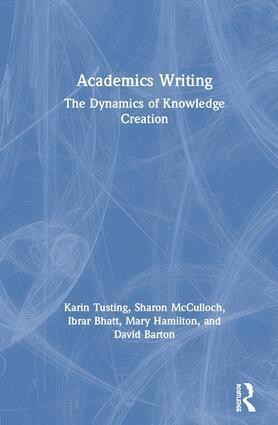
    Academics Writing

    The Dynamics of Knowledge Creation

    AvKarin Tusting,Sharon McCulloch

    Inbunden, Engelska, 2019

    2 493 kr

    Beställningsvara. Skickas inom 10-15 vardagar. Fri frakt över 249 kr.

    Fler format och utgåvor

    Häftad

    644 kr

    Beskrivning

    Academics Writing recounts how academic writing is changing in the contemporary university, transforming what it means to be an academic and how, as a society, we produce academic knowledge. Writing practices are changing as the academic profession itself is reconfigured through new forms of governance and accountability, increasing use of digital resources, and the internationalisation of higher education. Through detailed studies of writing in the daily life of academics in different disciplines and in different institutions, this book explores: the space and time of academic writing; tensions between disciplines and institutions around genres of writing; the diversity of stances adopted towards the tools and technologies of writing, and towards engagement with social media; and the importance of relationships and collaboration with others, in writing and in ongoing learning in a context of constant change.Drawing out implications of the work for academics, university management, professional training, and policy, Academics Writing: The Dynamics of Knowledge Creation is key reading for anyone studying or researching writing, academic support, and development within education and applied linguistics.

    Produktinformation

    • Utgivningsdatum:2019-03-26
    • Mått:156 x 234 x 14 mm
    • Vikt:421 g
    • Format:Inbunden
    • Språk:Engelska
    • Antal sidor:166
    • Förlag:Taylor & Francis Inc
    • ISBN:9780815385912

    Utforska kategorier

    • Språkundervisning och språkinlärning inom Språk och ordböcker
    • Språkvetenskap och lingvistik inom Språk och ordböcker

    Mer om författaren

    Karin Tusting is a senior lecturer in the Department of Linguistics and English Language at Lancaster University. Her research interests lie in workplace literacies and accountability practices, and linguistic ethnography. She has published on academics, writing practices, digital literacies, workplace literacies and audit society, and linguistic ethnography.Sharon McCulloch is a senior lecturer in the School of Language and Global Studies at the University of Central Lancashire. Her research interests lie mainly in L2 writing and academic discourse; in particular how students engage with reading, use source material in their writing, and develop their authorial voice. She is also interested in professional academic writing practices and how institutional and social contexts affect writers.Ibrar Bhatt is a lecturer in the School of Social Sciences, Education and Social Work at Queen’s University Belfast (Northern Ireland, UK). His research and teaching interests are in the fields of applied linguistics (including TESOL), literacy studies, and educational research with new media. He is also a member of the Governing Council of the Society for Research into Higher Education (SRHE), and a convener of its "Digital University Network".Mary Hamilton is Professor Emerita of Adult Learning and Literacy in the Department of Educational Research at Lancaster University, UK. She has a long-standing interest in informal, vernacular learning and how communicative and learning resources are built across the life span. Her current research is in literacy policy and governance, socio-material theory, academic literacies, and change.David Barton is Professor in the Department of Linguistics at Lancaster University, England, and erstwhile Director of the Lancaster Literacy Research Centre. His most recent books, both co-authored and published by Routledge, are Language Online (2013) and Researching Language and Social Media (2014).

    Recensioner i media

    "Through a detailed examination of academics’ writing practices, the authors both ground and critique higher education in its present social and cultural context. This provides the springboard for their exploration of digital scholarship and its implications for academic identity work and knowledge production in an age of social media." Honorary Associate Mary Lea, The Open University, UK

    Innehållsförteckning

    • List of illustrations Preface Acknowledgements Chapter 1: Introduction and context for the study Chapter 2: Theories and methods for studying academics writing Chapter 3: Days in the lives of academics, writing Chapter 4: Academics writing in space and time Chapter 5: Disciplines, genres and writing Chapter 6: Changing tools and technologies in academics’ writing lives Chapter 7: New social media genres: marketing the academic self Chapter 8: Relationships and collaboration in academic writing Chapter 9: Learning academic writing: an ongoing process Chapter 10: The futures of writing: Conclusions and implications References Index