• Fri frakt över 249 kr
  • •
  • Snabba leveranser
  • •
  • Billiga böcker
Kundservice

Du är på sajten för privatpersoner.

Företag, bibliotek eller offentlig verksamhet?

Du handlar på classic.bokus.com, där alla dina funktioner finns intakta.
Till classic.bokus.com
Bokus logotyp. Gå till startsidan.
  • Erbjudanden
  • Nyheter
  • Student
  • Topplistor
  • Barn & ungdom
  • Bokus Play
  • E-böcker
  • Pocketböcker
  • Spel & pussel

10% rabatt på allt med kod: NYSTART10 →

Sidfot

Mina sidor

    Hjälp

    • Kundservice
    • Vanliga frågor och svar
    • Frakt och leverans
    • Retur vid ångerrätt
    • Reklamera vara
    • Betalning
    • Köpvillkor
    • Allmänna villkor
    • Information om webbplatsens tillgänglighet

    Om Bokus

    • Om oss
    • Pressrum
    • För studenter
    • För företag
    • För bibliotek och offentlig verksamhet
    • För leverantörer
    • Hållbarhet

    Populärt

    • Aktuella erbjudanden
    • Presentkort
    • Studentlitteratur
    • Nya böcker
    • Topplistor
    • Signerade böcker
    • Engelska böcker

    Inspiration

    • Boktips
    • BookTok
    • Populära bokserier
    • Barnbokskaraktärer
    • Populära författare
    Logotyp för Bokus
    Följ oss på Facebook (extern länk)Följ oss på Instagram (extern länk)Följ oss på YouTube (extern länk)Följ oss på TikTok (extern länk)
    bokus @ CookiesAnpassa cookiesIntegritetspolicyKöpvillkor
    Till Citymail hemsida (extern länk)Till Budbee hemsida (extern länk)Till Postnord hemsida (extern länk)Till Schenker hemsida (extern länk)Till Early Bird hemsida (extern länk)Till Walleys hemsida (extern länk)
    1. Samhälle och politik
    2. Politik och statsskick
    3. Internationella relationer

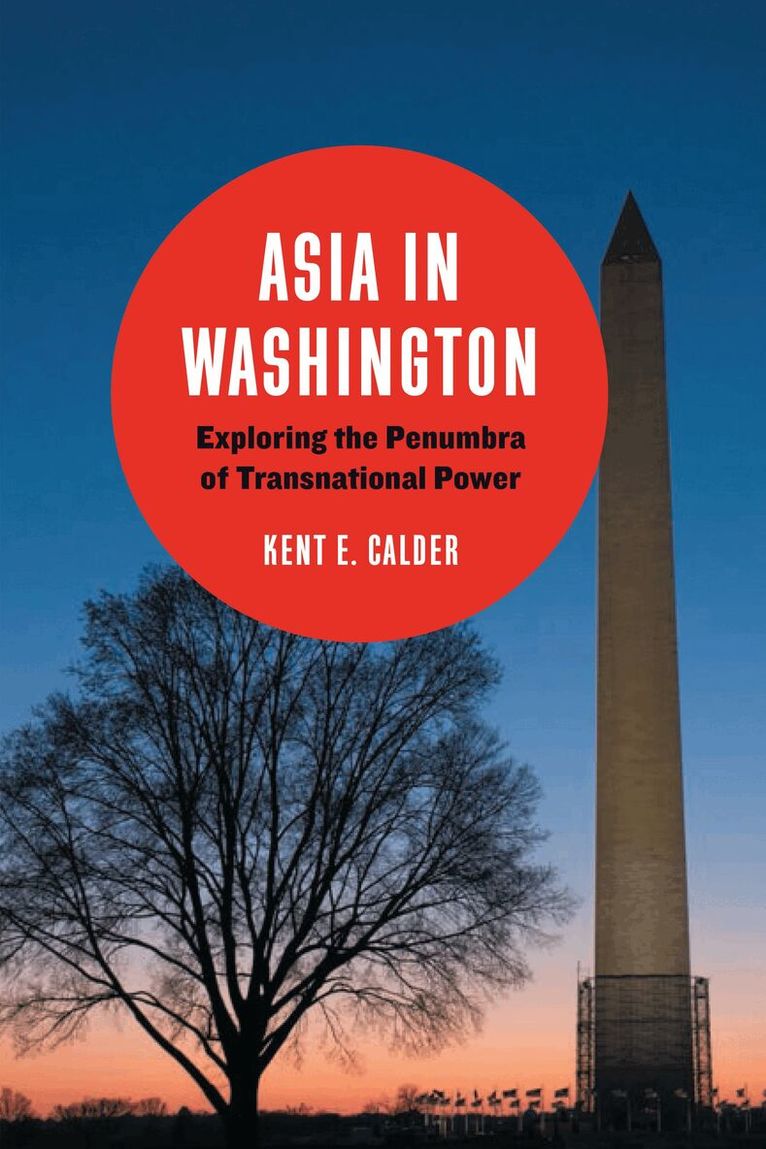
    Asia in Washington

    Exploring the Penumbra of Transnational Power

    AvKent E. Calder

    Häftad, Engelska, 2014

    451 kr

    Beställningsvara. Skickas inom 10-15 vardagar. Fri frakt över 249 kr.

    Fler format och utgåvor

    E-bok

    483 kr

    Beskrivning

    For several centuries, international relations has been primarily the purview of nation-states. Key powers have included at various times Great Britain, France, Japan, China, Russia (then the U.S.S.R., and then Russia again), and the nation most influential in international relations for the past several decades has been the United States. But in a world growing smaller, with a globalizing system increasing in complexity by the day, the nation-state paradigm is not as dominant as it once was.In Asia in Washington, longtime Asia analyst Kent Calder examines the concept of ""global city"" in the context of international affairs. The term typically has been used in an economic context, referring to centers of international finance and commerce such as New York, Tokyo, and London. But Calder extends the concept to political centers as well—particularly in this case, Washington, D.C.Improved communications, enhanced transportation, greater economic integration and activity have created a new economic village, and global political cities are arising within the new structure—distinguished not by their CEOs or stock markets but by their influence over policy decisions, and their amassing of strategic intelligence on topics from national policy trends to geopolitical risk.Calder describes the rise of Washington, D.C., as perhaps the preeminent global political city—seat of the world's most powerful government, center of NGO and multilateral policy activity, the locale of institutions such as the World Bank and IMF, and home to numerous think tanks and universities.Within Washington, the role of Asia is especially relevant for several reasons. It represents the core of the non-Western industrialized world and the most challenge to Western dominance. It also raises the delicate issue of how race matters in international global governance—a factor crucially important during a time of globalization. And since Asia developed later than the West, its changing role in Washington raises major issues regarding how rising powers assimilate themselves into global governance structure. How do Asian nations establish, increase, and leverage their Washington presence, and what is the impact on Washington itself and the decisions made there? Kent Calder explains it all in Asia in Washington.

    Produktinformation

    • Utgivningsdatum:2014-04-23
    • Mått:153 x 229 x 22 mm
    • Vikt:549 g
    • Format:Häftad
    • Språk:Engelska
    • Antal sidor:386
    • Förlag:Bloomsbury Publishing Plc
    • ISBN:9780815725381

    Utforska kategorier

    • Internationella relationer inom Samhälle och politik

    Mer om författaren

    Kent E. Calder is director of the Reischauer Center for East Asian Studies at SAIS/Johns Hopkins University. He is a former special adviser to the U.S. ambassador to Japan, Japan Chair at CSIS, and has been professor at Princeton University for twenty years. His books include Embattled Garrisons: Comparative Base Politics and American Globalism, Pacific Alliance: Reviving U.S.-Japan Relations, and The New Continentalism: Energy and Twenty-First Century Eurasian Geopolitics.

    Recensioner i media

    "Washington and Asia are both changing fast, with major implications for global affairs. Kent Calder knows that story well, from both the policy and the academic angles. His expertise is unsurpassed." —John V. Roos, former U.S. Ambassador to Japan, 2009–13|" Asia in Washington argues that Asian politics has been heavily shaped by the subterranean networks of influence that pervade global cities, and above all, Washington, D.C. Kent Calder has provided a fresh and unexpected perspective on the nature of international relations in our globalized world." —Francis Fukuyama, Olivier Nomellini Senior Fellow, Stanford University|"Calder... has illuminated [Washington's] agenda-setting impact on Asia and Asia's attempts to navigate the city's growing role in U.S.-Asia relations. Others have sought to explain how Washington works (or doesn't), but Calder's approach is unique in being empirically rigorous, conceptually sophisticated, and truly insightful." —Satu Limaye, Director of the East-West Center in Washington