• Fri frakt över 249 kr
  • •
  • Snabba leveranser
  • •
  • Billiga böcker
Kundservice

Du är på sajten för privatpersoner.

Företag, bibliotek eller offentlig verksamhet?

Du handlar på classic.bokus.com, där alla dina funktioner finns intakta.
Till classic.bokus.com
Bokus logotyp. Gå till startsidan.
  • Erbjudanden
  • Nyheter
  • Student
  • Topplistor
  • Barn & ungdom
  • Bokus Play
  • E-böcker
  • Pocketböcker
  • Spel & pussel

10% studentrabatt med kod TERM26

Sidfot

Mina sidor

    Hjälp

    • Kundservice
    • Vanliga frågor och svar
    • Frakt och leverans
    • Retur vid ångerrätt
    • Reklamera vara
    • Betalning
    • Köpvillkor
    • Allmänna villkor
    • Information om webbplatsens tillgänglighet

    Om Bokus

    • Om oss
    • Pressrum
    • För studenter
    • För företag
    • För bibliotek och offentlig verksamhet
    • För leverantörer
    • Hållbarhet

    Populärt

    • Aktuella erbjudanden
    • Presentkort
    • Studentlitteratur
    • Nya böcker
    • Topplistor
    • Signerade böcker
    • Engelska böcker

    Inspiration

    • Boktips
    • BookTok
    • Populära bokserier
    • Barnbokskaraktärer
    • Populära författare
    Logotyp för Bokus
    Följ oss på Facebook (extern länk)Följ oss på Instagram (extern länk)Följ oss på YouTube (extern länk)Följ oss på TikTok (extern länk)
    bokus @ CookiesAnpassa cookiesIntegritetspolicyKöpvillkor
    Till Citymail hemsida (extern länk)Till Budbee hemsida (extern länk)Till Postnord hemsida (extern länk)Till Schenker hemsida (extern länk)Till Early Bird hemsida (extern länk)Till Walleys hemsida (extern länk)
    1. Historia och arkeologi
    2. Historia

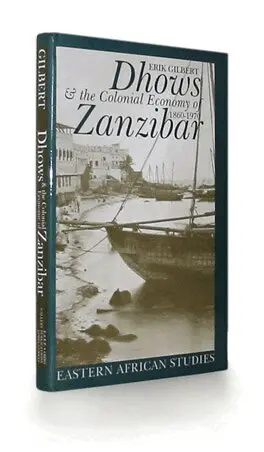
    Dhows and the Colonial Economy of Zanzibar, 1860-1970

    1860-1970

    AvErik Gilbert

    Häftad, Engelska, 2005

    Del i serien Eastern African Studies

    417 kr

    Beställningsvara. Skickas inom 5-8 vardagar. Fri frakt över 249 kr.

    Fler format och utgåvor

    Häftad

    296 kr

    Beskrivning

    Conventional history assumes that the rise of the steamship trade killed off the Indian Ocean dhow trade in the twentieth century. Erik Gilbert argues that the dhow economy played a major role in shaping the economic and social life of colonial Zanzibar. Dhows, and the regional trade they fostered, allowed a class of indigenous entrepreneurs to thrive in Zanzibar. These entrepreneurs, whose economic interests stretched across continents and colonial boundaries, were able to thwart or shape many of the colonial state's pet projects. Not only did steamships fail to drive out indigenous sailing craft, but in some cases dhows were able to drive the steamer out of specific market niches. In highlighting the role of East Africa's commercial connections to the Middle East and India during the colonial period, Dhows and the Colonial Economy of Zanzibar, 1860-1970 makes a major contribution to African history as part of world history.

    Produktinformation

    • Utgivningsdatum:2005-02-15
    • Mått:133 x 216 x 10 mm
    • Vikt:230 g
    • Format:Häftad
    • Språk:Engelska
    • Serie:Eastern African Studies
    • Antal sidor:288
    • Förlag:Ohio University Press
    • ISBN:9780821415580

    Utforska kategorier

    • Historia inom Historia och arkeologi
    • Afrikas historia inom Historia och arkeologi

    Mer om författaren

    Erik Gilbert is an assistant professor of history at Arkansas State University.

    Recensioner i media

    "Essential reading for anyone interested in Indian Ocean trade or the limits of 'modernization' during the colonial era." (The International History Review) "Well-written, succinct…Clearly this volume is an excellent resource for scholars as well as a useful, thought-provoking text for any graduate or undergraduate seminar." (Itinerario) "Dhows and the Colonial Economy of Zanzibar provides the most thorough discussion to date of the centrality of the dhow to Zanzibar's economic history. Generously illustrated and concisely written…provides a very readable account of colonial attempts to rationalize Zanzibar's economy and the challenges inherent in this process." (The International Journal of African Historical Studies) "This agreeably written and copiously illustrated book deserves a wide audience, especially from maritime historians and those studying the East African coast." (International Journal of Maritime History)