• Fri frakt över 249 kr
  • •
  • Snabba leveranser
  • •
  • Billiga böcker
Kundservice

Du är på sajten för privatpersoner.

Företag, bibliotek eller offentlig verksamhet?

Du handlar på classic.bokus.com, där alla dina funktioner finns intakta.
Till classic.bokus.com
Bokus logotyp. Gå till startsidan.
  • Erbjudanden
  • Nyheter
  • Student
  • Topplistor
  • Barn & ungdom
  • Bokus Play
  • E-böcker
  • Pocketböcker
  • Spel & pussel

10% rabatt på allt med kod NYSTART10 →

Sidfot

Mina sidor

    Hjälp

    • Kundservice
    • Vanliga frågor och svar
    • Frakt och leverans
    • Retur vid ångerrätt
    • Reklamera vara
    • Betalning
    • Köpvillkor
    • Allmänna villkor
    • Information om webbplatsens tillgänglighet

    Om Bokus

    • Om oss
    • Pressrum
    • För studenter
    • För företag
    • För bibliotek och offentlig verksamhet
    • För leverantörer
    • Hållbarhet

    Populärt

    • Aktuella erbjudanden
    • Presentkort
    • Studentlitteratur
    • Nya böcker
    • Topplistor
    • Signerade böcker
    • Engelska böcker

    Inspiration

    • Boktips
    • BookTok
    • Populära bokserier
    • Barnbokskaraktärer
    • Populära författare
    Logotyp för Bokus
    Följ oss på Facebook (extern länk)Följ oss på Instagram (extern länk)Följ oss på YouTube (extern länk)Följ oss på TikTok (extern länk)
    bokus @ CookiesAnpassa cookiesIntegritetspolicyKöpvillkor
    Till Citymail hemsida (extern länk)Till Budbee hemsida (extern länk)Till Postnord hemsida (extern länk)Till Schenker hemsida (extern länk)Till Early Bird hemsida (extern länk)Till Walleys hemsida (extern länk)
    1. Samhälle och politik
    2. Sociologi och antropologi
    3. Sociologi

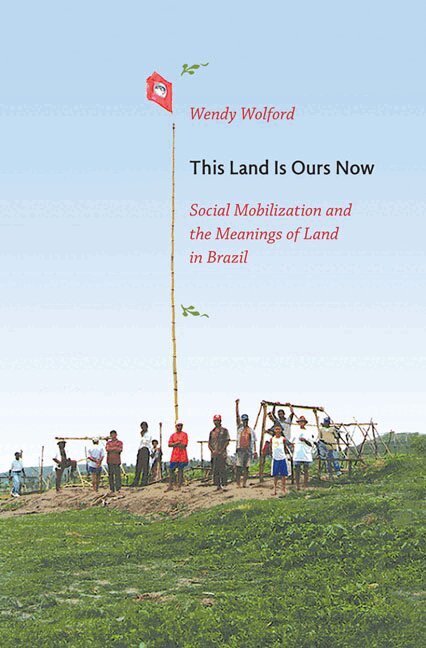
    This Land Is Ours Now

    Social Mobilization and the Meanings of Land in Brazil

    AvWendy Wolford

    Häftad, Engelska, 2010

    377 kr

    Beställningsvara. Skickas inom 5-8 vardagar. Fri frakt över 249 kr.

    Fler format och utgåvor

    E-bok

    568 kr

    Beskrivning

    In This Land Is Ours Now, Wendy Wolford presents an original framework for understanding social mobilization. She argues that social movements are not the politically coherent, bounded entities often portrayed by scholars, the press, and movement leaders. Instead, they are constantly changing mediations between localized moral economies and official movement ideologies. Wolford develops her argument by analyzing how a particular social movement works: Brazil’s Rural Landless Workers’ Movement, known as the Movimento Sem Terra (MST). Founded in the southernmost states of Brazil in the mid-1980s, this extraordinary grassroots agrarian movement grew dramatically in the ensuing years. By the late 1990s it was the most dynamic, well-organized social movement in Brazilian history. Drawing on extensive ethnographic research, Wolford compares the development of the movement in Brazil’s southern state of Santa Catarina and its northeastern state of Pernambuco. As she explains, in the south, most of the movement’s members were sons and daughters of small peasant farmers; in the northeast, they were almost all former plantation workers, who related awkwardly to the movement’s agenda of accessing “land for those who work it.” The MST became an effective presence in Pernambuco only after the local sugarcane economy had collapsed. Worldwide sugarcane prices dropped throughout the 1990s, and by 1999 the MST was a prominent political organizer in the northeastern plantation region. Yet fewer than four years later, most of the region’s workers had dropped out of the movement. By delving into the northeastern workers’ motivations for joining and then leaving the MST, Wolford adds nuance and depth to accounts of a celebrated grassroots social movement, and she highlights the contingent nature of social movements and political identities more broadly.

    Produktinformation

    • Utgivningsdatum:2010-01-27
    • Mått:156 x 241 x 18 mm
    • Vikt:413 g
    • Format:Häftad
    • Språk:Engelska
    • Antal sidor:296
    • Förlag:Duke University Press
    • ISBN:9780822345398

    Utforska kategorier

    • Sociologi inom Samhälle och politik

    Mer om författaren

    Wendy Wolford is Associate Professor of Sociology at Cornell University.

    Recensioner i media

    “Wolford’s narrative style accommodates her heterogeneous sources, but she is rooted in ethnography, and the density of her description is a significantvirtue. She allows space for extended material directly from interviews with MST settlers and leaders, which ground her analysis. In her conclusion, she offers a careful, balanced, and subtle evaluation of President Lula’s record on agrarian reform that avoids the polemics associated with this subject.” - Thomas D. Rogers, Hispanic American Historical Review “This Land Is Ours Now is destined to become a classic in social movement literature and among those who study property relations, land tenure, and development policy. Offering a fresh, honest, and insightful take on a compelling but previously oversimplified story, it has broad implications for the political strategies of social movements, autonomous communities, and development alternatives in Latin America and throughout the world.”-Dianne Rocheleau, Professor of Geography and Global Environmental Studies, Clark University “Precious few ethnographic subjects have ever been accorded the respect, critical eye, and deep attention Wendy Wolford pays on every page to ordinary Brazilians. Her study of the MST is exemplary in every way. The voices and texture are palpable and are woven into an analytically powerful and conceptually original argument. A signal contribution to the study of land reform, of social movements, and of Brazilian politics. I’m frankly a little jealous of what she has achieved here.”-James C. Scott, Sterling Professor of Political Science and Anthropology, Yale University “Wolford’s narrative style accommodates her heterogeneous sources, but she is rooted in ethnography, and the density of her description is a significant virtue. She allows space for extended material directly from interviews with MST settlers and leaders, which ground her analysis. In her conclusion, she offers a careful, balanced, and subtle evaluation of President Lula’s record on agrarian reform that avoids the polemics associated with this subject.” - Thomas D. Rogers (Hispanic American Historical Review)

    Innehållsförteckning

    • List of Illustrations List of Tables Acknowledgments 1. Mobilization within Movements 2. The Making of a Movement in Southern Brazil 3. The MST's Imagined Community and Agrarian Populism 4. The Making of a Movement in Northeastern Brazil 5. Moral Economies of Sugarcane and Social Mobilization 6. Going Bananas: Producing for Market, State, and Movement Conclusion Notes Bibliography Index