• Fri frakt över 249 kr
  • •
  • Snabba leveranser
  • •
  • Billiga böcker
Kundservice

Du är på sajten för privatpersoner.

Företag, bibliotek eller offentlig verksamhet?

Du handlar på classic.bokus.com, där alla dina funktioner finns intakta.
Till classic.bokus.com
Bokus logotyp. Gå till startsidan.
  • Erbjudanden
  • Nyheter
  • Student
  • Topplistor
  • Barn & ungdom
  • Bokus Play
  • E-böcker
  • Pocketböcker
  • Spel & pussel

10% rabatt på allt med kod NYSTART10 →

Sidfot

Mina sidor

    Hjälp

    • Kundservice
    • Vanliga frågor och svar
    • Frakt och leverans
    • Retur vid ångerrätt
    • Reklamera vara
    • Betalning
    • Köpvillkor
    • Allmänna villkor
    • Information om webbplatsens tillgänglighet

    Om Bokus

    • Om oss
    • Pressrum
    • För studenter
    • För företag
    • För bibliotek och offentlig verksamhet
    • För leverantörer
    • Hållbarhet

    Populärt

    • Aktuella erbjudanden
    • Presentkort
    • Studentlitteratur
    • Nya böcker
    • Topplistor
    • Signerade böcker
    • Engelska böcker

    Inspiration

    • Boktips
    • BookTok
    • Populära bokserier
    • Barnbokskaraktärer
    • Populära författare
    Logotyp för Bokus
    Följ oss på Facebook (extern länk)Följ oss på Instagram (extern länk)Följ oss på YouTube (extern länk)Följ oss på TikTok (extern länk)
    bokus @ CookiesAnpassa cookiesIntegritetspolicyKöpvillkor
    Till Citymail hemsida (extern länk)Till Budbee hemsida (extern länk)Till Postnord hemsida (extern länk)Till Schenker hemsida (extern länk)Till Early Bird hemsida (extern länk)Till Walleys hemsida (extern länk)
    1. Språk och ordböcker
    2. Språkvetenskap och lingvistik

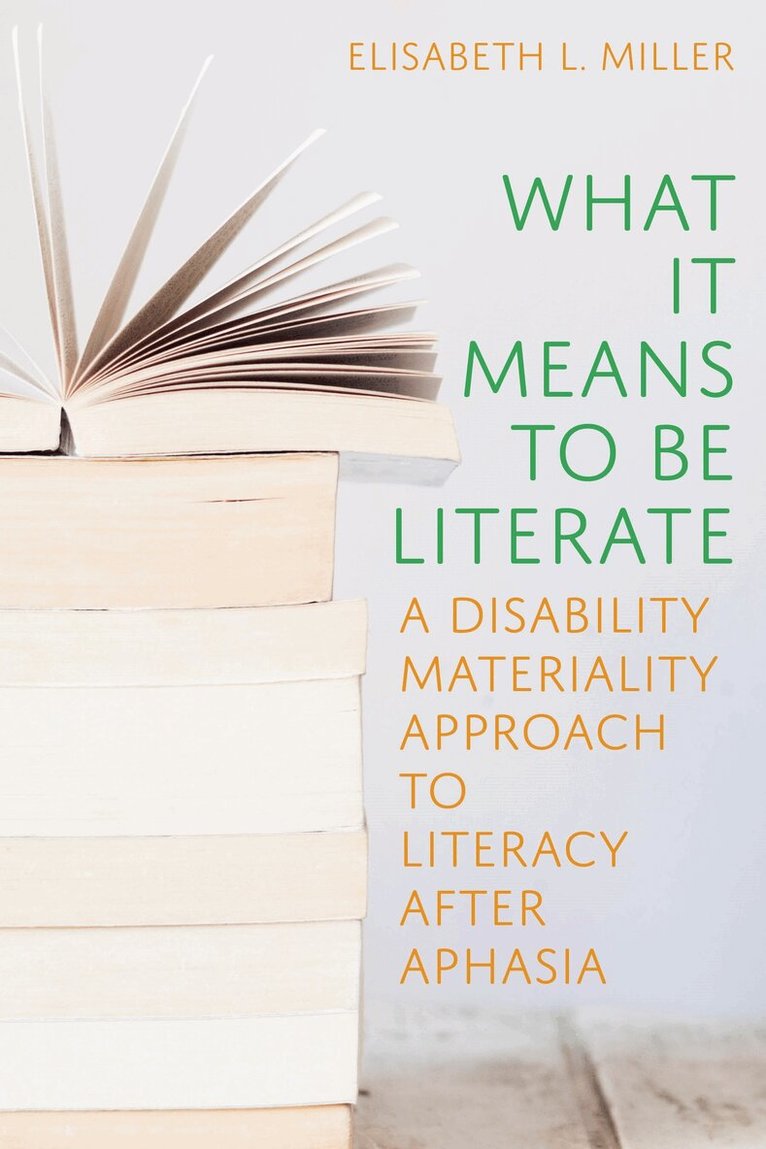
    What It Means to Be Literate

    A Disability Materiality Approach to Literacy after Aphasia

    AvElisabeth L. Miller

    Inbunden, Engelska, 2022

    Del i serien Composition, Literacy, and Culture

    787 kr

    Beställningsvara. Skickas inom 5-8 vardagar. Fri frakt över 249 kr.

    Beskrivning

    Disability and literacy are often understood as incompatible. Disability is taken to be a sign of illiteracy, and illiteracy to be a sign of disability. These oppositions generate damaging consequences for disabled students (and those labeled as such) who are denied full literacy education and for nonliterate adults who are perceived as lacking intelligence, knowledge, and ability. What It Means to Be Literate turns attention to disabled writers themselves, exposing how the cultural oppositions between disability and literacy affect how people understand themselves as literate and even as fully human. Drawing on interviews with individuals who have experienced strokes and brain injuries causing the language disability aphasia, Elisabeth L. Miller argues for the importance of taking a disability materiality approach to literacy that accounts for the embodied, material experiences of disabled people writing and reading. This approach reveals how aphasic writers’ literate practices may reinscribe, challenge, or even exceed scripts around the body in literacy (how brains, hands, eyes, mouths, voice boxes, and more operate to make reading and writing happen) as well as what and how spaces, activities, tools, and materials matter in literate practice. Miller pushes for a deeper understanding of how individuals’ specific bodies always matter for literate practice and identity, enabling researchers to better account for, and counter, ableist literate norms.

    Produktinformation

    • Utgivningsdatum:2022-11-01
    • Mått:152 x 229 x 26 mm
    • Vikt:436 g
    • Format:Inbunden
    • Språk:Engelska
    • Serie:Composition, Literacy, and Culture
    • Antal sidor:188
    • Förlag:University of Pittsburgh Press
    • ISBN:9780822947233

    Utforska kategorier

    • Språkvetenskap och lingvistik inom Språk och ordböcker

    Mer om författaren

    Elisabeth L. Miller is assistant professor of English and director of the Writing and Speaking in the Disciplines Program at University of Nevada, Reno. She researches and teaches about literacy, disability, and writing across the curriculum.

    Recensioner i media

    In What It Means to Be Literate, Elisabeth L. Miller challenges long-held assumptions about the relationship between embodiment, literacy, and disability as she takes a disability materiality look at literate practices navigated by people experiencing aphasia. In helping us listen to stories about literacy, she also pushes readers to recognize the layers of stigma and ableism that are part of everyday literacy experiences, but which are not always readily recognized in combination. This is a necessary read for anyone interested in literacy studies or disability studies for understanding the complex interrelationships between literacy and disability.