• Fri frakt över 249 kr
  • •
  • Snabba leveranser
  • •
  • Billiga böcker
Kundservice

Du är på sajten för privatpersoner.

Företag, bibliotek eller offentlig verksamhet?

Du handlar på classic.bokus.com, där alla dina funktioner finns intakta.
Till classic.bokus.com
Bokus logotyp. Gå till startsidan.
  • Erbjudanden
  • Nyheter
  • Student
  • Topplistor
  • Barn & ungdom
  • Bokus Play
  • E-böcker
  • Pocketböcker
  • Spel & pussel

10% rabatt på allt med kod: NYSTART10 →

Sidfot

Mina sidor

    Hjälp

    • Kundservice
    • Vanliga frågor och svar
    • Frakt och leverans
    • Retur vid ångerrätt
    • Reklamera vara
    • Betalning
    • Köpvillkor
    • Allmänna villkor
    • Information om webbplatsens tillgänglighet

    Om Bokus

    • Om oss
    • Pressrum
    • För studenter
    • För företag
    • För bibliotek och offentlig verksamhet
    • För leverantörer
    • Hållbarhet

    Populärt

    • Aktuella erbjudanden
    • Presentkort
    • Studentlitteratur
    • Nya böcker
    • Topplistor
    • Signerade böcker
    • Engelska böcker

    Inspiration

    • Boktips
    • BookTok
    • Populära bokserier
    • Barnbokskaraktärer
    • Populära författare
    Logotyp för Bokus
    Följ oss på Facebook (extern länk)Följ oss på Instagram (extern länk)Följ oss på YouTube (extern länk)Följ oss på TikTok (extern länk)
    bokus @ CookiesAnpassa cookiesIntegritetspolicyKöpvillkor
    Till Citymail hemsida (extern länk)Till Budbee hemsida (extern länk)Till Postnord hemsida (extern länk)Till Schenker hemsida (extern länk)Till Early Bird hemsida (extern länk)Till Walleys hemsida (extern länk)
    1. Historia och arkeologi
    2. Historia
    3. Amerikas historia

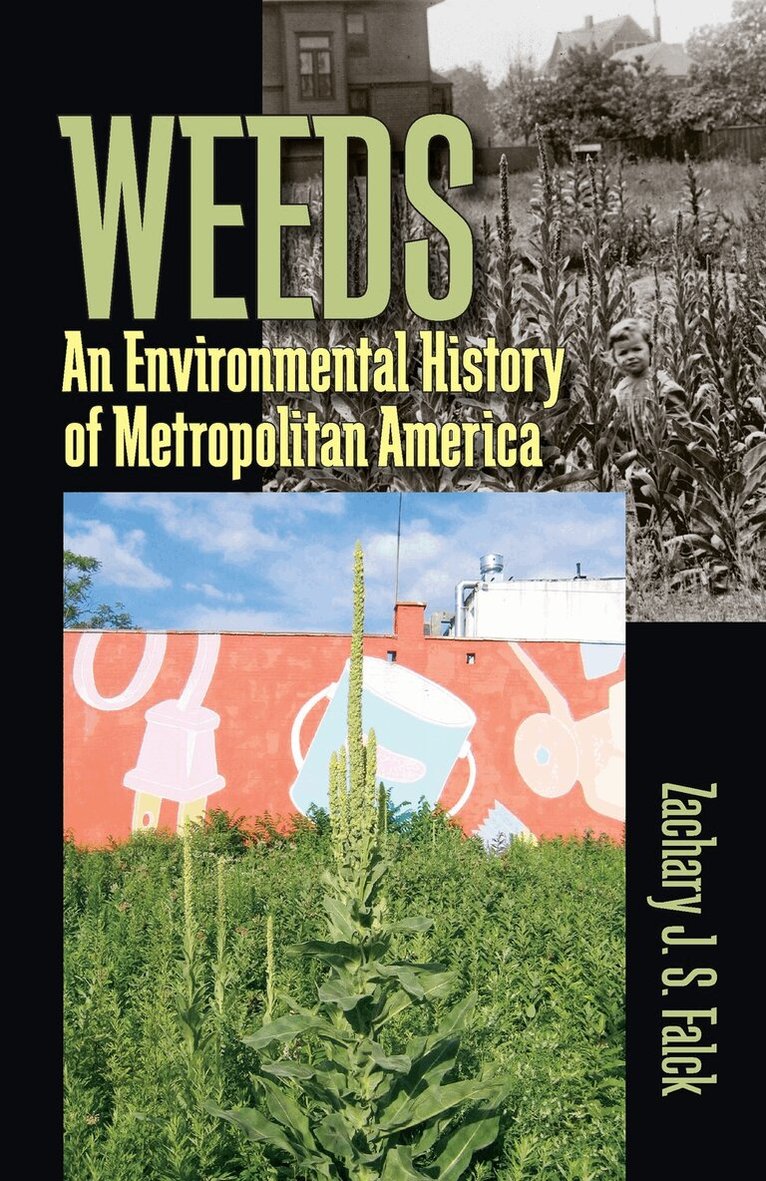
    Weeds

    An Environmental History of Metropolitan America

    AvZachary Falck

    Häftad, Engelska, 2016

    Del i serien History of the Urban Environment

    689 kr

    Beställningsvara. Skickas inom 5-8 vardagar. Fri frakt över 249 kr.

    Beskrivning

    As long as humans have existed, they've worked and competed with plants to shape their surroundings. As cities developed and expanded, their diverse spaces were covered with and colored by weeds. In Weeds, Zachary J. S. Falck presents a comprehensive history of "happenstance plants" in American urban environments. Beginning in the late nineteenth century and continuing to the present, he examines the proliferation, perception, and treatment of weeds in metropolitan centers from Boston to Los Angeles.In dynamic city ecosystems, population movements and economic cycles establish and transform habitats where vegetation continuously changes. Americans came to associate weeds with infectious diseases and allergies, illegal dumping, vagrants, drug dealers, and decreased property values. Local governments and citizens' groups attempted to eliminate unwanted plants to better their urban environments and improve the health and safety of inhabitants. Over time, a growing understanding of the natural environment made "happenstance plants" more tolerable and even desirable.In the twenty-first century, scientists have warned that the effects of global warming and the heat-trapping properties of cities are producing more robust strains of weeds. Falck shows that nature continues to flourish where humans have struggled: in the aftermath of Hurricane Katrina, in the abandoned homes of the California housing bust, and alongside crumbling infrastructure. Weeds are here to stay.

    Produktinformation

    • Utgivningsdatum:2016-01-29
    • Mått:152 x 229 x 23 mm
    • Vikt:408 g
    • Format:Häftad
    • Språk:Engelska
    • Serie:History of the Urban Environment
    • Antal sidor:280
    • Förlag:University of Pittsburgh Press
    • ISBN:9780822964025

    Utforska kategorier

    • Amerikas historia inom Historia och arkeologi
    • Miljöteknik inom Naturvetenskap och teknik

    Mer om författaren

    Zachary J. S. Falck, Ph.D. is a historian who resides in Pittsburgh, PA.

    Recensioner i media

    An important reconsideration of the story of urban development during the last two centurires. . . . Commendable for its author's ability to tease out the social and the ecological in order to tell a sophisticated urban environmental history.