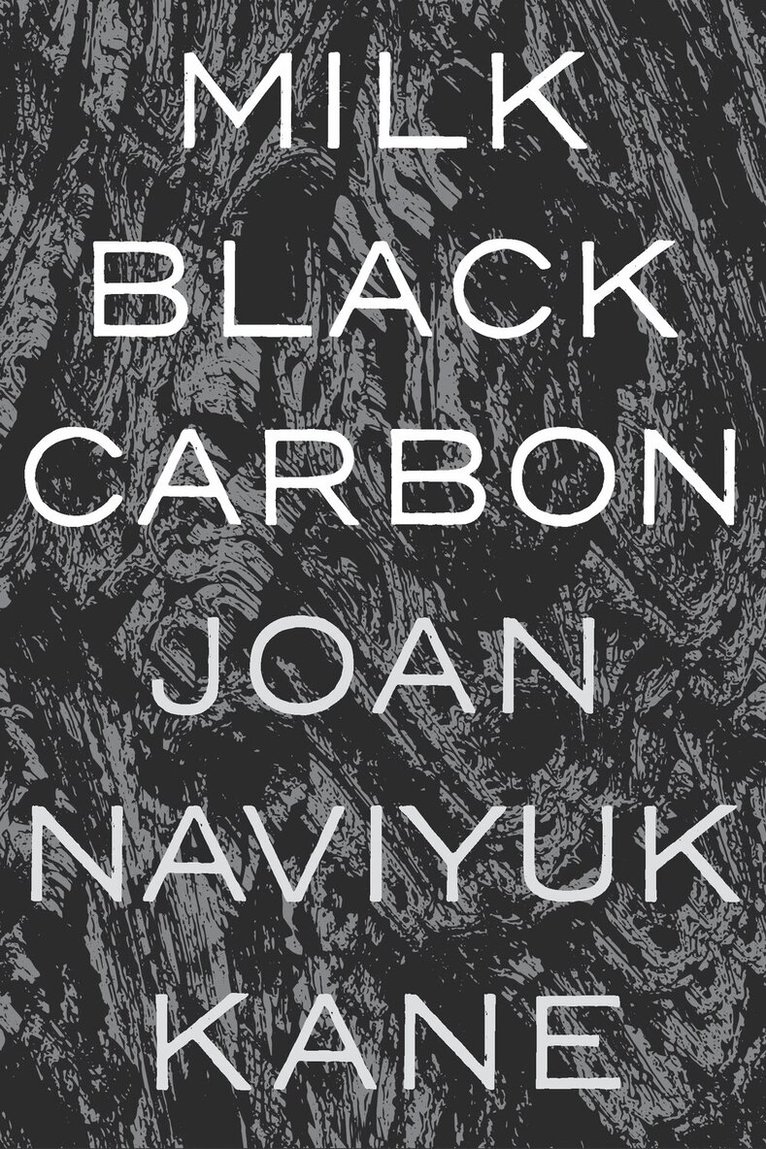
Milk Black Carbon
289 kr
Beställningsvara. Skickas inom 3-6 vardagar. Fri frakt över 249 kr.
Du är på sajten för privatpersoner.
289 kr
Beställningsvara. Skickas inom 3-6 vardagar. Fri frakt över 249 kr.
Joan Naviyuk Kane is the author of the poetry collections The Cormorant Hunter’s Wife, Hyperboreal, Milk Black Carbon, and Dark Traffic. Her edited volumes include The Griffin Poetry Prize 2017 Anthologyand Circumpolar Connections: Creative Indigenous Geographies of the Arctic. A Guggenheim Fellow, Radcliffe Fellow, Native Arts and Cultures Foundation National Artist Fellow, Whiting Award winner, and Paul Engle Prize recipient, she’s a 2025 United States Artists Fellow based in Oregon, where she’s an associate professor at Reed College.
Milk Black Carbon is at once a brilliant work of lyric art and a decoding of knowledges written 'in the dark cursive of a wolf/circling on sea ice.' Kane's is a vertiginous sensibility, chiseled into language in a precarious time, as the rising seas 'rephrase us.' She writes in English and Inupiaq Eskimo, toward a horizon of radical futurity, against nostalgia, with awareness that there is no turning back. This is a twenty-first century poetry, urgent, necessary, and of its time.
Du är på sajten för privatpersoner.
289 kr
Beställningsvara. Skickas inom 3-6 vardagar. Fri frakt över 249 kr.
Joan Naviyuk Kane is the author of the poetry collections The Cormorant Hunter’s Wife, Hyperboreal, Milk Black Carbon, and Dark Traffic. Her edited volumes include The Griffin Poetry Prize 2017 Anthologyand Circumpolar Connections: Creative Indigenous Geographies of the Arctic. A Guggenheim Fellow, Radcliffe Fellow, Native Arts and Cultures Foundation National Artist Fellow, Whiting Award winner, and Paul Engle Prize recipient, she’s a 2025 United States Artists Fellow based in Oregon, where she’s an associate professor at Reed College.
Milk Black Carbon is at once a brilliant work of lyric art and a decoding of knowledges written 'in the dark cursive of a wolf/circling on sea ice.' Kane's is a vertiginous sensibility, chiseled into language in a precarious time, as the rising seas 'rephrase us.' She writes in English and Inupiaq Eskimo, toward a horizon of radical futurity, against nostalgia, with awareness that there is no turning back. This is a twenty-first century poetry, urgent, necessary, and of its time.