• Fri frakt över 249 kr
  • •
  • Snabba leveranser
  • •
  • Billiga böcker
Kundservice

Du är på sajten för privatpersoner.

Företag, bibliotek eller offentlig verksamhet?

Du handlar på classic.bokus.com, där alla dina funktioner finns intakta.
Till classic.bokus.com
Bokus logotyp. Gå till startsidan.
  • Erbjudanden
  • Nyheter
  • Student
  • Topplistor
  • Barn & ungdom
  • Bokus Play
  • E-böcker
  • Pocketböcker
  • Spel & pussel

10% rabatt på allt med kod: NYSTART10 →

Sidfot

Mina sidor

    Hjälp

    • Kundservice
    • Vanliga frågor och svar
    • Frakt och leverans
    • Retur vid ångerrätt
    • Reklamera vara
    • Betalning
    • Köpvillkor
    • Allmänna villkor
    • Information om webbplatsens tillgänglighet

    Om Bokus

    • Om oss
    • Pressrum
    • För studenter
    • För företag
    • För bibliotek och offentlig verksamhet
    • För leverantörer
    • Hållbarhet

    Populärt

    • Aktuella erbjudanden
    • Presentkort
    • Studentlitteratur
    • Nya böcker
    • Topplistor
    • Signerade böcker
    • Engelska böcker

    Inspiration

    • Boktips
    • BookTok
    • Populära bokserier
    • Barnbokskaraktärer
    • Populära författare
    Logotyp för Bokus
    Följ oss på Facebook (extern länk)Följ oss på Instagram (extern länk)Följ oss på YouTube (extern länk)Följ oss på TikTok (extern länk)
    bokus @ CookiesAnpassa cookiesIntegritetspolicyKöpvillkor
    Till Citymail hemsida (extern länk)Till Budbee hemsida (extern länk)Till Postnord hemsida (extern länk)Till Schenker hemsida (extern länk)Till Early Bird hemsida (extern länk)Till Walleys hemsida (extern länk)
    1. Samhälle och politik
    2. Politik och statsskick
    3. Internationella relationer

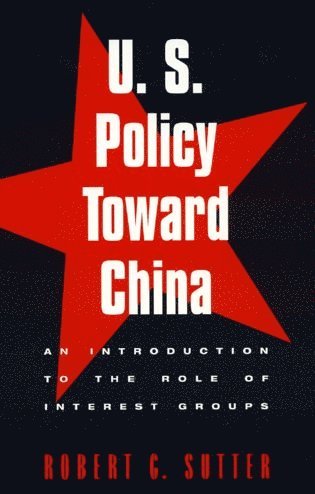
    U.S. Policy Toward China

    An Introduction to the Role of Interest Groups

    AvRobert G. Sutter

    Häftad, Engelska, 1998

    548 kr

    Beställningsvara. Skickas inom 10-15 vardagar. Fri frakt över 249 kr.

    Beskrivning

    Increased fluidity and pluralism in U.S. policy toward China in the post–Cold War period have led to growing non-governmental influence as both the administration and Congress have become the target of intense lobbying by organized groups concerned with human rights, trade opportunities, relations with Taiwan, and other hotly debated issues. This balanced study examines the central role of these organizations, focusing especially on two key cases of policy reversal: President Clinton's 1994 decision to delink human rights concerns from trade access and his 1995 decision to allow Taiwan's president to visit the United States, albeit in a private capacity. The recent movement toward a more consistent and coherent administration policy on China remains tentative and has been under mounting attack, especially in the wake of Asian campaign contributions. Although recognizing that U.S. policymakers must consider a wider range of interests than was the case during the Cold War, Sutter argues that following the prevailing consensus among organized interests may lead to bad policy. Instead, he contends that U.S. foreign policy must strike a balance between satisfying domestic concerns while buttressing interests abroad.

    Produktinformation

    • Utgivningsdatum:1998-09-03
    • Mått:151 x 229 x 13 mm
    • Vikt:254 g
    • Format:Häftad
    • Språk:Engelska
    • Antal sidor:184
    • Förlag:Bloomsbury Publishing Plc
    • ISBN:9780847687251

    Utforska kategorier

    • Internationella relationer inom Samhälle och politik

    Mer om författaren

    Robert G. Sutter was an analyst of Asian and Pacific affairs and American foreign policy for the U.S. government for thirty years. He is now Professor of Practice of International Affairs, Elliott School of International Affairs, George Washington University.

    Recensioner i media

    Sutter portrays a very interesting phenomenon in U.S.-China foreign relations, and his book serves as a good introduction to the role of interest groups in foreign policy-making.

    Innehållsförteckning

    • Chapter 1 IntroductionChapter 2 Rising Influence After the Cold WarChapter 3 The MFN Debate during the Bush AdministrationChapter 4 The MFN Debate during the Clinton AdministrationChapter 5 The Taiwan Crisis of 1995-1996Chapter 6 Convergence and Conflict in U.S.-China Policy, 1996-1997Chapter 7 AppendixChapter 8 Chronology