• Fri frakt över 249 kr
  • •
  • Snabba leveranser
  • •
  • Billiga böcker
Kundservice

Du är på sajten för privatpersoner.

Företag, bibliotek eller offentlig verksamhet?

Du handlar på classic.bokus.com, där alla dina funktioner finns intakta.
Till classic.bokus.com
Bokus logotyp. Gå till startsidan.
  • Erbjudanden
  • Nyheter
  • Student
  • Topplistor
  • Barn & ungdom
  • Bokus Play
  • E-böcker
  • Pocketböcker
  • Spel & pussel

10% rabatt på allt med kod: NYSTART10 →

Sidfot

Mina sidor

    Hjälp

    • Kundservice
    • Vanliga frågor och svar
    • Frakt och leverans
    • Retur vid ångerrätt
    • Reklamera vara
    • Betalning
    • Köpvillkor
    • Allmänna villkor
    • Information om webbplatsens tillgänglighet

    Om Bokus

    • Om oss
    • Pressrum
    • För studenter
    • För företag
    • För bibliotek och offentlig verksamhet
    • För leverantörer
    • Hållbarhet

    Populärt

    • Aktuella erbjudanden
    • Presentkort
    • Studentlitteratur
    • Nya böcker
    • Topplistor
    • Signerade böcker
    • Engelska böcker

    Inspiration

    • Boktips
    • BookTok
    • Populära bokserier
    • Barnbokskaraktärer
    • Populära författare
    Logotyp för Bokus
    Följ oss på Facebook (extern länk)Följ oss på Instagram (extern länk)Följ oss på YouTube (extern länk)Följ oss på TikTok (extern länk)
    bokus @ CookiesAnpassa cookiesIntegritetspolicyKöpvillkor
    Till Citymail hemsida (extern länk)Till Budbee hemsida (extern länk)Till Postnord hemsida (extern länk)Till Schenker hemsida (extern länk)Till Early Bird hemsida (extern länk)Till Walleys hemsida (extern länk)
    1. Kultur
    2. Arkitektur

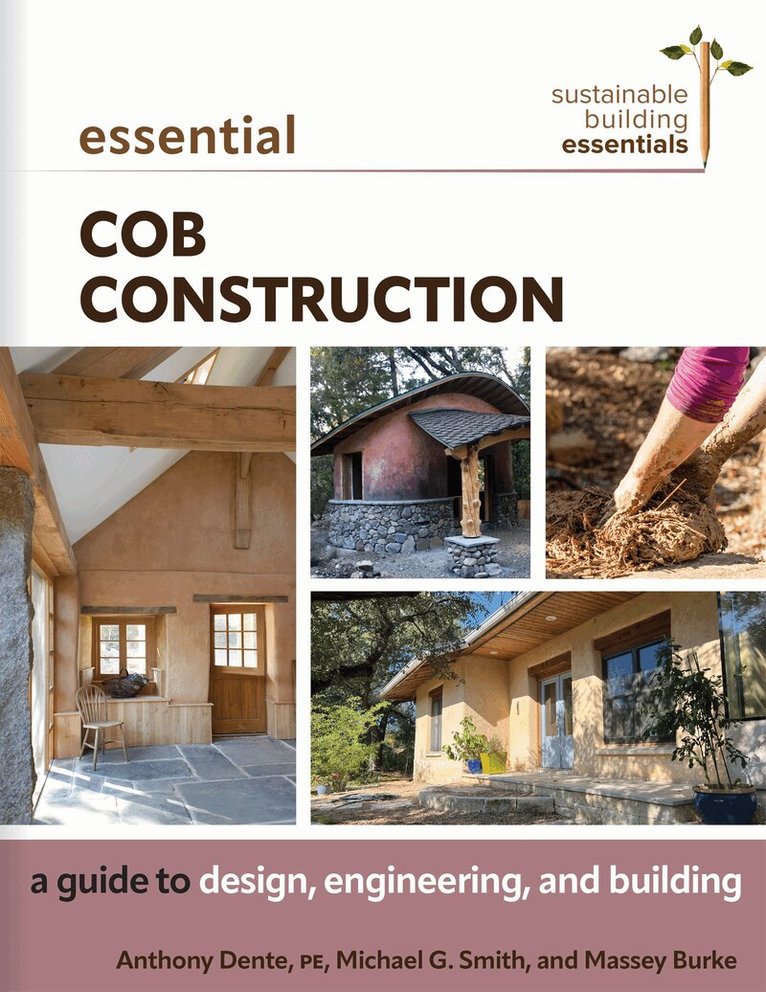
    Essential Cob Construction

    A Guide to Design, Engineering, and Building

    AvAnthony Dente,Michael G. Smith

    Häftad, Engelska, 2024

    Del 11 i serien Sustainable Building Essentials Series

    417 kr

    Tillfälligt slut

    Beskrivning

    The Complete Guide to Safe, Durable, and Beautiful Cob BuildingsPart of the Sustainable Building Essentials series, Essential Cob Construction delivers the most up-to-date design, engineering, and building guidance for one of the world's most enduring and expressive natural materials: cob. Learn how to build structurally sound, comfortable, low-carbon homes using clay, sand, and straw—with full support for permitting and modern building science.What You'll Learn Strong, Code-informed Cob Walls: Modern engineering and extensive testing ensure resilient structures with reliable fire and seismic performance.Healthy, Low-carbon Construction: Cob uses natural, minimally processed materials for a dramatically reduced environmental footprint.Thermal Comfort and Moisture Management: Properly designed cob walls regulate humidity, buffer temperature swings, and support healthy indoor air.Beautiful Sculptural Design Possibilities: Create curved forms, niches, and expressive details unique to hand-shaped, site-made architecture.Hands-on Building Mastery: Mix design, testing, manual/mechanical mixing, wall building, foundations, connections, finishes, and more.Permits, Codes and Budgeting: Navigate the new Cob Construction Appendix, plan projects efficiently, and ensure smooth approval processes.Written by leading experts Anthony Dente, PE, Michael G. Smith, and Massey Burke, this book combines rigorous engineering, building science, and decades of hands-on natural building experience. Whether you're a designer, engineer, contractor, or owner-builder, this guide provides the essential knowledge needed to build safe, durable, and climate-positive cob structures.Explore the full Sustainable Building Essentials series for practical, illustrated guidance on natural materials, high-performance envelopes, and sustainable building systems.

    Produktinformation

    • Utgivningsdatum:2024-01-16
    • Mått:216 x 279 x 15 mm
    • Vikt:753 g
    • Format:Häftad
    • Språk:Engelska
    • Serie:Sustainable Building Essentials Series
    • Antal sidor:256
    • Förlag:New Society Publishers
    • ISBN:9780865719682

    Utforska kategorier

    • Arkitektur inom Kultur
    • Byggnadsteknik inom Naturvetenskap och teknik
    • Gör det själv inom Hem och Trädgård

    Mer om författaren

    Anthony Dente, PE, LEED AP, is a licensed engineer and principal at Verdant Structural Engineers, a firm that has designed over 200 structures using natural-building wall systems such as straw bale, adobe, rammed earth, earthbag, and cob. As vice president of the Cob Research Institute, he was the lead engineer for the Cob Construction Appendix of the 2021 International Residential Code, as well as the Hemp-Lime (Hempcrete) Appendix, both the first of their kind in the US. Dente has advised, designed, and collaborated on numerous university research programs testing the structural behavior of natural materials, and writes and lectures extensively about appropriate use of environmentally sensitive building materials. He is the CEO for Verdant Structural Products, and project lead for their prefabricated, carbon-storing, straw wall panels. Dente was recently awarded the Constellation Prize for Sustainable Engineering Practice. He lives in the San Francisco Bay area of California.Michael G. Smith is a natural builder, trainer, designer, and consultant who has been working with natural building systems for over 30 years. He holds a B.S. in Civil and Environmental Engineering from MIT. In 1993 he co-founded the iconic Cob Cottage Company with Ianto Evans and Linda Smiley, reviving the ancient tradition of cob building. His hands-on workshops focus on energy efficiency, empowerment of people through simple, accessible techniques, and the regenerative use of locally available materials. Smith has led or been involved in over 100 natural building projects in North America and internationally and he is a board member of the Cob Research Institute, where he helped write the first model building code for cob. He is co-author of The Hand-Sculpted House and The Art of Natural Building and author of The Cobber's Companion. He lives on an organic farm near Sacramento, California.Massey Burke is a natural materials design/build consultant and co-director of the California Straw Building Association. She has worked with cob since 2005 and has taught natural building methods with non-profits and educational organizations, including the University of San Francisco and UC Berkeley. She was project manager for the first permitted cob building in the Bay Area, and supported the writing of the recent cob building code as a board member of the Cob Research Institute. Burke's work in life-cycle assessment focuses on low-carbon building, with a specific interest in supply chains and bringing natural building materials into the urban fabric. She partners with organizations including Arup, StopWaste, and the Carbon Leadership Forum to generate technical information and help remove barriers to scaling up natural, climate-positive building methods. Burke was a contributing author to The New Carbon Architecture. She lives in the San Francisco Bay area of California.

    Recensioner i media

    To save our precious Earth, we need to build with our precious earth. This book describes and details the practice of place-based cob construction, an ancient method that is more timely now than ever before. It is an affordable and ecological way to create better housing for more people throughout the world. —Paul Hawken, environmentalist, entrepreneur, New York Times best-selling author of The Ecology of Commerce, Drawdown, and RegenerationAt last!—the book we've been waiting for, by just the right authors! Anthony, Massey, and Michael are the perfect team who know the joy of getting your hands dirty and building with friends, study and appreciate the rich and venerable traditions of earthen architecture, and can bring it all into the 21st century with the engineering that modern construction requires. Well done! —Bruce King, PE, director, Ecological Building Network, co-author, Build Beyond Zero and The New Carbon Architecture This comprehensive book goes beyond essential. It covers virtually every aspect of cob construction and is written by a team who have decades of experience with muddy, hands-on building and engineering design. They have written what is literally the current state of the art, from the building science to the prescriptive codes that will allow cob to more easily be employed legally in many jurisdictions. All of this is lavishly illustrated with photos and diagrams showing both the beauty and the nitty gritty how-to of cob construction. —Kelly Hart, greenhomebuilding.com, www.naturalbuildingblog.com, author, Essential Earthbag ConstructionEssential Cob Construction is a comprehensive and timely addition to the literature on cob building. In addition to the wealth of experience and practical information for builders, much-needed technical and structural guidance is provided to enable the design, permitting, and construction of safe and durable cob buildings as cob gains wider and more diverse use. —David Eisenberg, director, Development Center for Appropriate Technology Absolutely fabulous! This simple description applies whether you are reading this book for inspiration, for details, for scientific data, or for ideas. Thank you Michael, Anthony, and Massey for writing what really is the ESSENTIAL book on cob construction. —Gord Baird, co-owner/builder, Eco-Sense, co-author, Essential Composting Toilets A comprehensive guide and reference every builder should have. Answering questions about design, function, strength, and safety, Essential Cob Construction will do a lot to make cob an accessible part of the building lexicon. —John Curry and Kindra Welch, cob builders and designers, ClaySandStraw Essential Cob Construction is the cob manual the building industry needs. The step-by-step guides to engineering, design, and building are clear and well laid-out. Filled with excellent photos, this manual brings together the mind and heart of a very human building material, and offers hope that we are moving forward with ancient and modern approaches to our built environment. —Sukita Reay Crimmel, founder, Claylin Earthen Floors, co-author, Earthen Floors: A Modern Approach to an Ancient Practice Anthony, Michael, and Massey have given us an excellent resource for dreaming, designing, and building with cob. Not only that, they've managed to work in a healthy amount of history, engineering methodology, and helpful advice that ties this blend of clay, sand, and straw to many other earthen building techniques used around the world. Bravo! —Tim Krahn, P. Eng., author, Essential Rammed Earth Construction What an excellent resource for both the natural building and conventional building communities. This is a groundbreaking book that will help to inspire and inform anyone who reads it with an interest in cob and/or natural building. —Adam Weismann and Katy Bryce, co-founders, Clayworks, authors, Building with Cob and Clay and Lime Renders Plasters and Paints The authors of Essential Cob Construction have crafted a masterpiece of knowledge. This book contains an encyclopedic amount of information, covering all essential aspects of cob construction, from its historical and cultural context to its technical performance, practical applications, and architectural potential. —Jacob Deva Racusin, director, Building Science and Sustainability, New Frameworks, author, Essential Building Science Essential Cob Construction brings modern knowledge to an age-old material, and empowers readers to build climate-appropriate cob walls. Finally, a book on cob that includes construction timing, work site planning, tool lists, and recipes! Kudos! —Sigi Koko, founder, Down to Earth Design, buildnaturally.com

    Innehållsförteckning

    • Chapter 1: Introduction Chapter 2: Building Science Chapter 3: Materials and Tools Chapter 4: Mixes and Mixing Chapter 5: Building Cob Walls Chapter 6: Architectural Design Chapter 7: Structural Design Chapter 8: Foundations, Floors, and Roofs Chapter 9: Finishes Chapter 10: Building Codes and Permits Chapter 11: Planning, Budgeting, and Getting HelpGlossary: Terminology Appendix 1: Full IRC Appendix AU Appendix 2: Life Cycle Analysis Appendix 3: Bibliography and Resources