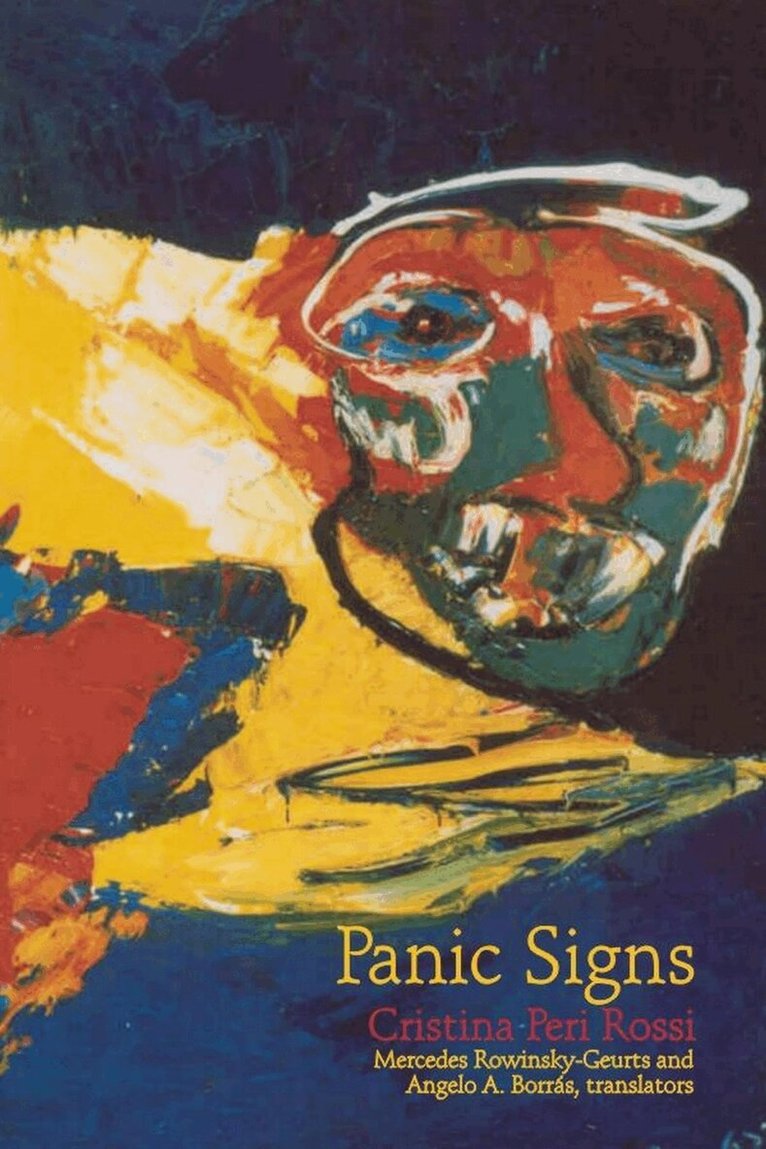
Panic Signs
392 kr
Beställningsvara. Skickas inom 5-8 vardagar. Fri frakt över 249 kr.
Du är på sajten för privatpersoner.
392 kr
Beställningsvara. Skickas inom 5-8 vardagar. Fri frakt över 249 kr.
Cristina Peri Rossi was born in Montevideo, Uruguay, in 1941 and started her literary career in 1963 with the publication of her collection of short stories: Viviendo. She was a professor of comparative literature, a translator, and a journalist. In 1972, after the military coup in Uruguay, she emigrated to Spain where she lives and writes today. Her first narrative publications (El libro de mis primos, 1969; Indicios pánicos, 1970) combined symbolism with irony, questioning social reality and patriarchal structures. From 1972 through to the early 1980s, her work was banned in Uruguay. Cristina Peri Rossi's spirit of innovation, her rebelliousness, and her disregard for the conventions of society have made her an emblematic personality of the 1970s. This collection of short stories was originally published as Indicios pánicos in 1970 by Editorial Nuestra América.Mercedes Rowinsky-Geurts is an associate professor at Wilfrid Laurier University, specializing in Latin American social and political issues, the Latin American diaspora, and women writers of the twentieth century. Her book Imagen y discurso: El estudio de las imágenes en la obra de Cristina Peri Rossi (1995) has been awarded a Special Mention by the Ministry of Education and Culture in Uruguay in 1998. In 2000, Mercedes Rowinsky-Geurts was awarded the Outstanding Teacher Award at Wilfrid Laurier University.Angelo A. Borrás is a professor emeritus of Spanish in the Department of Languages and Literatures at Wilfrid Laurier University. Author of El teatro del exilio de Max Aub, and editor and co-author of The Theatre and Hispanic Life: Essays in Honour of Neale H. Tayler (WLU Press), he has published many articles on contemporary Spanish literature, several of which deal with exile literature.
With Panic Signs, English readers have access to an important Latin American author, Cristina Peri Rossi, whose work engages with issues of identity (gender, national, cultural, sexual) and authority (political, societal, familial), as it critiques all repressive structures that would limit individual freedom. Panic Signs gives readers a sense of the tense political climate in Uruguay just prior to the military takeover, with people living under the threat of house invasions, random detention and questioning by the police, and torture. Peri Rossi is a brilliant reader of the signs around her, signs that are beautifully and disturbingly evoked in Indicios Pãinicos, and that are now available in English through Mercedes Rowinsky-Geurts and Angelo A. Borrãis's translation.... Authoritarian regimes would impose one single reading, their reading, their ``truth.'' But literature, particularly literature like Peri Rossi's, resists such impositions, and having a number of her books available in English translation enriches those readers not able to read the original Spanish. Translation is a labour of love and translators put forth the results of their work never knowing if their reading ``has been correct, considering all the possible readings.'' Passages, sentences, and words can be translated in different ways, but Rowinsky-Geurts and Borrãis understand the possibilities are endless and offer, in Panic Signs, a strong reading of the original. -- Laura J. Beard, Texas Tech University
Slavenka Drakulić, Ilya Kaminsky, Sara Stridsberg, Mercedes Roffé, Michael Azar, Merima Dizdarević, Balsam Karam, Julie Hansen, Morris Wikström, Maria Stepanova, Cristina Peri Rossi, Bertolt Brecht
87 kr
Slavenka Drakulić, Ilya Kaminsky, Sara Stridsberg, Mercedes Roffé, Michael Azar, Merima Dizdarević, Balsam Karam, Julie Hansen, Morris Wikström, Maria Stepanova, Cristina Peri Rossi, Bertolt Brecht
87 kr
Du är på sajten för privatpersoner.
392 kr
Beställningsvara. Skickas inom 5-8 vardagar. Fri frakt över 249 kr.
Cristina Peri Rossi was born in Montevideo, Uruguay, in 1941 and started her literary career in 1963 with the publication of her collection of short stories: Viviendo. She was a professor of comparative literature, a translator, and a journalist. In 1972, after the military coup in Uruguay, she emigrated to Spain where she lives and writes today. Her first narrative publications (El libro de mis primos, 1969; Indicios pánicos, 1970) combined symbolism with irony, questioning social reality and patriarchal structures. From 1972 through to the early 1980s, her work was banned in Uruguay. Cristina Peri Rossi's spirit of innovation, her rebelliousness, and her disregard for the conventions of society have made her an emblematic personality of the 1970s. This collection of short stories was originally published as Indicios pánicos in 1970 by Editorial Nuestra América.Mercedes Rowinsky-Geurts is an associate professor at Wilfrid Laurier University, specializing in Latin American social and political issues, the Latin American diaspora, and women writers of the twentieth century. Her book Imagen y discurso: El estudio de las imágenes en la obra de Cristina Peri Rossi (1995) has been awarded a Special Mention by the Ministry of Education and Culture in Uruguay in 1998. In 2000, Mercedes Rowinsky-Geurts was awarded the Outstanding Teacher Award at Wilfrid Laurier University.Angelo A. Borrás is a professor emeritus of Spanish in the Department of Languages and Literatures at Wilfrid Laurier University. Author of El teatro del exilio de Max Aub, and editor and co-author of The Theatre and Hispanic Life: Essays in Honour of Neale H. Tayler (WLU Press), he has published many articles on contemporary Spanish literature, several of which deal with exile literature.
With Panic Signs, English readers have access to an important Latin American author, Cristina Peri Rossi, whose work engages with issues of identity (gender, national, cultural, sexual) and authority (political, societal, familial), as it critiques all repressive structures that would limit individual freedom. Panic Signs gives readers a sense of the tense political climate in Uruguay just prior to the military takeover, with people living under the threat of house invasions, random detention and questioning by the police, and torture. Peri Rossi is a brilliant reader of the signs around her, signs that are beautifully and disturbingly evoked in Indicios Pãinicos, and that are now available in English through Mercedes Rowinsky-Geurts and Angelo A. Borrãis's translation.... Authoritarian regimes would impose one single reading, their reading, their ``truth.'' But literature, particularly literature like Peri Rossi's, resists such impositions, and having a number of her books available in English translation enriches those readers not able to read the original Spanish. Translation is a labour of love and translators put forth the results of their work never knowing if their reading ``has been correct, considering all the possible readings.'' Passages, sentences, and words can be translated in different ways, but Rowinsky-Geurts and Borrãis understand the possibilities are endless and offer, in Panic Signs, a strong reading of the original. -- Laura J. Beard, Texas Tech University
Slavenka Drakulić, Ilya Kaminsky, Sara Stridsberg, Mercedes Roffé, Michael Azar, Merima Dizdarević, Balsam Karam, Julie Hansen, Morris Wikström, Maria Stepanova, Cristina Peri Rossi, Bertolt Brecht
87 kr
Slavenka Drakulić, Ilya Kaminsky, Sara Stridsberg, Mercedes Roffé, Michael Azar, Merima Dizdarević, Balsam Karam, Julie Hansen, Morris Wikström, Maria Stepanova, Cristina Peri Rossi, Bertolt Brecht
87 kr