• Fri frakt över 249 kr
  • •
  • Snabba leveranser
  • •
  • Billiga böcker
Kundservice

Du är på sajten för privatpersoner.

Företag, bibliotek eller offentlig verksamhet?

Du handlar på classic.bokus.com, där alla dina funktioner finns intakta.
Till classic.bokus.com
Bokus logotyp. Gå till startsidan.
  • Erbjudanden
  • Student
  • Topplistor
  • Barn & ungdom
  • Bokus Play
  • E-böcker
  • Ljudböcker
  • Pocketböcker
  • Spel och pussel

5% studentrabatt – använd koden KURSBOK27 →

Sidfot

Mina sidor

    Hjälp

    • Kundservice
    • Vanliga frågor och svar
    • Frakt och leverans
    • Retur vid ångerrätt
    • Reklamera vara
    • Betalning
    • Köpvillkor
    • Allmänna villkor
    • Information om webbplatsens tillgänglighet

    Om Bokus

    • Om oss
    • Pressrum
    • För studenter
    • För företag
    • För bibliotek och offentlig verksamhet
    • För leverantörer
    • Hållbarhet

    Populärt

    • Aktuella erbjudanden
    • Presentkort
    • Studentlitteratur
    • Nya böcker
    • Topplistor
    • Signerade böcker
    • Engelska böcker

    Inspiration

    • Boktips
    • BookTok
    • Barnbokskaraktärer
    • Populära författare
    Logotyp för Bokus
    Följ oss på Facebook (extern länk)Följ oss på Instagram (extern länk)Följ oss på YouTube (extern länk)Följ oss på TikTok (extern länk)
    bokus @ CookiesAnpassa cookiesIntegritetspolicyKöpvillkor
    Till Citymail hemsida (extern länk)Till Budbee hemsida (extern länk)Till Postnord hemsida (extern länk)Till Schenker hemsida (extern länk)Till Early Bird hemsida (extern länk)Till Walleys hemsida (extern länk)
    1. Data och IT
    2. Systemvetenskap och AI
    3. Artificiell intelligens

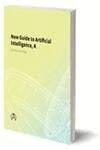
    New Guide to Artificial Intelligence

    AvDerek Partridge

    Häftad, Engelska, 1991

    295 kr

    Tillfälligt slut

    Beskrivning

    In this textbook the author endeavors to cover the large and growing field of artificial intelligence (AI) in some detail. While there are books that examine and discuss global perspectives on AI, they make no attempt to cover the diversity of theories and programs. A global perspective on the subject is provided by this volume, but in conjunction with an exhaustive survey of the field. It covers all recognized AI work in sufficient detail to allow a critiquie from general concerns to be anchored, whenever possible, in the structure of specific AI programs. It can be used as a supplement to other AI texts, providing broader perspectives on the wealth of details that such texts contain. It can also be considered as a companion to the current AI literature for it is only in conference proceedings and journals that these up-to-date details are usually found.

    Produktinformation

    • Utgivningsdatum:1991-05-01
    • Format:Häftad
    • Språk:Engelska
    • Antal sidor:200
    • Förlag:Intellect
    • ISBN:9780893916077

    Utforska kategorier

    • Artificiell intelligens inom Data och IT

    Innehållsförteckning

    • Preface               xviii1 AI: what is it?               1 definitions: what would it look like if I saw one?               1 True AI Story: 1.1-ELIZA meets PARRY:the syntax is willing but the semantics is weak               7 a history of scaling down               8 categorizations of AI work               14 the goals of AI research               15 the heuristic programming approach               18 the Samuel phenomenon               22 2 AI and the Science of Computer Usage: The Forging               23of a Methodology how to use the essential tool?               23 first specify, then verify               26 the nature of AI problems               27 a methodology of incremental exploration               30 rapid prototypes to the rescue?               32 supportive environments               33 forging a new methodology               34 is AI so different?               37 3 The Major Paradigms               39 symbolic search spaces               40 planning intelligent solutions               45 SSSP infrastructure               54 the pivotal role of searching strategies               56 heuristic pruning               59 connectionism: a possible alternative?               62 connectionism: the second coming               64 on not losing their inhibitions               66 the need for decay               67 subsymbolic connectionism: the good news               68                when is an AI system like a piece of fine china?               70 subsymbolic connectionism: the real news               71 reasoning with amorphous complexity               72 the myth of empirical guidance               73 what's the stopping rule?               77 single-minded models               78 philosophical objections               79 potential solutions to the dilemma               81 formal analysis               81 software support systems               83 approximate translation-the truth about mendacity               84 the SSSP and the CP: integration, bifurcation,or annilation?               86 simulated evolution: guess and try it out               89 'bad' paradigms               90 4 The Babel of AI Languages               98 it's all done by manipulating symbols               98 LISP               100 flexibility               100 the magic of recursion               101 code-data equivalence               103 the special assignment               105 lists of properties               106 PROLOG               108 the independence of declaration               109loss of control: better or worse?               111 extralogical pollutants               116 negation as failure               120 verify or compute               120 bidirectionality               121 pattern matching               121 the promises of PROLOG               122parallelism               122 a specification language               123 heuristic controls               124 object-oriented programming               125 programming environments               131 LISP environments               131LOOPS               132 POPLOG               134 True AI -Story: 4.1. DIMWIT (Do I Mean What I Tell):A PA (Programmer's Assailant) System               136 5 Current Expert Systems Technology (CEST)               139experts with tunnel vision               140the basic assumptions and the criticisms               141what can be CESTed?               145explanations and context sensitivity               146updating knowledge bases and machine learning               150let's dig deeper               155logical decision making               159human and computer decision making               161classes of human decision making               163connectionism: a possible answer?               165knowledge elicitation               167knowledge engineers and the third degree               167automatic learning from examples               168empirical techniques               168CEST: where is it and where is it going?               1696 Knowledge Representation: A Problem of Both               171Structure and Function               why networks?               171why neurons?               176pandering to evolution: beware of classical reconditioning               178neural architectures: in the beginning               179knowledge representation: structure and function               183the SSSP and the CP: representational issues               188knowledge representation in the CP               189functionally distributed representations               189symbolic connectionist representations               189winner-takes-all subnets               194hybrid connectionism               195totally distributed representations               196path-like architectures in the CP               202bath-like architectures in the CP               204knowledge representation in the SSSP               209logic-based representations               210procedural representations of knowledge               213semantic networks               217elements of structured knowledge: frames,scripts, and schemata               2267 Vision: Seeing is Perceiving               228bottoming in: operators canny, uncanny,and cannyless               233pixel processing               233 edges and lines               237 vertices or junctions               238 texture: a truly superficial feature               239 illumination, reflectance, and other sourcesof nuisance               241 the intrinsic image               241 model-based vision systems               244 True AI Story: 7.1               247 beer cans, broomsticks, etc.               248seeing as perceiving               250 oversight and hallucination               252 the modularity of human vision               255 eyeballs and nervous optics               256 biological feature detectors               256human perceptual behavior               261 breaking up context               262structuring top-down information               262 a cognitive model of word recognition               264 the eye of the robot               267 general theories of visual perception               273 the vision of connectionists               2788 Language Processing: What You Hear is What You Are               283natural language               286what mode of natural language?               287the goals of AI-NLP               289natural language: the essential ingredients               289phonetics and phonology               290the lexical level and above               291 generation and analysis               291natural language generation (NLG)               293text generation systems               297empirical guidance for NLG               298natural language understanding (NLU)               299syntax, grammars, and parsing               grammars               300furious transformational grammarians              sleep curiously               303 transition networks: augmented and otherwise               305unification and the new grammatism               308semantic definite clause grammars (SDCG)               309NLP and a formal complaint               314semantics               318 the meaning of semantics               319 the atomic struture of meaning               320the case of the missing-blocks world               322 True AI Story: 8.1 SHRDLU and a "SORRY" story               324 revolting computational linguists               324 scripted NLU and its dependencies               326 True AI Story: 8.2 Try it again SAM               328 the conceptual dependency notation               329 a Swale of a tale               331 True AI Story: 8.3 Another SWALE of a tale               332 giving semantics preferential treatment               333bidirectional NLP               335pragmatics?               336 machine translation (MT)               339natural language interfaces (NLI)               341networks for NLP               344 9 Learning To Do it Right                351can we have intelligence without learning?               354can we have AI without learning?               355learning paradigms in AI               356learning as the accretion of symbolic structures               358learning as the adjustment of link weights               361external tutoring: learning by being told               363learning on the path               370learning in a bath - taking the plunge               381climbing hills because the 're there               384rote learning: if it might be useful, store it               390learning generalities               391induction               393overgeneralization and refinement               395 a first guess and generalization               397 True Al story: 9.1. Underneath the arches:an everyday story of concept learning               399competitive learning               404 learning particularities: removal of unwantedgeneralization               406 EBG, or is it EBL?               409 the EBL viewpoint               416 mechanized creativity               421learning by introspection               423rediscovering things               427learning by analogy               432 learning at the knowledge level               433 soaring through search spaces               437 the more you know the slower you go               443on finding needles in haystacks               448when to learn and what to learn               448giving credit where it is due               450unlearning               45310 Foundations of AI: Can we find any?               458foundations: why dig for them?               459formal foundations               460a disinterested user's guide to the FOPC               462the curse of nonmonotonicity               467logical odds and ends               471 True AI Story: 10 .1 It is not a closed world after all               471the epilogic               474methodological foundations               477 the roles of programs in AI               478 programs as theories               479programs as experiments               483rational reconstructions in AI               483 sorting out AI methodologies               486philosophical foundations               488there's nothing special about you, or me               488building the foundations on the CP               490undermining the foundations of the CP               491total disbelief: let's not be Searle-ish               49211 Prognostications, or W(h)ither AI?               496 abstract AI and concrete AI               496 is the mind an appropriate object for scientific study?               498                True AI Story: 11.1. Sand in the works               499AI as a magnifying glass               501 AI: can it be practically useful?               503AI: just wait till we get into parallel hardware               503last words               506References               507 Author Index               531 Subject Index