• Fri frakt över 249 kr
  • •
  • Snabba leveranser
  • •
  • Billiga böcker
Kundservice

Du är på sajten för privatpersoner.

Företag, bibliotek eller offentlig verksamhet?

Du handlar på classic.bokus.com, där alla dina funktioner finns intakta.
Till classic.bokus.com
Bokus logotyp. Gå till startsidan.
  • Erbjudanden
  • Student
  • Topplistor
  • Barn & ungdom
  • Bokus Play
  • E-böcker
  • Ljudböcker
  • Pocketböcker
  • Spel & pussel

10% rabatt på allt med kod NYSTART10 →

Sidfot

Mina sidor

    Hjälp

    • Kundservice
    • Vanliga frågor och svar
    • Frakt och leverans
    • Retur vid ångerrätt
    • Reklamera vara
    • Betalning
    • Köpvillkor
    • Allmänna villkor
    • Information om webbplatsens tillgänglighet

    Om Bokus

    • Om oss
    • Pressrum
    • För studenter
    • För företag
    • För bibliotek och offentlig verksamhet
    • För leverantörer
    • Hållbarhet

    Populärt

    • Aktuella erbjudanden
    • Presentkort
    • Studentlitteratur
    • Nya böcker
    • Topplistor
    • Signerade böcker
    • Engelska böcker

    Inspiration

    • Boktips
    • BookTok
    • Populära bokserier
    • Barnbokskaraktärer
    • Populära författare
    Logotyp för Bokus
    Följ oss på Facebook (extern länk)Följ oss på Instagram (extern länk)Följ oss på YouTube (extern länk)Följ oss på TikTok (extern länk)
    bokus @ CookiesAnpassa cookiesIntegritetspolicyKöpvillkor
    Till Citymail hemsida (extern länk)Till Budbee hemsida (extern länk)Till Postnord hemsida (extern länk)Till Schenker hemsida (extern länk)Till Early Bird hemsida (extern länk)Till Walleys hemsida (extern länk)
    1. Naturvetenskap och teknik
    2. Teknik och industri
    3. Miljöteknik

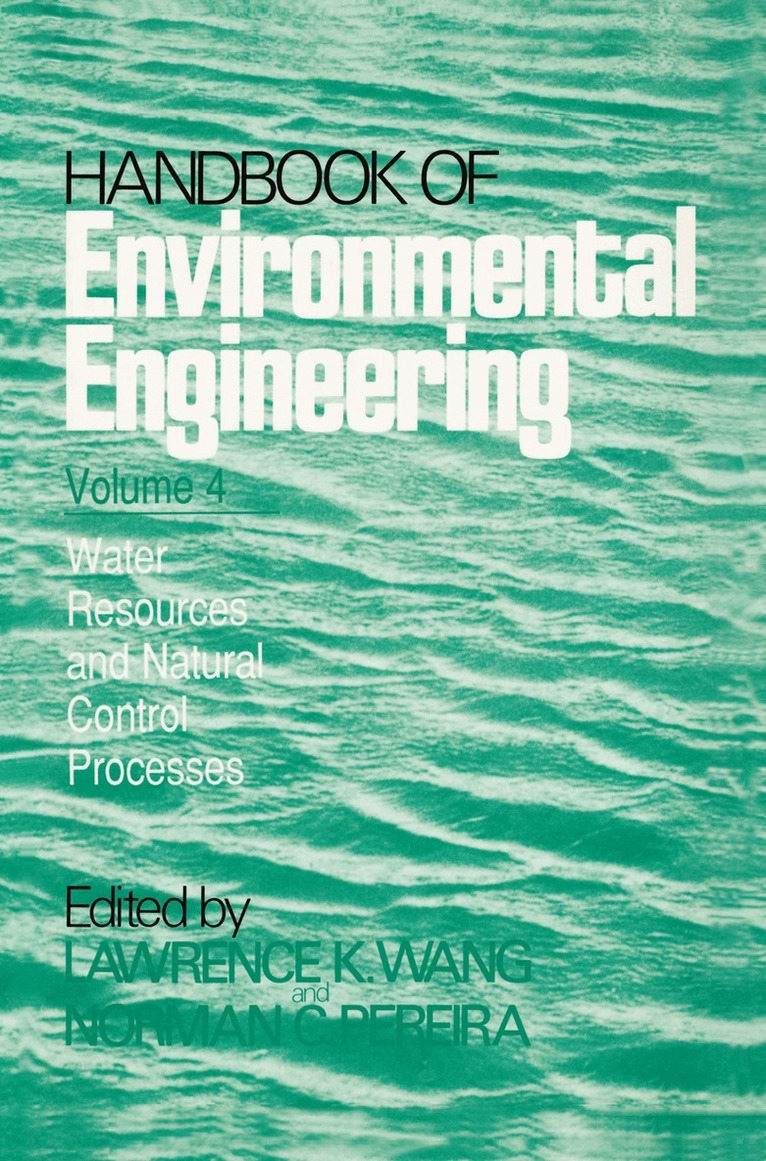
    Water Resources and Control Processes

    Volume 4

    AvLawrence K. Wang,Norman C. Pereira

    Inbunden, Engelska, 1987

    Del i serien Handbook of Environmental Engineering

    1 084 kr

    Beställningsvara. Skickas inom 10-15 vardagar. Fri frakt över 249 kr.

    Beskrivning

    The past few years have seen the emergence of a growing, widespread desire in this country, and indeed everywhere, that positive actions be taken to restore the quality of our environment, and to protect it from the degrading effects of all forms of pollution-air, noise, solid waste, and water. Since pollution is a direct or indirect consequence of waste, if there is no waste, there can be no pollution, and the seemingly idealistic demand for "zero discharge" can be construed as a demand for zero waste. However, as long as there is waste, we can only attempt to abate the consequent pollution by converting it to a less noxious form. In those instances in which a particular type of pollution has been recognized, three major questions usually arise: (1) How serious is the pollution? (2) Is the technology to abate it available? and (3) Do the costs of abatement justify the degree of abatement achieved? The principal intention of this series of books on environmental engineering is to help the reader formu­ late useful answers to the second and third of these questions, i. e. , to outline the best currently available engineering solutions, and to examine their costs in the light of the real level of benefits afforded.

    Produktinformation

    • Utgivningsdatum:1987-01-27
    • Mått:155 x 235 x 29 mm
    • Vikt:902 g
    • Format:Inbunden
    • Språk:Engelska
    • Serie:Handbook of Environmental Engineering
    • Antal sidor:496
    • Upplaga:1986
    • Förlag:Humana Press Inc.
    • ISBN:9780896030596

    Utforska kategorier

    • Miljöteknik inom Naturvetenskap och teknik

    Innehållsförteckning

    • 1 Surface Water Quality Analysis.- I. Introduction.- II. Mathematical Simulation of the Surface Water System.- III. Oxygen Consumption and Replenishment in Receiving Waters.- IV. Coliform Bacteria Die-Off.- V. Modeling Application in Surface Water Quality.- 2 Water Quality Control of Tidal Rivers and Estuaries.- I. Introduction.- II. Water Quality Parameters.- III. Basic Mathematical Models.- IV. Working Models.- V. Practical Examples.- 3 Cooling of Thermal Discharges.- I. Introduction.- II. Cooling Ponds.- III. Cooling Towers.- 4 Control of Reservoirs and Lakes.- I. Introduction.- II. Special Features of Water.- III. Hydrology.- IV. Evaporation.- V. Transpiration.- VI. Evapotranspiration.- VII. Infiltration and Percolation.- VIII. Runoff.- IX. Groundwater.- X. Impact of Pollution on Lakes.- XI. Thermal Impacts on the Aquatic Environment.- XII. Toxics in Water Resources.- XIII. Goals of Water Pollution Control.- 5 Deep-Well Disposal.- I. Introduction.- II. Basic Well Designs.- III. Evaluation of a Proposed Injection Well Site.- IV. Potential Hazards—Ways to Prevent, Detect, and Correct Them.- V. Economic Evaluation of a Proposed Injection Well System.- VI. Use of Injection Wells in Wastewater Management.- VII. Protection of Usable Aquifers.- VIII. Nomenclature.- IX. Practical Examples.- 6 Chemical Control of Pests and Vectors.- I. Introduction.- II. Pests and Poisons.- III. Control of Organisms Pathogenic to Humans.- IV. Chemical Control of Vector Organisms.- V. Chemical Control of Organisms Destructive or Pathogenic to Plants.- VI. Chemical Control of Nuisance Organisms.- VII. Pollution from Chemical Poisons.- VIII. Alternatives to Chemical Poisoning.- 7 Management of Radioactive Wastes.- I. Introduction.- II. Sources of Radioactive Wastes.- III. TransportMechanisms.- IV. Waste Management.- V. Surveillance.- VI. Protection.- VII. Costs.- VIII. Anticipated Future Problems.- IX. Summary.- 8 Drying and Evaporation Processes.- I. Introduction.- II. Natural Dewatering.- III. Thermal Drying.- IV. Evaporation.- V. Theory of Drying.- VI. Theory of Evaporation.- 9 Dredging Operations and Waste Disposal.- I. Introduction.- II. Type of Dredges.- III. Sources of Pollution from Dredging Operations.- IV. Dredge Disposal and Environmental Enhancement Alternatives.- V. Dredge Transport Alternatives.- VI. Dredge Containment Alternatives.- VII. Dredge Treatment Alternatives.- VIII. Quality Criteria of Treated Sediment and Water.- IX. Economic Aspects of Dredging Treatment.- X. Conclusions and Summary.- XI. Practical Examples.- References.