• Fri frakt över 249 kr
  • •
  • Snabba leveranser
  • •
  • Billiga böcker
Kundservice

Du är på sajten för privatpersoner.

Företag, bibliotek eller offentlig verksamhet?

Du handlar på classic.bokus.com, där alla dina funktioner finns intakta.
Till classic.bokus.com
Bokus logotyp. Gå till startsidan.
  • Erbjudanden
  • Nyheter
  • Student
  • Topplistor
  • Barn & ungdom
  • Bokus Play
  • E-böcker
  • Pocketböcker
  • Spel & pussel

Må bättre, för mindre! Upp till 50% rabatt på hälsoböcker

Sidfot

Mina sidor

    Hjälp

    • Kundservice
    • Vanliga frågor och svar
    • Frakt och leverans
    • Retur vid ångerrätt
    • Reklamera vara
    • Betalning
    • Köpvillkor
    • Allmänna villkor
    • Information om webbplatsens tillgänglighet

    Om Bokus

    • Om oss
    • Pressrum
    • För studenter
    • För företag
    • För bibliotek och offentlig verksamhet
    • För leverantörer
    • Hållbarhet

    Populärt

    • Aktuella erbjudanden
    • Presentkort
    • Studentlitteratur
    • Nya böcker
    • Topplistor
    • Signerade böcker
    • Engelska böcker

    Inspiration

    • Boktips
    • BookTok
    • Populära bokserier
    • Barnbokskaraktärer
    • Populära författare
    Logotyp för Bokus
    Följ oss på Facebook (extern länk)Följ oss på Instagram (extern länk)Följ oss på YouTube (extern länk)Följ oss på TikTok (extern länk)
    bokus @ CookiesAnpassa cookiesIntegritetspolicyKöpvillkor
    Till Citymail hemsida (extern länk)Till Budbee hemsida (extern länk)Till Postnord hemsida (extern länk)Till Schenker hemsida (extern länk)Till Early Bird hemsida (extern länk)Till Walleys hemsida (extern länk)
    1. Skönlitteratur
    2. Litteraturvetenskap
    3. Litteraturvetenskap

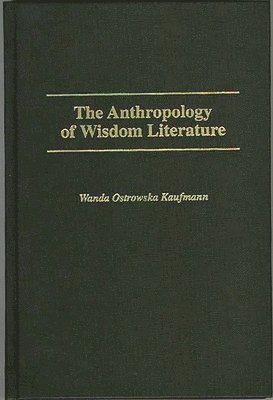
    Anthropology of Wisdom Literature

    AvH.W Kaufmann

    Inbunden, Engelska, 1996

    966 kr

    Beställningsvara. Skickas inom 10-15 vardagar. Fri frakt över 249 kr.

    Beskrivning

    This unusual book examines definitions of the fable, apologue, parable, moral tale, etc. It then proposes the use of the term exemplum, used by medieval scribes, to define all types of wisdom narratives. It makes a cross-cultural structural analysis of the exemplum and identifies its tripartite structure composed of the promythium, the nucleus, and the epimythium. The book ends with an analysis of the reasons why grown men spent so much time writing and collecting these tales. It demonstrates that fables and related genres were not really meant for little children to learn moral lessons. They were used to teach complex religious and political ideologies, to safely ridicule tyrants and despots, to release tensions, and to give good or bad advice.

    Produktinformation

    • Utgivningsdatum:1996-09-13
    • Mått:156 x 235 x 15 mm
    • Vikt:425 g
    • Format:Inbunden
    • Språk:Engelska
    • Antal sidor:184
    • Förlag:Bloomsbury Publishing Plc
    • ISBN:9780897894722

    Utforska kategorier

    • Litteraturvetenskap inom Skönlitteratur

    Mer om författaren

    WANDA OSTROWSKA KAUFMANN is Visiting Assistant Professor at Our Lady of the Lake University and a Lecturer at the University of Texas, San Antonio. Born in Germany, she is of Polish descent and was raised in Addis Ababa, Ethiopia, and speaks six languages fluently. Her research involves applying anthropological and archaeological methodologies and theories to the study of literary texts, writers, and readers. Dr. Kaufmann received her PhD in Medieval Spanish Literature from the University of Texas at Austin and is currently Visiting Assistant Professor at Our Lady of the Lake University and a Lecturer at the University of Texas at San Antonio.

    Innehållsförteckning

    • Foreword by Madeline SutherlandIntroductionMorphology of the ExemplumTypology of the ExemplumOriental RootsFrom the Vedas to the EpicsFrom the Upanishads to the Brhat-KathaThe Derivatives of the Brhat-KathaClassical RootsFrom Homer to AristotleHellenistic CollectionsFrom Phaedrus to AvianusThe Exemplum in Medieval EuropeFrom the New Testament to Caesarius of ArlesRevival of the CollectionsFrom Juan Manuel to BoccaccioFunctions of the ExemplumIntra-Textual FunctionsExtra-Textual FunctionsConclusionBibliographyIndex