
Acadia 2018 Recalibration: on imprecision and infidelity: Project Catalog of the 38th Annual Conference of the Association for Computer Aided Des
Phillip Anzalone, Marcella del Signore
Häftad, 2018
731 kr
AvMarcella Del Signore,Nancy Diniz
716 kr
Läs direkt i Bokus Reader – eller ladda ned till din enhet (PDF kräver ofta zoom och scroll på små skärmar).
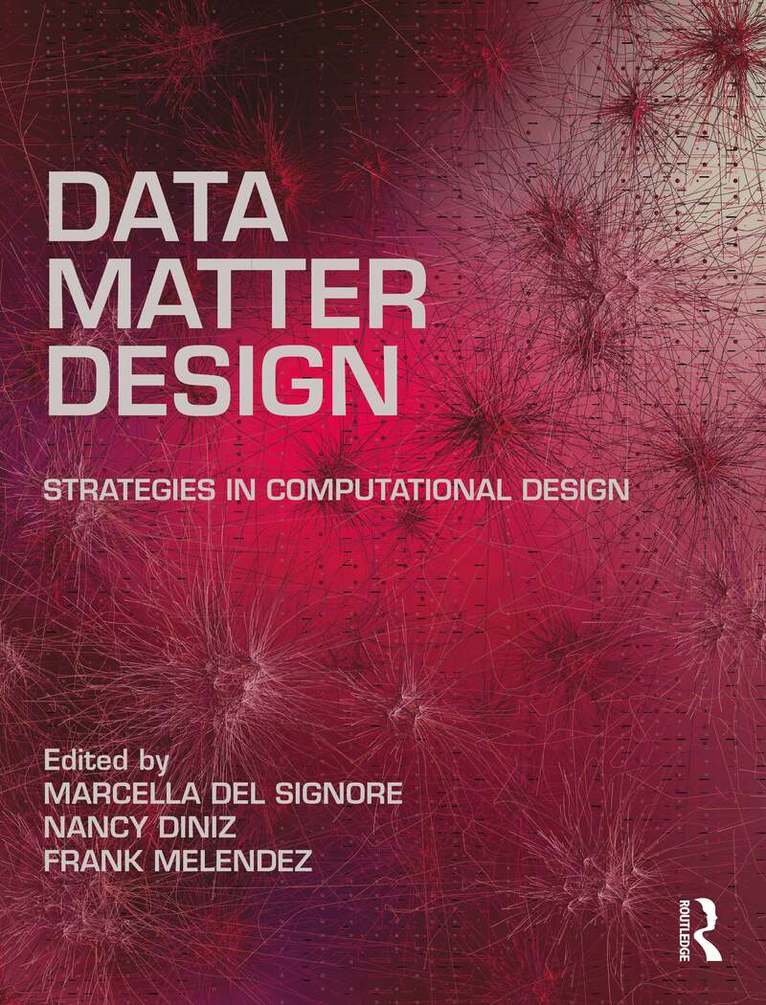
Data, Matter, Design presents a comprehensive overview of current design processes that rely on the input of data and use of computational design strategies, and their relationship to an array of outputs.
Technological changes, through the use of computational tools and processes, have radically altered and influenced our relationship to cities and the methods by which we design architecture, urban, and landscape systems. This book presents a wide range of curated projects and contributed texts by leading architects, urbanists, and designers that transform data as an abstraction, into spatial, experiential, and performative configurations within urban ecologies, emerging materials, robotic agents, adaptive fields, and virtual constructs.
Richly illustrated with over 200 images, Data, Matter, Design is an essential read for students, academics, and professionals to evaluate and discuss how data in design methodologies and theoretical discourses have evolved in the last two decades and why processes of data collection, measurement, quantification, simulation, algorithmic control, and their integration into methods of reading and producing spatial conditions, are becoming vital in academic and industry practices.
Phillip Anzalone, Marcella del Signore
Häftad, 2018
731 kr

Phillip Anzalone, Marcella del Signore
Häftad, 2018
731 kr

AvMarcella Del Signore,Nancy Diniz
716 kr
Läs direkt i Bokus Reader – eller ladda ned till din enhet (PDF kräver ofta zoom och scroll på små skärmar).
Data, Matter, Design presents a comprehensive overview of current design processes that rely on the input of data and use of computational design strategies, and their relationship to an array of outputs.
Technological changes, through the use of computational tools and processes, have radically altered and influenced our relationship to cities and the methods by which we design architecture, urban, and landscape systems. This book presents a wide range of curated projects and contributed texts by leading architects, urbanists, and designers that transform data as an abstraction, into spatial, experiential, and performative configurations within urban ecologies, emerging materials, robotic agents, adaptive fields, and virtual constructs.
Richly illustrated with over 200 images, Data, Matter, Design is an essential read for students, academics, and professionals to evaluate and discuss how data in design methodologies and theoretical discourses have evolved in the last two decades and why processes of data collection, measurement, quantification, simulation, algorithmic control, and their integration into methods of reading and producing spatial conditions, are becoming vital in academic and industry practices.
Phillip Anzalone, Marcella del Signore
Häftad, 2018
731 kr
Phillip Anzalone, Marcella del Signore
Häftad, 2018
731 kr
AvMarcella Del Signore,Nancy Diniz
716 kr
Läs direkt i Bokus Reader – eller ladda ned till din enhet (PDF kräver ofta zoom och scroll på små skärmar).
Data, Matter, Design presents a comprehensive overview of current design processes that rely on the input of data and use of computational design strategies, and their relationship to an array of outputs.
Technological changes, through the use of computational tools and processes, have radically altered and influenced our relationship to cities and the methods by which we design architecture, urban, and landscape systems. This book presents a wide range of curated projects and contributed texts by leading architects, urbanists, and designers that transform data as an abstraction, into spatial, experiential, and performative configurations within urban ecologies, emerging materials, robotic agents, adaptive fields, and virtual constructs.
Richly illustrated with over 200 images, Data, Matter, Design is an essential read for students, academics, and professionals to evaluate and discuss how data in design methodologies and theoretical discourses have evolved in the last two decades and why processes of data collection, measurement, quantification, simulation, algorithmic control, and their integration into methods of reading and producing spatial conditions, are becoming vital in academic and industry practices.
Phillip Anzalone, Marcella del Signore
Häftad, 2018
731 kr
Phillip Anzalone, Marcella del Signore
Häftad, 2018
731 kr