• Fri frakt över 249 kr
  • •
  • Snabba leveranser
  • •
  • Billiga böcker
Kundservice

Du är på sajten för privatpersoner.

Företag, bibliotek eller offentlig verksamhet?

Du handlar på classic.bokus.com, där alla dina funktioner finns intakta.
Till classic.bokus.com
Bokus logotyp. Gå till startsidan.
  • Erbjudanden
  • Nyheter
  • Student
  • Topplistor
  • Barn & ungdom
  • Bokus Play
  • E-böcker
  • Pocketböcker
  • Spel & pussel

10% rabatt på allt med kod: NYSTART10 →

Sidfot

Mina sidor

    Hjälp

    • Kundservice
    • Vanliga frågor och svar
    • Frakt och leverans
    • Retur vid ångerrätt
    • Reklamera vara
    • Betalning
    • Köpvillkor
    • Allmänna villkor
    • Information om webbplatsens tillgänglighet

    Om Bokus

    • Om oss
    • Pressrum
    • För studenter
    • För företag
    • För bibliotek och offentlig verksamhet
    • För leverantörer
    • Hållbarhet

    Populärt

    • Aktuella erbjudanden
    • Presentkort
    • Studentlitteratur
    • Nya böcker
    • Topplistor
    • Signerade böcker
    • Engelska böcker

    Inspiration

    • Boktips
    • BookTok
    • Populära bokserier
    • Barnbokskaraktärer
    • Populära författare
    Logotyp för Bokus
    Följ oss på Facebook (extern länk)Följ oss på Instagram (extern länk)Följ oss på YouTube (extern länk)Följ oss på TikTok (extern länk)
    bokus @ CookiesAnpassa cookiesIntegritetspolicyKöpvillkor
    Till Citymail hemsida (extern länk)Till Budbee hemsida (extern länk)Till Postnord hemsida (extern länk)Till Schenker hemsida (extern länk)Till Early Bird hemsida (extern länk)Till Walleys hemsida (extern länk)
    1. Ekonomi och Ledarskap
    2. Nationalekonomi

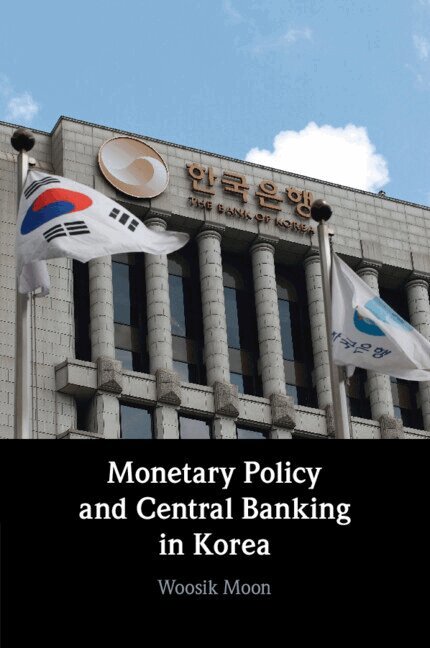
    Monetary Policy and Central Banking in Korea

    AvWoosik Moon

    Häftad, Engelska, 2024

    380 kr

    Beställningsvara. Skickas inom 10-15 vardagar. Fri frakt över 249 kr.

    Fler format och utgåvor

    E-bok

    439 kr

    E-bok

    440 kr

    Inbunden

    1 513 kr

    Beskrivning

    This study is among the first to examine the theory and practice of monetary policy in South Korea. Woosik Moon provides a detailed analysis of the central bank of South Korea, one of the most successful and important economies in Asia. He covers everything from monetary policy to inflation targeting and macroprudential regulation, explaining how these policy tools were used to deal with the aftermath of the 2007-2011 financial crisis. He then brings his study into our current moment, speculating as to how the use of these policies will change in order to deal with the fallout of the Covid-19 pandemic. This book offers in-depth investigations and the provision of the most up-to-date information about the Bank of Korea's monetary and financial actions, serving as essential reading for central bankers and professionals of financial markets around the world, as well as anyone interested in monetary policy-making.

    Produktinformation

    • Utgivningsdatum:2024-03-21
    • Mått:150 x 230 x 20 mm
    • Vikt:542 g
    • Format:Häftad
    • Språk:Engelska
    • Antal sidor:376
    • Förlag:Cambridge University Press
    • ISBN:9781009094207

    Utforska kategorier

    • Nationalekonomi inom Ekonomi och Ledarskap

    Mer om författaren

    Woosik Moon is Professor of Economics at the Graduate School of International Studies, Seoul National University. He was a member of the Monetary Policy Board of the Bank of Korea, from 2012 to 2016.

    Recensioner i media

    'Less than a quarter of a century ago, South Korea was in the throes of an economic and financial crisis, leaving the Bank of Korea to grapple desperately with the fallout. Today the Bank of Korea is a model modern central bank, as shown by its successful navigation of the Global Financial Crisis and COVID-19 pandemic. Woosik Moon provides the first comprehensive account of this historic transition.' Barry Eichengreen, University of California, Berkeley

    Innehållsförteckning

    • Preface; Part 1. What is the Goal of Korean Monetary Policy: 1. The goals of economic and monetary policy; Part II. How does Money Affect the Korean Economy: 2. Money and the evolution of monetary standards; 3. The transmission channels of monetary policy; Part III. How is Monetary Conducted in Korea?: 4. The organisation and functions of the Bank of Korea; 5. The monetary policy strategies of the Bank of Korea; 6. Inflation targeting in Korea; 7. The tools and instruments of monetary policy; 8. Monetary policy without money; 9. Foreign exchange market intervention and monetary policy; Part IV. How is Financial Stability Pursued in Korea?: 10. The financial crisis and its impact on Korean economy; 11. Macro-prudential policy; 12. Crisis management and lender of last resort; Part V. What Will Be the Challenge for Future Monetary Policy in Korea: 13. Monetary policy under low growth and low inflation.