• Fri frakt över 249 kr
  • •
  • Snabba leveranser
  • •
  • Billiga böcker
Kundservice

Du är på sajten för privatpersoner.

Företag, bibliotek eller offentlig verksamhet?

Du handlar på classic.bokus.com, där alla dina funktioner finns intakta.
Till classic.bokus.com
Bokus logotyp. Gå till startsidan.
  • Erbjudanden
  • Nyheter
  • Student
  • Topplistor
  • Barn & ungdom
  • Bokus Play
  • E-böcker
  • Pocketböcker
  • Spel & pussel

10% rabatt på allt med kod: NYSTART10 →

Sidfot

Mina sidor

    Hjälp

    • Kundservice
    • Vanliga frågor och svar
    • Frakt och leverans
    • Retur vid ångerrätt
    • Reklamera vara
    • Betalning
    • Köpvillkor
    • Allmänna villkor
    • Information om webbplatsens tillgänglighet

    Om Bokus

    • Om oss
    • Pressrum
    • För studenter
    • För företag
    • För bibliotek och offentlig verksamhet
    • För leverantörer
    • Hållbarhet

    Populärt

    • Aktuella erbjudanden
    • Presentkort
    • Studentlitteratur
    • Nya böcker
    • Topplistor
    • Signerade böcker
    • Engelska böcker

    Inspiration

    • Boktips
    • BookTok
    • Populära bokserier
    • Barnbokskaraktärer
    • Populära författare
    Logotyp för Bokus
    Följ oss på Facebook (extern länk)Följ oss på Instagram (extern länk)Följ oss på YouTube (extern länk)Följ oss på TikTok (extern länk)
    bokus @ CookiesAnpassa cookiesIntegritetspolicyKöpvillkor
    Till Citymail hemsida (extern länk)Till Budbee hemsida (extern länk)Till Postnord hemsida (extern länk)Till Schenker hemsida (extern länk)Till Early Bird hemsida (extern länk)Till Walleys hemsida (extern länk)
    1. Juridik
    2. Rättsvetenskap

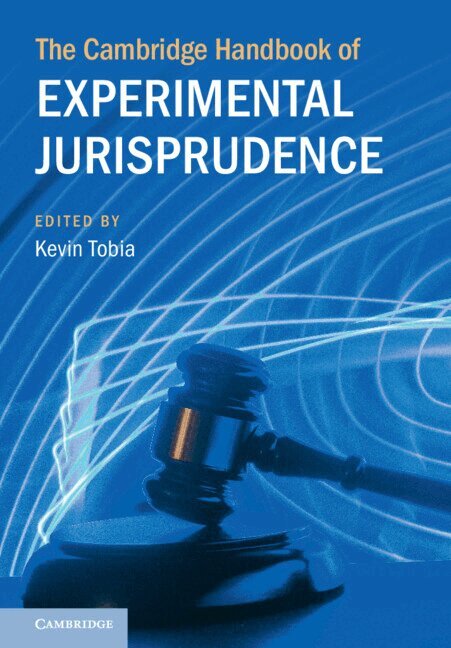
    The Cambridge Handbook of Experimental Jurisprudence

    AvKevin Tobia

    Inbunden, Engelska, 2025

    Del i serien Cambridge Law Handbooks

    2 229 kr

    Beställningsvara. Skickas inom 10-15 vardagar. Fri frakt över 249 kr.

    Beskrivning

    This handbook introduces readers to the emerging field of experimental jurisprudence, which applies new empirical methods to address fundamental philosophical questions in legal theory. The book features contributions from a global group of leading professors of law, philosophy, and psychology, covering a diverse range of topics such as criminal law, legal interpretation, torts, property, procedure, evidence, health, disability, and international law. Across thirty-eight chapters, the handbook utilizes a variety of methods, including traditional philosophical analysis, psychology survey studies and experiments, eye-tracking methods, neuroscience, behavioural methods, linguistic analysis, and natural language processing. The book also addresses cutting-edge issues such as legal expertise, gender and race in the law, and the impact of AI on legal practice. In addition to examining United States law, the work also takes a comparative approach that spans multiple legal systems, discussing the implications of experimental jurisprudence in Australia, Germany, Mexico, and the United Kingdom.

    Produktinformation

    • Utgivningsdatum:2025-06-05
    • Mått:262 x 187 x 48 mm
    • Vikt:1 702 g
    • Format:Inbunden
    • Språk:Engelska
    • Serie:Cambridge Law Handbooks
    • Antal sidor:756
    • Förlag:Cambridge University Press
    • ISBN:9781009170918

    Utforska kategorier

    • Rättsvetenskap inom Juridik
    • Juridisk kompetens och praktik inom Juridik
    • Juridik: metod och teori inom Juridik

    Mer om författaren

    Kevin Tobia is a Professor of Law and Philosophy at Georgetown. His work is published in the Harvard Law Review, Yale Law Journal, Analysis, and Cognition, has been cited by courts and legal casebooks, and has been awarded the Felix S. Cohen prize and the AALS Jurisprudence 'Future Promise Award' for scholarship in legal philosophy.

    Innehållsförteckning

    • Part I. Foundations and Theory: 1. Introduction; 2. Psychology and jurisprudence across the curriculum; 3. Holmes, legal realism, and experimental jurisprudence; 4. The empirical component of analytic jurisprudence; 5. The limits of experimental jurisprudence; 6. Competing conceptual inferences and the limits of experimental jurisprudence; 7. The contours of bias in experimental jurisprudence; 8. Experimental jurisprudence and doctrinal reasoning: a view from German criminal law; 9. Law and morality; 10. Legal constraint; Part II. Introductions: 11. Rules; 12. Surveys and experiments in statutory interpretation; 13. Corpus linguistics and armchair jurisprudence; 14. Using experiments to inform regulation of consumer contracts; 15. An Experimental jurisprudence approach to health law and disability law; 16. Public perceptions of settlement; 17. Experimental jurisprudence in international law; 18. The law and psychology of gender stereotyping; 19. The experimental jurisprudence of persistence through time; 20. Experimental investigation of judicial legal reasoning; 21. Eye-Tracking as a method for legal research; 22. Intuitive jurisprudence: what experimental jurisprudence can learn from developmental science; Part III. Applications: 23. Moral judgments about retributive vigilantism; 24. How much harm does it take? An experimental study on legal expertise, the severity effect, and intentionality attributions; 25. Human perceptions of AI-caused harm; 26. Reasonableness from an experimental jurisprudence perspective; 27. The meaning of “Reasonable”: evidence from a corpus-linguistic study; 28. Commonsense consent and action representation: what is “Essential” to consent?; 29. Who caused it? Different effects of statistical and prescriptive abnormality on causal selection in chains; 30. Ownership for and against control; 31. Examining the foundations of the law of judicial bias: expert versus lay perspectives on judicial recusal; 32. The promise and the pitfalls of Mock Jury studies: testing the psychology of character assessments; 33. Legal interpretation as coordination; 34. Legal ambiguities: what can psycholinguistics tell us?; 35. Cross-cultural perceptions of rights for future generations; 36. The right to transgender identity; 37. The legal conductome: the complexity behind decisions; 38. Trial by internet: a randomized field experiment on wikipedia's influence on judges' legal reasoning.