• Fri frakt över 249 kr
  • •
  • Snabba leveranser
  • •
  • Billiga böcker
Kundservice

Du är på sajten för privatpersoner.

Företag, bibliotek eller offentlig verksamhet?

Du handlar på classic.bokus.com, där alla dina funktioner finns intakta.
Till classic.bokus.com
Bokus logotyp. Gå till startsidan.
  • Erbjudanden
  • Nyheter
  • Student
  • Topplistor
  • Barn & ungdom
  • Bokus Play
  • E-böcker
  • Pocketböcker
  • Spel & pussel

10% rabatt på allt med kod: NYSTART10 →

Sidfot

Mina sidor

    Hjälp

    • Kundservice
    • Vanliga frågor och svar
    • Frakt och leverans
    • Retur vid ångerrätt
    • Reklamera vara
    • Betalning
    • Köpvillkor
    • Allmänna villkor
    • Information om webbplatsens tillgänglighet

    Om Bokus

    • Om oss
    • Pressrum
    • För studenter
    • För företag
    • För bibliotek och offentlig verksamhet
    • För leverantörer
    • Hållbarhet

    Populärt

    • Aktuella erbjudanden
    • Presentkort
    • Studentlitteratur
    • Nya böcker
    • Topplistor
    • Signerade böcker
    • Engelska böcker

    Inspiration

    • Boktips
    • BookTok
    • Populära bokserier
    • Barnbokskaraktärer
    • Populära författare
    Logotyp för Bokus
    Följ oss på Facebook (extern länk)Följ oss på Instagram (extern länk)Följ oss på YouTube (extern länk)Följ oss på TikTok (extern länk)
    bokus @ CookiesAnpassa cookiesIntegritetspolicyKöpvillkor
    Till Citymail hemsida (extern länk)Till Budbee hemsida (extern länk)Till Postnord hemsida (extern länk)Till Schenker hemsida (extern länk)Till Early Bird hemsida (extern länk)Till Walleys hemsida (extern länk)
    1. Historia och arkeologi
    2. Historia
    3. Mellanösterns historia

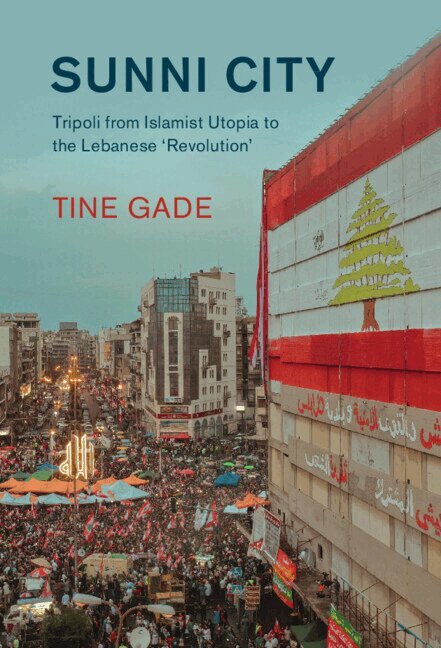
    Sunni City

    Tripoli from Islamist Utopia to the Lebanese 'Revolution'

    AvTine Gade

    Inbunden, Engelska, 2022

    Del 69 i serien Cambridge Middle East Studies

    1 140 kr

    Beställningsvara. Skickas inom 10-15 vardagar. Fri frakt över 249 kr.

    Beskrivning

    Tripoli, Lebanon's 'Sunni City' is often presented as an Islamist or even Jihadi city. However, this misleading label conceals a much deeper history of resistance and collaboration with the state and the wider region. Based on more than a decade of fieldwork and using a broad array of primary sources, Tine Gade analyses the modern history of Tripoli, exploring the city's contentious politics, its fluid political identity, and the relations between Islamist and sectarian groups. Offering an alternative explanation for Tripoli's decades of political troubles - rather than emphasizing Islamic radicalism as the principal explanation - she argues that it is Lebanese clientelism and the decay of the state that produced the rise of violent Islamist movements in Tripoli. By providing a corrective to previous assumptions, this book not only expands our understanding of Lebanese politics, but of the wider religious and political dynamics in the Middle East.

    Produktinformation

    • Utgivningsdatum:2022-11-24
    • Mått:158 x 235 x 23 mm
    • Vikt:610 g
    • Format:Inbunden
    • Språk:Engelska
    • Serie:Cambridge Middle East Studies
    • Antal sidor:314
    • Förlag:Cambridge University Press
    • ISBN:9781009222761

    Utforska kategorier

    • Mellanösterns historia inom Historia och arkeologi

    Mer om författaren

    Tine Gade is Senior Research Fellow in the Norwegian Institute of International Affairs' (NUPI) Research Group on Peace, Conflict and Development. She is a former Max Weber fellow at the European University Institute and the 2012 recipient of the Michel Seurat prize. She has conducted fieldwork on Sunni movements in Lebanon since 2008 and in Iraq since 2016. This is her first book, and it builds on her extensive research during her doctoral studies at Sciences Po Paris.

    Recensioner i media

    'The story of Tripoli is rich and fascinating, and Gade tells it with deep insight and sympathy. Based on years of meticulous research, the book provides a new vantage point to evaluate Lebanese politics: the country's second metropolis, where citizens both resist and reshape the state.' Hannes Baumann, University of Liverpool

    Innehållsförteckning

    • Introduction: Tripoli, secondary city of Lebanon; 1. Tripoli's city corporatism and identity politics during the nationalist era (1920–1979); 2. Regional proxy war: Radical Islamism (1982–1986) alters Tripoli; 3. The postwar erosion of Tripoli's city corporatism; 4. The globalization of Islam and the crisis of religious authority; 5. The future movement: Lebanon's political crisis and sectarianization 2005–2011; 6. Tripoli's Islamists: Clients of Arab Gulf states or autonomous actors?; 7. The impact of the Syrian Civil War and beyond, 2011–2020; Conclusion: What can Tripoli tell us about violence and ideological-political activism in the Middle East?