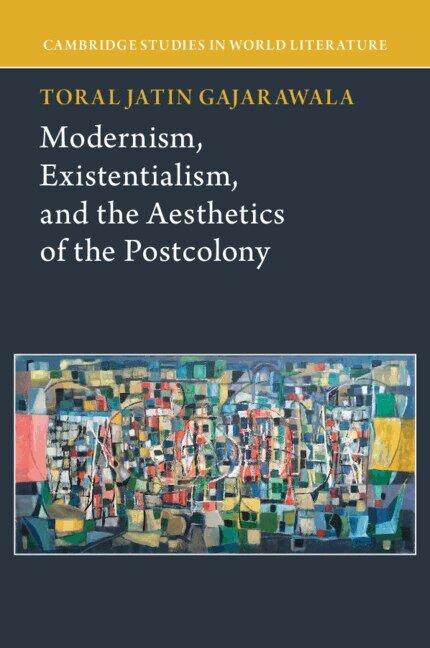
Häftad, Engelska, 2026
Modernism, Existentialism, and the Aesthetics of the Postcolony
Del i serien Cambridge Studies in World Literature
604 kr
Skickas tisdag 17/11. Fri frakt över 249 kr.
Beskrivning
Produktinformation
- Utgivningsdatum: 2026-08-20
- Mått: 152 x 228 x 17 mm
- Vikt: 477 g
- Format: Häftad
- Språk: Engelska
- Serie: Cambridge Studies in World Literature
- Antal sidor: 292
- Förlag: Cambridge University Press
- ISBN: 9781009697033
Utforska kategorier
Mer om författaren
Toral Jatin Gajarawala is an Associate Professor of English and Comparative Literature at NYU and the author of Untouchable Fictions: Literary Realism and the Crisis of Caste (2012). She is also the winner of the William Riley Parker Prize, Modern Language Association; awarded grants by the Camargo Foundation and the National Endowment for the Humanities; forthcoming publications in Modernism/Modernity and Philological Encounters.
Recensioner i media
'Strange Light is a field-changing account of collagist, interdisciplinary, and multimedial existentialisms that emerged across South Asia in Cold War conditions of the 1960s and 70s. It reveals such existentialisms as an occluded outlook of estrangement that challenges composite visions of identity endorsed by anticolonial nation-states, no less than visions of solidarity and commitment supported by the anticolonial left. In a series of dazzling literary-philosophical excurses through underexplored archives and entangled texts, Gajarawala presents postcolonial existentialism as the formal and aesthetic dimension of postcolonial modernism, and as a secret history of late-postcoloniality in general.' Leela Gandhi, John Hawkes Professor of Humanities and English, Brown University
Betyg & recensioner
0 recensioner
Inga recensioner tillgängliga.