• Fri frakt över 249 kr
  • •
  • Snabba leveranser
  • •
  • Billiga böcker
Kundservice

Du är på sajten för privatpersoner.

Företag, bibliotek eller offentlig verksamhet?

Du handlar på classic.bokus.com, där alla dina funktioner finns intakta.
Till classic.bokus.com
Bokus logotyp. Gå till startsidan.
  • Erbjudanden
  • Nyheter
  • Student
  • Topplistor
  • Barn & ungdom
  • Bokus Play
  • E-böcker
  • Pocketböcker
  • Spel & pussel

10% rabatt på allt med kod NYSTART10 →

Sidfot

Mina sidor

    Hjälp

    • Kundservice
    • Vanliga frågor och svar
    • Frakt och leverans
    • Retur vid ångerrätt
    • Reklamera vara
    • Betalning
    • Köpvillkor
    • Allmänna villkor
    • Information om webbplatsens tillgänglighet

    Om Bokus

    • Om oss
    • Pressrum
    • För studenter
    • För företag
    • För bibliotek och offentlig verksamhet
    • För leverantörer
    • Hållbarhet

    Populärt

    • Aktuella erbjudanden
    • Presentkort
    • Studentlitteratur
    • Nya böcker
    • Topplistor
    • Signerade böcker
    • Engelska böcker

    Inspiration

    • Boktips
    • BookTok
    • Populära bokserier
    • Barnbokskaraktärer
    • Populära författare
    Logotyp för Bokus
    Följ oss på Facebook (extern länk)Följ oss på Instagram (extern länk)Följ oss på YouTube (extern länk)Följ oss på TikTok (extern länk)
    bokus @ CookiesAnpassa cookiesIntegritetspolicyKöpvillkor
    Till Citymail hemsida (extern länk)Till Budbee hemsida (extern länk)Till Postnord hemsida (extern länk)Till Schenker hemsida (extern länk)Till Early Bird hemsida (extern länk)Till Walleys hemsida (extern länk)
    1. Historia och arkeologi
    2. Arkeologi

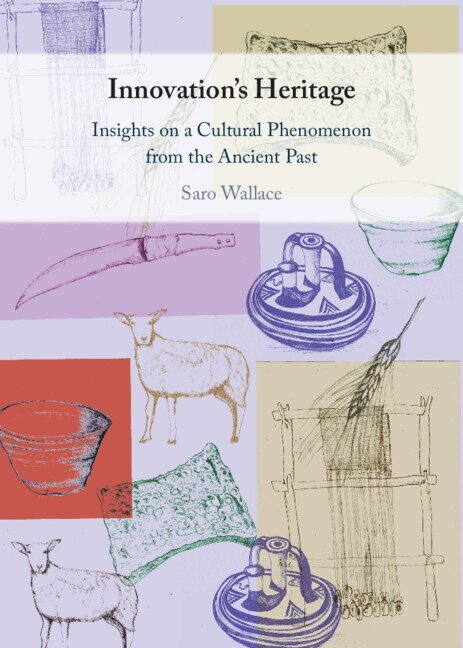
    Innovation's Heritage

    Insights on a Cultural Phenomenon from the Ancient Past

    AvSaro Wallace

    Inbunden, Engelska, 2026

    1 358 kr

    Kommande

    Fler format och utgåvor

    Häftad

    Kommande

    Beskrivning

    Is innovation all we think it is? In this study, Saro Wallace challenges prevalent assumptions about innovation within post-colonial, post-industrial academic, and popular frameworks. She shows how they are often predicated on recent western culture and its dominant economic frameworks, and how they draw heavily on ecological and evolutionary models in the biological sciences. Using the ancient past to examine and recast innovation in long-term perspective, she reveals innovation's ultimate social determination, historicity, and non-innateness in human groups. Wallace offers core case studies from the ancient Mediterranean and west Asia and covers the origins of metals, ceramics, textiles and cultural landscapes starting 14000 years ago and ending in the first millennium BC. She demonstrates that her compelling, wide-ranging model also applies to historical and recent  cases, suggesting that innovation is neither an engineerable phenomenon in society, nor is it inherent, organic, or inevitable.

    Produktinformation

    • Utgivningsdatum:2026-09-30
    • Mått:152 x 229 x undefined mm
    • Vikt:343 g
    • Format:Inbunden
    • Språk:Engelska
    • Antal sidor:259
    • Förlag:Cambridge University Press
    • ISBN:9781009761376

    Utforska kategorier

    • Arkeologi inom Historia och arkeologi

    Mer om författaren

    Saro Wallace is an archaeologist specialising in east Mediterranean prehistory. A former university professor and researcher in several British universities, she is a senior specialist researcher funded by grants and fellowships at institutions, including the Universities of Warsaw, Heidelberg, Harvard, and Manchester. She currently co-directs a research excavation project in Crete with the Polish Academy of Sciences and operates a heritage research consultancy in the United Kingdom.

    Innehållsförteckning

    • 1. Introduction to an 'archaeology of innovation'; 2. Explaining cultural innovation: disciplinary perspectives; 3. Landscape as part of technical milieu for transformative subsistence innovation; 4. Weaving the new: early textile innovations; 5. Shaping and baking: ceramic innovation and the social conditioning of innovation-generating contexts; 6. The first cultural metals: copper, tin and iron; 7. An historical odyssey, and some conclusions; Conclusions: revising contemporary views of innovation.