• Fri frakt över 249 kr
  • •
  • Snabba leveranser
  • •
  • Billiga böcker
Kundservice

Du är på sajten för privatpersoner.

Företag, bibliotek eller offentlig verksamhet?

Du handlar på classic.bokus.com, där alla dina funktioner finns intakta.
Till classic.bokus.com
Bokus logotyp. Gå till startsidan.
  • Erbjudanden
  • Nyheter
  • Student
  • Topplistor
  • Barn & ungdom
  • Bokus Play
  • E-böcker
  • Pocketböcker
  • Spel & pussel

10% rabatt på allt med kod: NYSTART10 →

Sidfot

Mina sidor

    Hjälp

    • Kundservice
    • Vanliga frågor och svar
    • Frakt och leverans
    • Retur vid ångerrätt
    • Reklamera vara
    • Betalning
    • Köpvillkor
    • Allmänna villkor
    • Information om webbplatsens tillgänglighet

    Om Bokus

    • Om oss
    • Pressrum
    • För studenter
    • För företag
    • För bibliotek och offentlig verksamhet
    • För leverantörer
    • Hållbarhet

    Populärt

    • Aktuella erbjudanden
    • Presentkort
    • Studentlitteratur
    • Nya böcker
    • Topplistor
    • Signerade böcker
    • Engelska böcker

    Inspiration

    • Boktips
    • BookTok
    • Populära bokserier
    • Barnbokskaraktärer
    • Populära författare
    Logotyp för Bokus
    Följ oss på Facebook (extern länk)Följ oss på Instagram (extern länk)Följ oss på YouTube (extern länk)Följ oss på TikTok (extern länk)
    bokus @ CookiesAnpassa cookiesIntegritetspolicyKöpvillkor
    Till Citymail hemsida (extern länk)Till Budbee hemsida (extern länk)Till Postnord hemsida (extern länk)Till Schenker hemsida (extern länk)Till Early Bird hemsida (extern länk)Till Walleys hemsida (extern länk)
    1. Naturvetenskap och teknik
    2. Teknik och industri
    3. Energiteknik

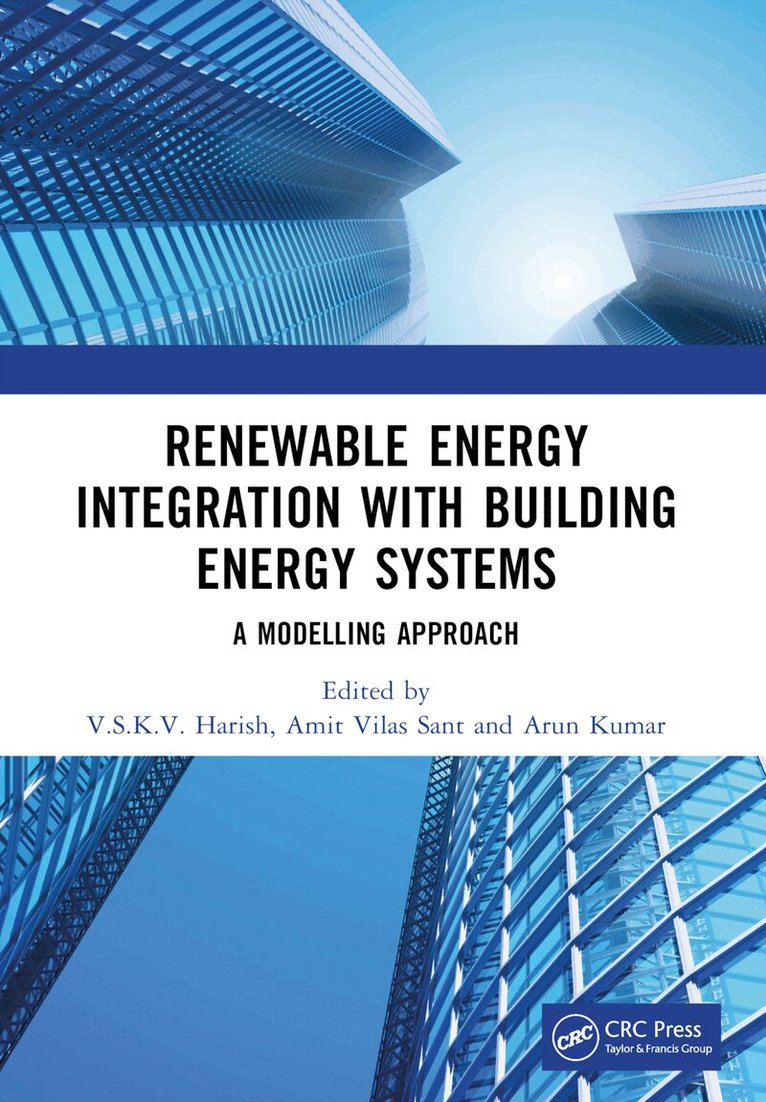
    Renewable Energy Integration with Building Energy Systems

    A Modelling Approach

    AvV.S.K.V. Harish,Amit Vilas Sant

    Häftad, Engelska, 2024

    737 kr

    Beställningsvara. Skickas inom 10-15 vardagar. Fri frakt över 249 kr.

    Beskrivning

    Construction, as an industry sector, is responsible for around one-third of the total worldwide energy usage and about 20% of greenhouse gas emissions. The rise in the number of buildings and floor space area for residential and commercial purposes has imposed enormous pressure on existing energy sources. Implementations such as efficient usage of building energy systems, design measures, utilization of local energy resources, energy storage, and the use of renewable energy sources to meet electricity demands are currently under development and deployment for improving the energy performance index. However, integrating all such measures and the development of nearly zero-energy and zero-emission buildings is yet to be explored.In this book, the different control techniques and intelligent technologies used to improve the energy performance of buildings are illustrated. Every building energy control system has a two-fold objective for energy and comfort requirements to achieve a high comfort index (for thermal, visual, air quality, humidity, and various plug loads) and increase the energy performance index. The most significant aspect in the design of a building’s energy control system is modelling. All the components, methodologies, and processes involved in developing a renewable energy-driven building are covered in detail.This book is intended for graduates and professionals working towards the development of a sustainable built environment using renewable energy sources.

    Produktinformation

    • Utgivningsdatum:2024-08-26
    • Mått:174 x 246 x 8 mm
    • Vikt:270 g
    • Format:Häftad
    • Språk:Engelska
    • Antal sidor:138
    • Förlag:Taylor & Francis Ltd
    • ISBN:9781032077987

    Utforska kategorier

    • Energiteknik inom Naturvetenskap och teknik
    • Byggnadsteknik inom Naturvetenskap och teknik
    • Miljöteknik inom Naturvetenskap och teknik

    Innehållsförteckning

    • 1. Fundamentals of Energy Transfer in Buildings. 2. Modelling and Simulation of Building Energy Elements. 3. Modelling and Simulation of Heating Ventilation and Air-Conditioning System. 4. Review of Power Converters. 5. Grid Integration of Renewable Energy Sources for Buildings. 6. Electric Vehicle Technology. 7. Techno-Economic Analysis of Electric Vehicles.