• Fri frakt över 249 kr
  • •
  • Snabba leveranser
  • •
  • Billiga böcker
Kundservice

Du är på sajten för privatpersoner.

Företag, bibliotek eller offentlig verksamhet?

Du handlar på classic.bokus.com, där alla dina funktioner finns intakta.
Till classic.bokus.com
Bokus logotyp. Gå till startsidan.
  • Erbjudanden
  • Nyheter
  • Student
  • Topplistor
  • Barn & ungdom
  • Bokus Play
  • E-böcker
  • Pocketböcker
  • Spel & pussel

10% studentrabatt med kod TERM26

Sidfot

Mina sidor

    Hjälp

    • Kundservice
    • Vanliga frågor och svar
    • Frakt och leverans
    • Retur vid ångerrätt
    • Reklamera vara
    • Betalning
    • Köpvillkor
    • Allmänna villkor
    • Information om webbplatsens tillgänglighet

    Om Bokus

    • Om oss
    • Pressrum
    • För studenter
    • För företag
    • För bibliotek och offentlig verksamhet
    • För leverantörer
    • Hållbarhet

    Populärt

    • Aktuella erbjudanden
    • Presentkort
    • Studentlitteratur
    • Nya böcker
    • Topplistor
    • Signerade böcker
    • Engelska böcker

    Inspiration

    • Boktips
    • BookTok
    • Populära bokserier
    • Barnbokskaraktärer
    • Populära författare
    Logotyp för Bokus
    Följ oss på Facebook (extern länk)Följ oss på Instagram (extern länk)Följ oss på YouTube (extern länk)Följ oss på TikTok (extern länk)
    bokus @ CookiesAnpassa cookiesIntegritetspolicyKöpvillkor
    Till Citymail hemsida (extern länk)Till Budbee hemsida (extern länk)Till Postnord hemsida (extern länk)Till Schenker hemsida (extern länk)Till Early Bird hemsida (extern länk)Till Walleys hemsida (extern länk)
    1. Samhälle och politik
    2. Samhälle och kultur
    3. Kultur och medier
    4. Referensverk och tvärvetenskap

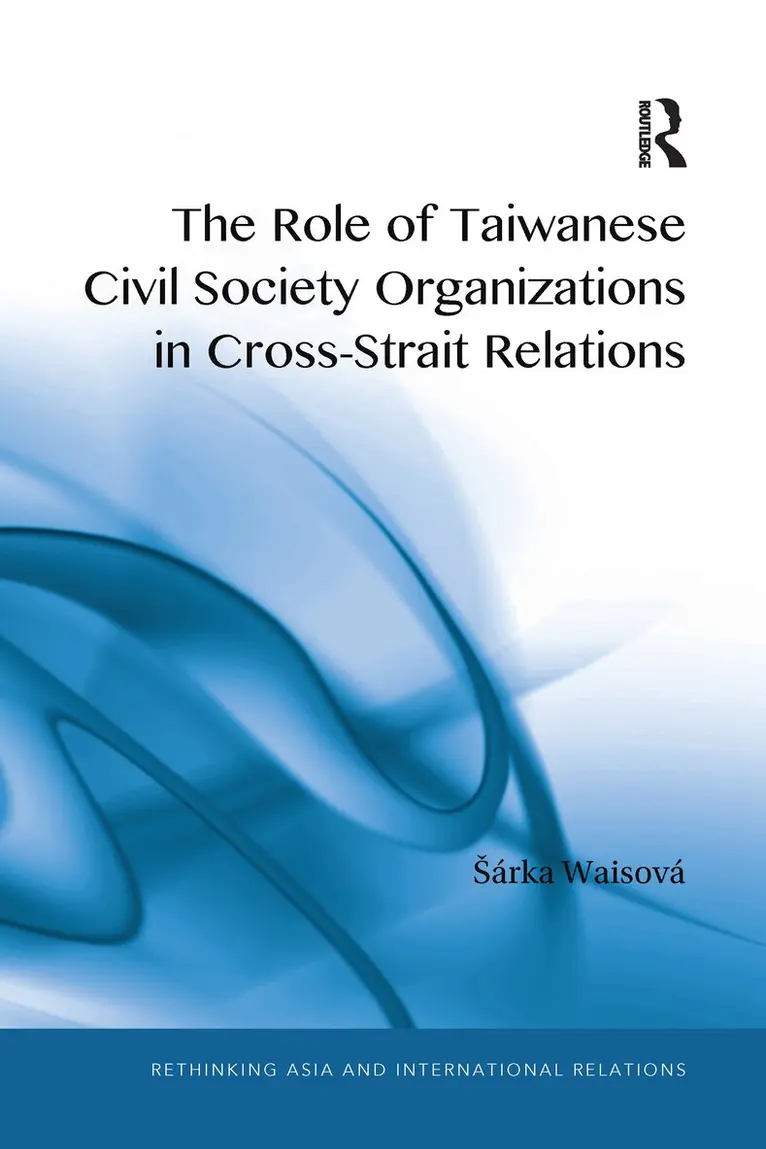
    Role of Taiwanese Civil Society Organizations in Cross-Strait Relations

    AvŠárka Waisová

    Häftad, Engelska, 2021

    Del i serien Rethinking Asia and International Relations

    670 kr

    Beställningsvara. Skickas inom 10-15 vardagar. Fri frakt över 249 kr.

    Fler format och utgåvor

    E-bok

    788 kr

    E-bok

    790 kr

    Inbunden

    2 434 kr

    Beskrivning

    Despite the instability of the political relationship between Taiwan and Mainland China, cross-strait activities such as trade, education, marriage and travel have prospered. While the main focus of current academic research has been on security and economic relationships between the two governments, relatively little attention has been paid to social interactions or the role of civil society actors. This book investigates the role of Taiwanese civil society organizations in shaping the relationship between Mainland China and Taiwan. It explores the role of civil society organizations (CSOs) in building confidence and peace and shows that Taiwanese CSOs hold a very complicated position which has in fact added to tensions. Waisová’s research looks closely at the roles civil society organizations play in conflict transformation, reconciliation and peacebuilding, the modalities of playing such roles, and the challenges facing them. It will be of interest to students and scholars researching cross-strait relations and also to conflict resolution think-tanks, policy makers and policy analysts.

    Produktinformation

    • Utgivningsdatum:2021-09-30
    • Mått:156 x 234 x 9 mm
    • Vikt:290 g
    • Format:Häftad
    • Språk:Engelska
    • Serie:Rethinking Asia and International Relations
    • Antal sidor:156
    • Förlag:Taylor & Francis Ltd
    • ISBN:9781032179018

    Utforska kategorier

    • Referensverk och tvärvetenskap inom Samhälle och politik
    • Politik och statsskick inom Samhälle och politik
    • Internationella relationer inom Samhälle och politik

    Mer om författaren

    Šárka Waisová was formerly Head of the Department of Politics and International Relations at the Faculty of Philosophy and Arts, University of West Bohemia, Pilsen, and researcher at the Institute of International Relations in Prague. Since 2005 she has held an Associated Professorship at the Faculty of Philosophy and Arts, University of West Bohemia, Pilsen, Czech Republic. She is now an International Chair at the National University of Public Service, Budapest, Hungary. She is also an associate editor of Politics in Central Europe: the Journal of the Central European Political Science Association. She has received various research grants and fellowship such as the Fulbright Fellowship, the Canada–Europe Award, Jean Monnet Chair and the Taiwan Fellowship.

    Recensioner i media

    "Waisová examines the case of cross-strait relations to point to the contradictions in the relationship between democratisation, civil society and peace building. A worthy challenge to the conventional wisdom." - Petr Drulák, Ambassador of Czech Republic to France and to UNESCO, former professor of international relations at the Charles University, Prague."This innovative book makes a good contribution to the better understanding of what, how and why some Taiwanese civil society organizations (CSOs) have succeeded and some have failed their intermediary roles in the tension-driven Taiwan –China relations. The " One China principle" imposed by PRC regime has preempted and denied any constructive dialogue function of Taiwan’s " advocacy CSOs" in conflict resolution and policy option making. On the other hand, the "philanthropic CSOs" from Taiwan have somehow shaped the positive Taiwan image among the ordinary Chinese public. This book also pushes the readers to question another critical question: why are Chinese CSOs completely absent in cross-strait dynamics?" - Hsin-Huang Michael Hsiao, Academia Sinica, Taiwan.

    Innehållsförteckning

    • Introduction. Chapter 1: The role of CSOs in conflict transformation and peacebuilding: theoretical views and basic concepts. Chapter 2: Cross-strait relations and CSOs: framework for action. Chapter 3: What roles are there for Taiwanese civil society organizations in cross-strait relations? Policy advice, human rights, support of democracy and political status of Taiwan. Chapter 4: What is the role of Taiwanese civil society organizations in cross-strait relations? Culture exchange, social welfare, development assistance and environmental protection. Conclusion