• Fri frakt över 249 kr
  • •
  • Snabba leveranser
  • •
  • Billiga böcker
Kundservice

Du är på sajten för privatpersoner.

Företag, bibliotek eller offentlig verksamhet?

Du handlar på classic.bokus.com, där alla dina funktioner finns intakta.
Till classic.bokus.com
Bokus logotyp. Gå till startsidan.
  • Erbjudanden
  • Nyheter
  • Student
  • Topplistor
  • Barn & ungdom
  • Bokus Play
  • E-böcker
  • Pocketböcker
  • Spel & pussel

10% rabatt på allt med kod NYSTART10 →

Sidfot

Mina sidor

    Hjälp

    • Kundservice
    • Vanliga frågor och svar
    • Frakt och leverans
    • Retur vid ångerrätt
    • Reklamera vara
    • Betalning
    • Köpvillkor
    • Allmänna villkor
    • Information om webbplatsens tillgänglighet

    Om Bokus

    • Om oss
    • Pressrum
    • För studenter
    • För företag
    • För bibliotek och offentlig verksamhet
    • För leverantörer
    • Hållbarhet

    Populärt

    • Aktuella erbjudanden
    • Presentkort
    • Studentlitteratur
    • Nya böcker
    • Topplistor
    • Signerade böcker
    • Engelska böcker

    Inspiration

    • Boktips
    • BookTok
    • Populära bokserier
    • Barnbokskaraktärer
    • Populära författare
    Logotyp för Bokus
    Följ oss på Facebook (extern länk)Följ oss på Instagram (extern länk)Följ oss på YouTube (extern länk)Följ oss på TikTok (extern länk)
    bokus @ CookiesAnpassa cookiesIntegritetspolicyKöpvillkor
    Till Citymail hemsida (extern länk)Till Budbee hemsida (extern länk)Till Postnord hemsida (extern länk)Till Schenker hemsida (extern länk)Till Early Bird hemsida (extern länk)Till Walleys hemsida (extern länk)
    1. Data och IT
    2. Informationsteknik: allmänt

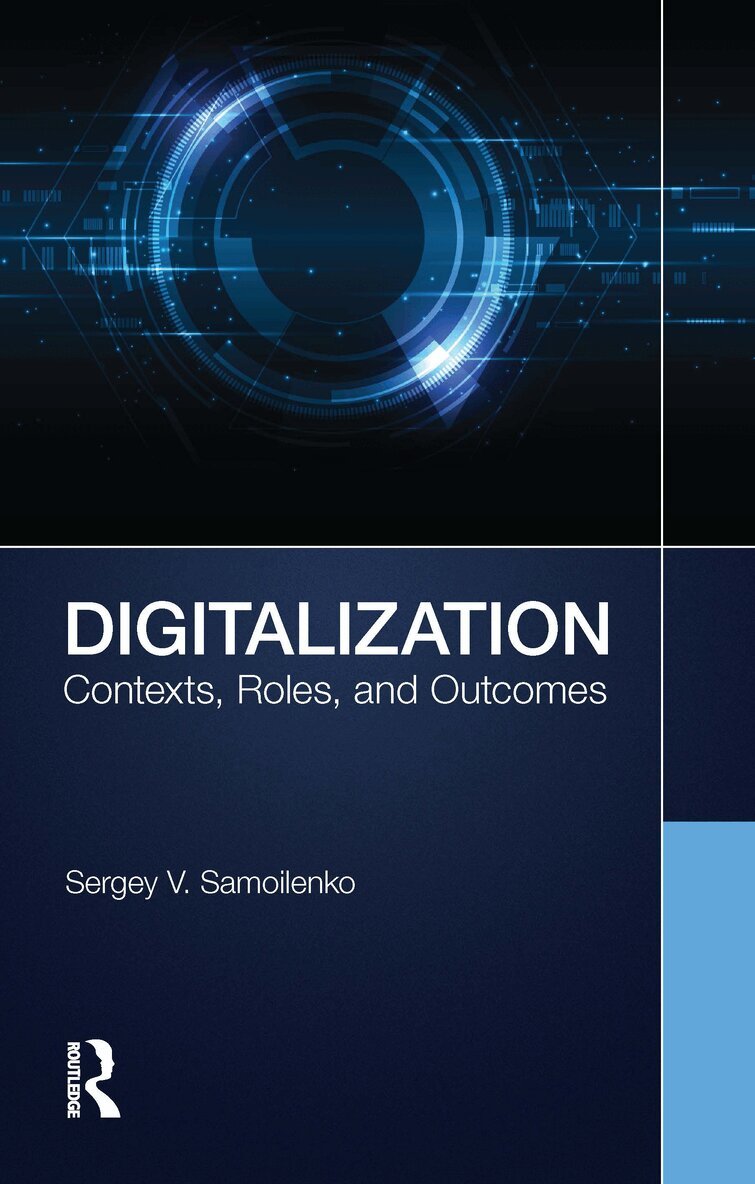
    Digitalization

    Contexts, Roles, and Outcomes

    AvSergey V. Samoilenko

    Häftad, Engelska, 2024

    730 kr

    Beställningsvara. Skickas inom 10-15 vardagar. Fri frakt över 249 kr.

    Fler format och utgåvor

    E-bok

    866 kr

    E-bok

    864 kr

    Inbunden

    1 815 kr

    Beskrivning

    Conceptually, as well as practically, digitalization is similar to the implementation of a modern computation model – the model may be a centralized setup using a mainframe or it may be extended to an N-tier architecture. Regardless of the specifics of the implementation, however, the conceptual model of data processing remains the same. Digitalization is nothing but a system relying on digital technologies to create, conduct and, potentially, expand a business activity of some sort. Digitalization can be used to create an e-commerce model for a small business or to create a global supply and distribution chain geared toward almost any kind of a business. It could also be used for non-profit purposes, such as on-line education and telemedicine or e-government.Digitalization: Contexts, Roles, and Outcomes is a contemplation and analysis of the socio-technical system that is known as digitalization. It considers the context of digitalization as well as the ways by which digitalization offers value to the context within which it operates. This book aims to offer readers an entry point to a path of inquiry into the different aspects of digitalization. The goal is to identify main directions for further inquiry as well as to outline the most obvious obstacles along the way. The book aims to guide readers on their own unique journeys using the basic ideas, principles, and concepts synthesized, developed, and presented in the book. It is beneficial to both practitioners and researchers.The book covers: The functionality of digitalization The significance of digitalization Identifying the context of digitalization Designing a control system A cognitive model for the theory of digitalization Designing a theory of digitalizationThe book helps readers to consider the subject of digitalization in a rigorous and rational way so their own perspectives can emerge stronger and be substantiated and reinforced by building an argument vis-à-vis perspectives and points examined in this book.

    Produktinformation

    • Utgivningsdatum:2024-10-07
    • Mått:156 x 234 x 12 mm
    • Vikt:340 g
    • Format:Häftad
    • Språk:Engelska
    • Antal sidor:196
    • Förlag:Taylor & Francis Ltd
    • ISBN:9781032303970

    Utforska kategorier

    • Informationsteknik: allmänt inom Data och IT
    • Projektledning inom Ekonomi och Ledarskap

    Mer om författaren

    Sergey Samoilenko is a Professor in the Department of CIS/CS at Averett University, Danville, Virginia. He holds his PhD and MS in Information Systems from Virginia Commonwealth University. Sergey’s research is focused on the areas of Information Technologies for development, decision support systems, and design of quantitative multi-method methodologies. He is an author of multiple books, books’ chapters, and he has published in a variety of journals, as well as in numerous conference proceedings. Sergey can be reached at samoilenko@averett.edu.

    Innehållsförteckning

    • About the Author. Overview. Introduction: Trouble with Words. Chapter 1 Conceptualizing and Defining Digitalization. Chapter 2 Conceptualizing Digitalization – What is a Good Lens to Use? Chapter 3 Assessing the Present and Planning the Future. Chapter 4 Assumptions Underlying Structure of Digitalization. Chapter 5 Essential Structural Components of Digitalization. Chapter 6 Functionality of Digitalization. Chapter 7 Improving the Output of Digitalization via Process Optimization. Chapter 8 Impact of Digitalization on Its Internal Environment. Chapter 9 Impact of Digitalization on Its External Environment. Chapter 10 Significance of Digitalization – Why Is It Important? Chapter 11 Mechanism of the Impact – What Is the Theory? Chapter 12 Identifying the Context of Digitalization. Chapter 13 Digitalization: Platform Acquisition. Chapter 14 Digitalization: Outcomes of Using a Platform. Chapter 15 Identifying the Scope of the Environment. Chapter 16 Identifying the Outcome of Digitalization. Chapter 17 Digitalization and the Pressures of the Environment. Chapter 18 Digitalization and Non-Competitive Context. Chapter 19 Digitalization and Competitive Context. Chapter 20 Digitalization and Adversarial Social Groups. Chapter 21 Managing a Conflict Environment of Digitalization. Chapter 22 Designing a Control System. Chapter 23 Cognitive Model for Theory of Digitalization. Chapter 24 Designing a Theory of Digitalization. Index.