• Fri frakt över 249 kr
  • •
  • Snabba leveranser
  • •
  • Billiga böcker
Kundservice

Du är på sajten för privatpersoner.

Företag, bibliotek eller offentlig verksamhet?

Du handlar på classic.bokus.com, där alla dina funktioner finns intakta.
Till classic.bokus.com
Bokus logotyp. Gå till startsidan.
  • Erbjudanden
  • Nyheter
  • Student
  • Topplistor
  • Barn & ungdom
  • Bokus Play
  • E-böcker
  • Pocketböcker
  • Spel & pussel

10% rabatt på allt med kod: NYSTART10 →

Sidfot

Mina sidor

    Hjälp

    • Kundservice
    • Vanliga frågor och svar
    • Frakt och leverans
    • Retur vid ångerrätt
    • Reklamera vara
    • Betalning
    • Köpvillkor
    • Allmänna villkor
    • Information om webbplatsens tillgänglighet

    Om Bokus

    • Om oss
    • Pressrum
    • För studenter
    • För företag
    • För bibliotek och offentlig verksamhet
    • För leverantörer
    • Hållbarhet

    Populärt

    • Aktuella erbjudanden
    • Presentkort
    • Studentlitteratur
    • Nya böcker
    • Topplistor
    • Signerade böcker
    • Engelska böcker

    Inspiration

    • Boktips
    • BookTok
    • Populära bokserier
    • Barnbokskaraktärer
    • Populära författare
    Logotyp för Bokus
    Följ oss på Facebook (extern länk)Följ oss på Instagram (extern länk)Följ oss på YouTube (extern länk)Följ oss på TikTok (extern länk)
    bokus @ CookiesAnpassa cookiesIntegritetspolicyKöpvillkor
    Till Citymail hemsida (extern länk)Till Budbee hemsida (extern länk)Till Postnord hemsida (extern länk)Till Schenker hemsida (extern länk)Till Early Bird hemsida (extern länk)Till Walleys hemsida (extern länk)
    1. Naturvetenskap och teknik
    2. Teknik och industri
    3. Energiteknik

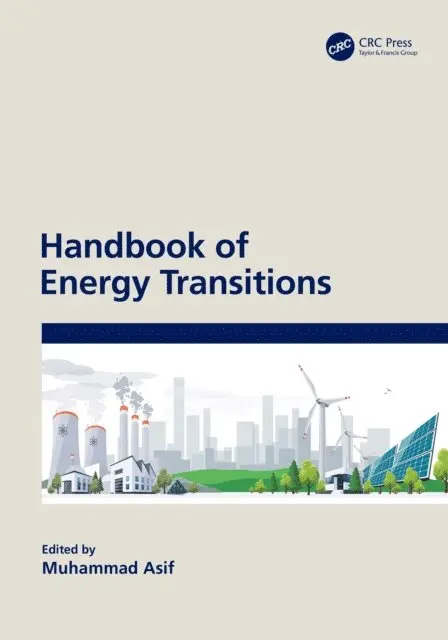
    Handbook of Energy Transitions

    AvMuhammad Asif

    Häftad, Engelska, 2025

    737 kr

    Beställningsvara. Skickas inom 10-15 vardagar. Fri frakt över 249 kr.

    Fler format och utgåvor

    Inbunden

    2 056 kr

    E-bok

    671 kr

    E-bok

    671 kr

    Beskrivning

    The global energy scenario is undergoing an unprecedented transition. In the wake of enormous challenges—such as increased population, higher energy demands, increasing greenhouse gas emissions, depleting fossil fuel reserves, volatile energy prices, geopolitical concerns, and energy insecurity issues—the energy sector is experiencing a transition in terms of energy resources and their utilization. This modern transition is historically more dynamic and multidimensional compared to the past considering the vast technological advancements, socioeconomic implications and political responses, and ever-evolving global policies and regulations. Energy insecurity in terms of its critical dimensions—access, affordability, and reliability—remains a major problem hindering the socioeconomic progress in developing countries.The Handbook of Energy Transitions presents a holistic account of the 21st-century energy transition away from fossil fuels. It provides an overview of the unfolding transition in terms of overall dimensions, drivers, trends, barriers, policies, and geopolitics, and then discusses transition in terms of particular resources or technologies, such as renewable energy systems, solar energy, hydropower, hydrogen and fuel cells, electric vehicles, energy storage systems, batteries, digitalization, smart grids, blockchain, and machine learning. It also discusses the present energy transition in terms of broader policy and developmental perspectives. Further, it examines sustainable development, the economics of energy and green growth, and the role of various technologies and initiatives like renewables, nuclear power, and electrification in promoting energy security and energy transition worldwide.Key FeaturesIncludes technical, economic, social, and policy perspectives of energy transitionsFeatures practical case studies and comparative assessmentsExamines the latest renewable energy and low-carbon technologiesExplains the connection between energy transition and global climate change

    Produktinformation

    • Utgivningsdatum:2025-03-12
    • Mått:178 x 254 x 28 mm
    • Vikt:970 g
    • Format:Häftad
    • Språk:Engelska
    • Antal sidor:504
    • Förlag:Taylor & Francis Ltd
    • ISBN:9781032324982

    Utforska kategorier

    • Energiteknik inom Naturvetenskap och teknik
    • Klassisk mekanik inom Naturvetenskap och teknik
    • Miljöteknik inom Naturvetenskap och teknik

    Mer om författaren

    Dr Muhammad Asif is a Professor at the King Fahd University of Petroleum and Minerals. He is a Chartered Engineer, a Certified Energy Manager, and a Member of the Energy Institute. He has 20 years of teaching and research experience at various European and Middle Eastern Universities. His areas of research interests include energy transition, renewable energy, energy policy, energy security, sustainable buildings, and life cycle assessment. He has authored/edited six books and has published more than 100 journal and conference papers.

    Innehållsförteckning

    • Section I Introduction to the 21st-Century Energy TransitionChapter 1 Dynamics of a Sustainable Energy TransitionMuhammad AsifChapter 2 Energy Transitions: Trend, Drivers, Barriers, and PoliciesTri Ratna Bajracharya, Shree Raj Shakya, and Anzoo SharmaChapter 3 Geopolitics of the Energy TransitionMarco GiuliSection II Energy Transition: Resources and TechnologiesChapter 4 Renewable Energy SystemsHafiz Ali Muhammad, Muhammad Asim, Muhammad Imran, Zafar Ali Khan, Tabbi Wilberforce, and Young-Jin BaikChapter 5 A Global Hydropower Generation, Potentials, and ExternalitiesMaksud BekchanovChapter 6 A Multigenerational Solar Energy-Driven System for a Residential BuildingKhaled H.M. Al-Hamed and Ibrahim DincerChapter 7 Toward Building Sector Energy TransitionNiccolò Aste, Claudio Del Pero, and Fabrizio LeonforteChapter 8 Electric Vehicles and Future of Transport SectorHüseyin Turan Arat, Mustafa Kaan Baltacioğlu, and Cağlar ConkerChapter 9 Hydrogen and Fuel CellsSaeed-ur-Rehman, Hafiz Ahmad Ishfaq, Zubair Masaud, Muhammad Haseeb Hassan, Hafiz Ali Muhammad, and Muhammad Zubair KhanChapter 10 Energy Storage SystemsGhulam M. Mustafa and Ghulam AliChapter 11 Lithium-Based Battery Systems: Technological and EnvironmentalChallenges and OpportunitiesC. M. Costa, J. C. Barbosa, R. Gonçalves, S. Ferdov, and S. Lanceros-MendezChapter 12 Demand-Side Management in Smart GridsIntisar Ali Sajjad, Haroon Farooq, Waqas Ali, and Rehan LiaqatChapter 13 Digitalization in the Energy SectorMuhammad Umer, Muhammad Abid, Tahira Nazir, and Zaineb AbidChapter 14 Application of Blockchain for Energy Transition SystemsGijs van Leeuwen, Tarek AlSkaif, and Bedir TekinerdoganChapter 15 Machine Learning Applications in the Petroleum IndustryAhmed Abdulhamid Mahmoud, Salaheldin Elkatatny, and Abdulazeez AbdulraheemSection III Energy Transition: Policies and ProspectsChapter 16 Energy and Sustainable DevelopmentTri Ratna Bajracharya, Shree Raj Shakya, and Anzoo SharmaChapter 17 Economics of Energy and Green Growth: Decoupling DebateMeltem UcalChapter 18 Investigation into the Effects of Energy Transition in Terms of Economic GrowthGuller SahinChapter 19 Energy Security: Role of Renewable and Low-Carbon TechnologiesLiliana N. ProskuryakovaChapter 20 Promotion of Decarbonization by Private Sector’s ApproachesNobuhiro SawamuraChapter 21 Electrification and Targets in Developing CountriesTri Ratna Bajracharya, Shree Raj Shakya, and Anzoo SharmaChapter 22 Regional Energy Policies, Trade and Energy Security in South Asia: A Quest for DiplomacyMabroor Hassan, Manzoor Khan Afridi, and Muhammad Irfan KhanChapter 23 Electricity Sector Reforms, Private Sector Participation and Electricity Sector Performance in Sub-Saharan AfricaChigozie Nweke-Eze, Chinedu Miracle Nevo, and Ewere Evelyn AnyokwuChapter 24 Electrification and Energy Transition in Sub-Saharan Africa: Status, Issues and Effects, from a Source-to-Household PerspectiveVikrant Katekar and Sandip DeshmukhChapter 25 The Role of Nuclear Power under the Energy Transition: An Unsustainable Approach to Taiwan’s Nuclear-Free Homeland By 2025?Anton Ming-Zhi Gao