• Fri frakt över 249 kr
  • •
  • Snabba leveranser
  • •
  • Billiga böcker
Kundservice

Du är på sajten för privatpersoner.

Företag, bibliotek eller offentlig verksamhet?

Du handlar på classic.bokus.com, där alla dina funktioner finns intakta.
Till classic.bokus.com
Bokus logotyp. Gå till startsidan.
  • Erbjudanden
  • Nyheter
  • Student
  • Topplistor
  • Barn & ungdom
  • Bokus Play
  • E-böcker
  • Pocketböcker
  • Spel & pussel

10% rabatt på allt med kod: NYSTART10 →

Sidfot

Mina sidor

    Hjälp

    • Kundservice
    • Vanliga frågor och svar
    • Frakt och leverans
    • Retur vid ångerrätt
    • Reklamera vara
    • Betalning
    • Köpvillkor
    • Allmänna villkor
    • Information om webbplatsens tillgänglighet

    Om Bokus

    • Om oss
    • Pressrum
    • För studenter
    • För företag
    • För bibliotek och offentlig verksamhet
    • För leverantörer
    • Hållbarhet

    Populärt

    • Aktuella erbjudanden
    • Presentkort
    • Studentlitteratur
    • Nya böcker
    • Topplistor
    • Signerade böcker
    • Engelska böcker

    Inspiration

    • Boktips
    • BookTok
    • Populära bokserier
    • Barnbokskaraktärer
    • Populära författare
    Logotyp för Bokus
    Följ oss på Facebook (extern länk)Följ oss på Instagram (extern länk)Följ oss på YouTube (extern länk)Följ oss på TikTok (extern länk)
    bokus @ CookiesAnpassa cookiesIntegritetspolicyKöpvillkor
    Till Citymail hemsida (extern länk)Till Budbee hemsida (extern länk)Till Postnord hemsida (extern länk)Till Schenker hemsida (extern länk)Till Early Bird hemsida (extern länk)Till Walleys hemsida (extern länk)
    1. Kultur
    2. Konstböcker
    3. Konsthistoria
    • Nyhet

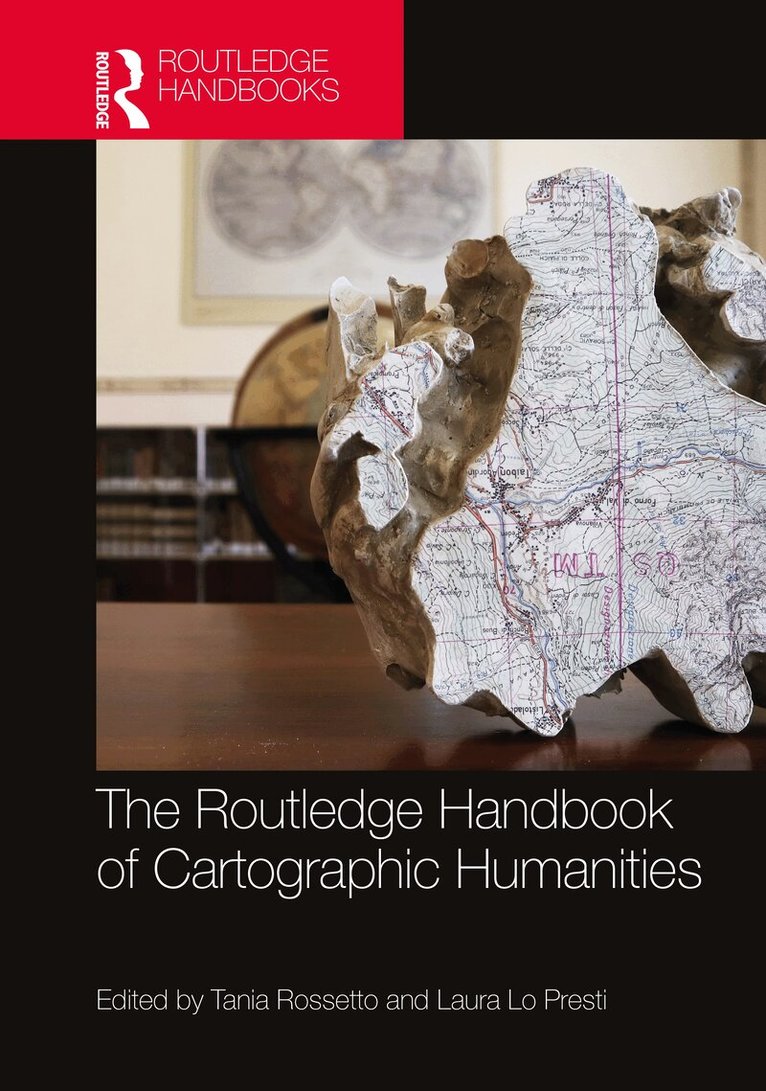
    Routledge Handbook of Cartographic Humanities

    AvTania Rossetto,Laura Lo Presti

    Häftad, Engelska, 2026

    788 kr

    Beställningsvara. Skickas inom 10-15 vardagar. Fri frakt över 249 kr.

    Beskrivning

    The Routledge Handbook of Cartographic Humanities offers a vibrant exploration of the intersection and convergence between map studies and the humanities through the multifaceted traditions and inclinations from different disciplinary, geographical and cultural contexts.With 42 chapters from leading scholars, this book provides an intellectual infrastructure to navigate core theories, critical concepts, phenomenologies and ecologies of mapping, while also providing insights into exciting new directions for future scholarship. It is organised into seven parts:Part 1 moves from the depths of the humans–maps relation to the posthuman dimension, from antiquity to the future of humanity, presenting a multidisciplinary perspective that bridges chronological distances, introspective instances and social engagements.Part 2 draws on ancient, archaeological, historical and literary sources, to consider the materialities and textures embedded in such texts. Fictional and non-fictional cartographies are explored, including layers of time, mobile historical phenomena, unmappable terrain features, and even animal perspectives.Part 3 examines maps and mappings from a medial perspective, offering theoretical insight into cartographic mediality as well as studies of its intermedial relations with other media.Part 4 explores how a cultural cartographic perspective can be productive in researching the digital as a human experience, considering the development of a cultural attentiveness to a wide range of map-related phenomena that interweave human subjectivities and nonhuman entities in a digital ecology.Part 5 addresses a range of issues and urgencies that have been, and still are, at the centre of critical cartographic thinking, from politics, inequalities and discrimination.Part 6 considers the growing amount of literature and creative experimentation that involve mapping in practices of eliciting individual life histories, collective identities and self-accounts.Part 7 examines the variety of ways in which we can think of maps in the public realm.This innovative and expansive Handbook will appeal to those in the fields of geography, art, philosophy, media and visual studies, anthropology, history, digital humanities and cultural studies as well as industry professionals.

    Produktinformation

    • Utgivningsdatum:2026-07-20
    • Mått:174 x 246 x 23 mm
    • Vikt:820 g
    • Format:Häftad
    • Språk:Engelska
    • Antal sidor:420
    • Förlag:Taylor & Francis Ltd
    • ISBN:9781032355948

    Utforska kategorier

    • Konsthistoria inom Kultur
    • Fotoböcker inom Kultur
    • Geografi inom Naturvetenskap och teknik

    Mer om författaren

    Tania Rossetto is Associate Professor of Cultural Geography at the University of Padua, Italy.Laura Lo Presti is Junior Assistant Professor of Geography at the University of Padua, Italy.

    Recensioner i media

    'Maps move, and this Handbook assembles a variety of vantage points to witness such movements: textual, sensorial and the more-than-representational, cinematic and the virtual, resistive and mundane, grounded and atmospheric, monumental and ephemeral. Careful to not recuperate mapmaking but make it more responsible, more resonating, this collection bends, without breaking, the reverberative potential of the drawn line. It leaves mapmaking practices more curious, more open, more vibrational, without the privilege of an ahistorical treatment.' Matthew W. Wilson, Professor of Geography, University of Kentucky, USA'Tania Rossetto and Laura Lo Presti have compiled a state-of-the-art collection of commentaries on the many ways in which the humanities and cartography are joined at the hip. Bringing together an international and interdisciplinary cast of writers on the cutting edge of geohumanistic enquiry they show how the seemingly instrumental rationalities of the map have always been, and always should be, richly discursive endeavours embedded in strategies of domination and resistance. This is a must-read collection for scholars across the humanities interested in the role of cartography in human meaning-making.'Tim Cresswell, Ogilvie Professor of Geography, University of Edinburgh, UK'Mapping remains an extraordinarily diverse and generative technique for mediating the world. Committed to theoretical and methodological pluralism, this outstanding collection explores its technologies, politics and consequences through a rich range of case studies drawn from across "cartographic culture", both historical and contemporary.'Gillian Rose, Professor of Human Geography, University of Oxford, UK

    Innehållsförteckning

    • List of figuresList of tablesList of contributorsIntroduction: Why Cartographic Humanities?Tania Rossetto and Laura Lo Presti Part 1: Preludes and trendsChapter 1Mapping Inner Worlds: Cartography as a HumanityVeronica Della DoraChapter 2Chorography, Cartography and the Geospatial HumanitiesJavier Arce-Nazario, Janet Downie, Tim Shea, John Pickles, Toni Veneri Chapter 3 Processual Map HistoryMatthew EdneyChapter 4Spatial Anthropology and Deep MappingLes RobertsChapter 5Don’t Believe the Mapping Hype! Three Steps Back for an Engaged CartographyPaul Schweizer, Severin Halder (kollektiv orangotango)Chapter 6Posthuman CartographiesJoe GerlachPart 2: Textural connectionsChapter 7In brevi tabella. Thinking with Diagrams in Late AntiquitySalvatore LiccardoChapter 8Archaeology, Crafting Maps and Political ChangePiraye HacıgüzellerChapter 9Charting Movement through Historical SourcesTiago Luís GilChapter 10Zoocentric Texts and Cartographic ContradictionsSally BushellChapter 11Writing with MapsJulien NègreChapter 12A Plea for Slow MappingJörn SeemannPart 3: Mediations and intermedialitiesChapter 13A Media-theory of (Western) Cartographic Imagination Tommaso MorawskiChapter 14The Map in Cinema and Cinema on the MapGiorgio AvezzùChapter 15The Antithetical Cartographies of Geospatial Cinema Chris LukinbealChapter 16Firing up Map Thinking: Music Videos Meta-mapsTania RossettoChapter 17Worlds for Sale: Cartography in Print AdvertisementsDavide PapottiChapter 18Maps as Design Tools: Space, Time and ExperienceRoger Paez Blanch, Manuela Valtchanova, Ferran Larroya, Josep Perelló Part 4: Cultural digitalitiesChapter 19Digital Narcissism and GPS Selfies: The Entry of the Self Claire ReddlemanChapter 20Automated Mapping CulturesSam HindChapter 21Map Fetishism and the Power of Maps: A Feminist-technoscience PerspectiveValentina CarraroChapter 22Ethnography and Maps in the Digital AgeMike DugganChapter 23A Humanistic Rewire of GIScienceBo ZhaoChapter 24The Cine-Tourist’s Online Cartographic Curiosity CabinetTadas BugneviciusPart 5: Troubles and disruptions Chapter 25Emptying and filling. Maps of inland Africa Andrea PaseChapter 26Cartography Contra ColonialismClancy WilmottChapter 27Indigenous CartographiesDavi Pereira Junior, Bjørn SlettoChapter 28Black Cartography as Memory WorkStephen P. HannaChapter 29Gender and Mapping CultureChristina DandoChapter 30Mapping as a Mode of Governance in the AnthropoceneDavid ChandlerPart 6: Elicitations and co-creations Chapter 31Co-Creative Mapping of MemoriesÉlise Olmedo, Emmanuelle Kayiganwa, Sébastien CaquardChapter 32Mapping as the Art of Listening to Jewish Mediterranean MigrationsPiera RossettoChapter 33Drawing (on) Cartographic IntimaciesLaura Lo PrestiChapter 34Auto-cartography. (Fictional) Ethnographies of the Self and the Map in the FieldGiada PeterleChapter 35Re-situating Participatory Cultural Mapping as Community-centred Work Nancy Duxbury, W.F. Garrett-PettsChapter 36Mapping Narratives on Historical ToursStephen P. Hanna, Amy E. Potter, Derek H. AldermanPart 7: Public cartographic humanities Chapter 37The Social Life of Maps Martin BrücknerChapter 38Public Map Exhibitions: What Goes in and What Comes outTom HarperChapter 39Participatory Network Mapping for Public Action Barbara Brayshay, Aldo de MoorChapter 40The Public Outreach of the ICA Commission on Art & Cartography Taien Ng-ChanChapter 41The (Aesth)Ethics of Publishing Geopolitical MapsLaura Lo Presti, Tania RossettoChapter 42MapLab: A Bloomberg Newsletter Connecting Maps and the NewsLaura Bliss, Marie PatinoIndex