• Fri frakt över 249 kr
  • •
  • Snabba leveranser
  • •
  • Billiga böcker
Kundservice

Du är på sajten för privatpersoner.

Företag, bibliotek eller offentlig verksamhet?

Du handlar på classic.bokus.com, där alla dina funktioner finns intakta.
Till classic.bokus.com
Bokus logotyp. Gå till startsidan.
  • Erbjudanden
  • Nyheter
  • Student
  • Topplistor
  • Barn & ungdom
  • Bokus Play
  • E-böcker
  • Pocketböcker
  • Spel & pussel

10% rabatt på allt med kod NYSTART10 →

Sidfot

Mina sidor

    Hjälp

    • Kundservice
    • Vanliga frågor och svar
    • Frakt och leverans
    • Retur vid ångerrätt
    • Reklamera vara
    • Betalning
    • Köpvillkor
    • Allmänna villkor
    • Information om webbplatsens tillgänglighet

    Om Bokus

    • Om oss
    • Pressrum
    • För studenter
    • För företag
    • För bibliotek och offentlig verksamhet
    • För leverantörer
    • Hållbarhet

    Populärt

    • Aktuella erbjudanden
    • Presentkort
    • Studentlitteratur
    • Nya böcker
    • Topplistor
    • Signerade böcker
    • Engelska böcker

    Inspiration

    • Boktips
    • BookTok
    • Populära bokserier
    • Barnbokskaraktärer
    • Populära författare
    Logotyp för Bokus
    Följ oss på Facebook (extern länk)Följ oss på Instagram (extern länk)Följ oss på YouTube (extern länk)Följ oss på TikTok (extern länk)
    bokus @ CookiesAnpassa cookiesIntegritetspolicyKöpvillkor
    Till Citymail hemsida (extern länk)Till Budbee hemsida (extern länk)Till Postnord hemsida (extern länk)Till Schenker hemsida (extern länk)Till Early Bird hemsida (extern länk)Till Walleys hemsida (extern länk)
    1. Psykologi och pedagogik
    2. Psykologi

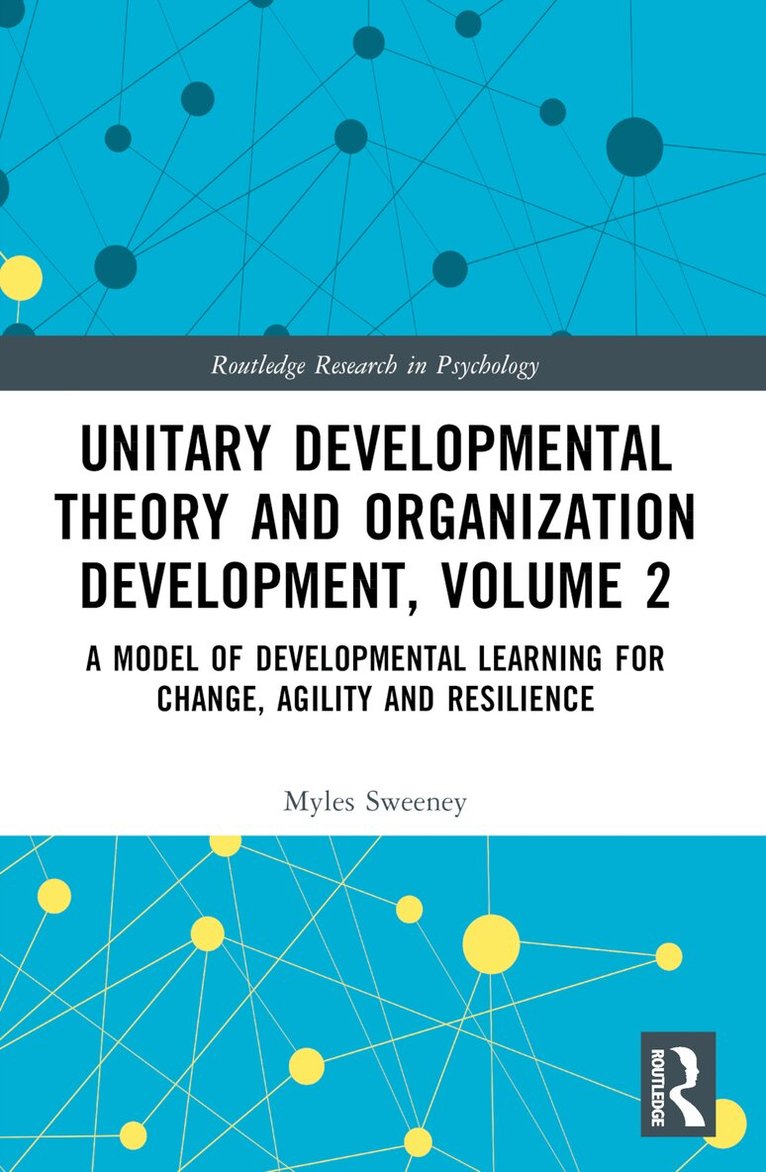
    Unitary Developmental Theory and Organization Development, Volume 2

    A Model of Developmental Learning for Change, Agility and Resilience

    AvMyles Sweeney

    Häftad, Engelska, 2024

    Del i serien Routledge Research in Psychology

    607 kr

    Beställningsvara. Skickas inom 10-15 vardagar. Fri frakt över 249 kr.

    Fler format och utgåvor

    E-bok

    717 kr

    E-bok

    717 kr

    Inbunden

    2 000 kr

    Beskrivning

    This book introduces Unitary Developmental Theory (UDT) to the field of organization development. The second of two volumes, it introduces the UDT model and examines its application to organization development and change management.The book presents UDT comprising seven developmental levels, showing how using its methodical progression can help to avoid issues such as unsustainable growth and change failure while examining how the model improves collaboration, digital transformation, change management and team development. It shows how the model clinically transforms concepts such as culture which is often cited as the cause of failure for change, re-defining it as habituated maturation stage and simplifying culture change accordingly. This book is designed to accompany Volume 1 which details the psychology of the model and its equal applicability to mental-health recovery.Showing how UDT can be used as an overarching model to optimize organization development, this book will be of great interest to researchers, scholars and postgraduate students from the fields of organizational psychology, organization development and change management.

    Produktinformation

    • Utgivningsdatum:2024-05-27
    • Mått:156 x 234 x 17 mm
    • Vikt:453 g
    • Format:Häftad
    • Språk:Engelska
    • Serie:Routledge Research in Psychology
    • Antal sidor:274
    • Förlag:Taylor & Francis Ltd
    • ISBN:9781032366609

    Utforska kategorier

    • Psykologi inom Psykologi och pedagogik

    Recensioner i media

    "This model is the best insight into bad Organisations since Prof. Clive Boddy’s Corporate Psychopathy, but has the benefit of offering normative process to get things right again"– Christine Louis de Canonville, MIACP, Ireland.

    Innehållsförteckning

    • 1.Organization Development/Change Management and the Problems that UDT Addresses: An Introduction 2. UDT: An Introduction to the Psychology behind the Model 3. The UDT Modeling of Organization Development 4. Culture Analysis and Development: A Sample UDT Breakthrough 5. Some Points on Applying the Model 6. Construct Validation through Correspondence with Prevailing Models of OD and Maturity, Historical Case Studies, etc. 7. UDT Bolstering OD/CM Theory and Practice 8. Disconnecting from the Old Paradigm and Leading the Way: UDT and Agile 9. Ultimate UDT Maturity with Agility and Resilience: The Regenerative Eco-System. Conclusion. Glossary. References